Streblognathus
Streblognathus peetersi
Care Guide
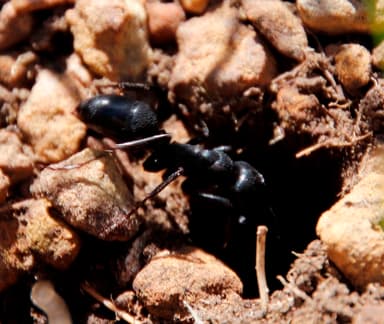
Streblognathus peetersi is one of the most fascinating and unusual ants in the hobby, prized by experienced keepers for its peculiar biology and striking appearance. These ants belong to the ponerine subfamily, a group renowned for their primitive yet highly specialized behaviors. The queen measures between 12 and 14 mm, while workers are only slightly smaller at 10 to 12 mm, making size differences within the colony minimal. Their exoskeleton is dark, almost black, with a subtle sheen, and their powerful mandibles are capable of delivering a painful sting. What truly sets Streblognathus peetersi apart, however, is their feeding strategy: adults practice a form of non-destructive larval hemolymph feeding, meaning they pierce the cuticle of their own larvae to drink their blood without killing them. This “dracula ant” behavior is a natural part of their lifecycle and essential to understand for successful care.
Care difficulty
Keeping Streblognathus peetersi is only recommended for advanced ant keepers. Their semi-claustral founding method means the queen must be regularly fed during the initial stages, as she cannot rely solely on her own reserves. The colony remains small, rarely exceeding 50 workers, which makes them manageable but also vulnerable to stress. Their specialized diet of live insects is a must — they will not accept seeds or sugars. Regular protein intake, such as small crickets, roaches, or mealworms, is crucial. Observing their feeding interactions with larvae is a highlight of the hobby, but it requires patience and a steady hand.
Housing
A suitable formicarium for Streblognathus peetersi should maintain a temperature between 20 and 25°C and a humidity level of 50 to 70 percent. Unlike many species, they do not require hibernation. The nest should be kept stable and undisturbed, as these ants are sensitive to vibrations and sudden changes. A setup with a large outworld is beneficial, as they are active foragers despite their small colony size. The substrate in the nest area should retain some moisture, but avoid waterlogging. Because they do not store seeds or need specific fungus chambers, a simple yet well-designed formicarium with adequate ventilation works best. Providing a varied prey selection will keep the colony healthy and encourage natural hunting behavior.
First days after purchase
Upon receiving your Streblognathus peetersi colony, place the formicarium in a calm, quiet location away from direct sunlight and strong drafts. Allow the ants several days to settle without disturbance. Ensure a constant supply of water and small prey items, such as freshly killed insects, during this acclimation period. Monitor the queen’s condition closely; if she appears weak, offer a drop of honey or sugar water as a temporary boost, though remember their staple diet remains protein. Avoid opening the nest frequently, as stress can halt development. With proper care, you will soon witness the unique larval feeding behavior that makes this species a true gem for dedicated ant enthusiasts.