Eciton
Eciton hamatum
Care Guide
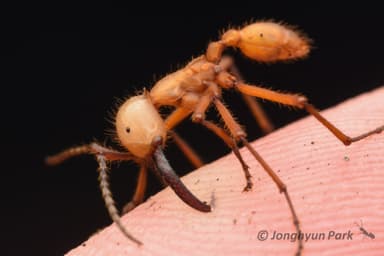
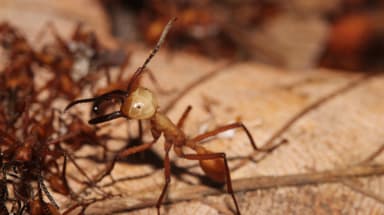
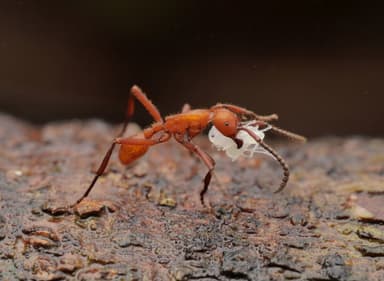
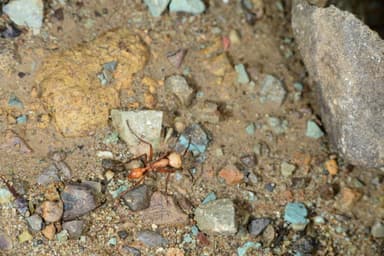
Eciton hamatum, commonly known as the red-lipped army ant, is one of the most spectacular and challenging species a myrmecologist can keep. These ants exhibit extreme polymorphism, with workers ranging from tiny minors measuring just 3 mm to imposing soldiers reaching up to 13 mm. The queen is a true giant, measuring 20–25 mm, and is capable of laying thousands of eggs per day when the colony is at full strength. Unlike many other ants, the colony itself is a living superorganism that follows a strict cycle of nomadic and statary phases — periods of frantic movement and brood transport alternate with times of rest and larval development.
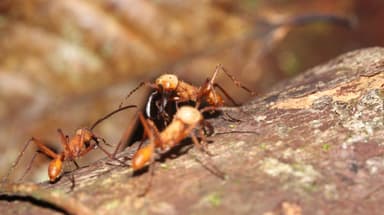
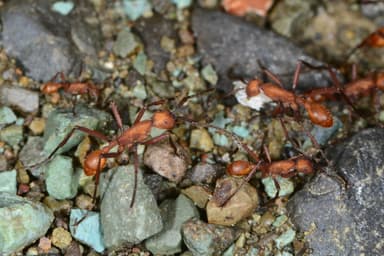
Their predatory nature is legendary. Eciton hamatum are specialized raiders, forming massive swarm columns that hunt and overwhelm insect prey — from crickets to large beetles — using coordinated group attacks. In captivity, this means a diet almost exclusively of protein-rich insects. They will accept a wide variety of fresh or frozen feeder insects, and must be fed frequently to sustain their enormous appetites. Despite the data listing them as claustral founders — meaning a single queen can start a colony without workers — in practice, raising a colony from a single queen is extremely demanding, as the founding queen still requires careful feeding and high humidity.
Care difficulty
Keeping Eciton hamatum is reserved for expert ant keepers. Their need for constant high humidity (70–90%) and stable warmth (24–28°C) mimics the tropical rainforest understory. Even slight environmental fluctuations can cause stress. The colony’s enormous potential size — up to half a million workers — demands a spacious formicarium and an equally large foraging arena. Without enough space, the ants may become aggressive or start raiding inside the nest.
Housing
A well-ventilated formicarium with several chambers and a large outworld is essential. The nest should be kept permanently moist, but not waterlogged — good drainage is critical. Army ants do not tolerate dry conditions; their larvae require high humidity to develop. Unlike seed-storing species, Eciton hamatum does not hoard food, so you must provide fresh prey daily. A heating cable or mat under part of the nest can help maintain the temperature gradient they enjoy. The outworld should be escape-proof and large enough to simulate raid routes, with obstacles and hiding spots for enrichment.
First days after purchase
Upon receiving your Eciton hamatum colony, place the setup in a quiet, dimly lit room. Allow them to settle without disturbance for at least 48 hours. Check humidity levels immediately and add water if the nest feels dry. Offer a small number of live or freshly killed insects — avoid overfeeding, as excess leftovers may mold. Observe the ants’ activity: a healthy colony will quickly begin exploring and transporting brood. Do not shake or move the nest unnecessarily. With patience and vigilance, you will witness one of the most thrilling spectacles in the ant world.