Temnothorax
Temnothorax crassispinus
Nuptial Flight Calendar
Flight months: Jan, May, Jul, Aug, Sep
Care Guide
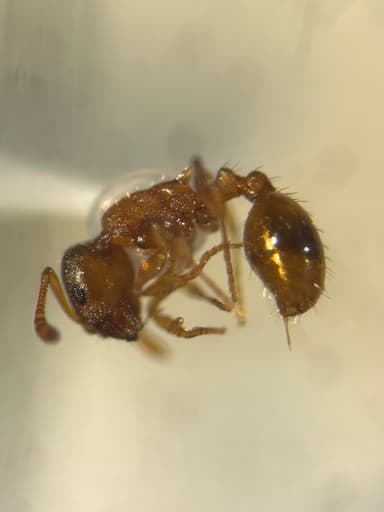
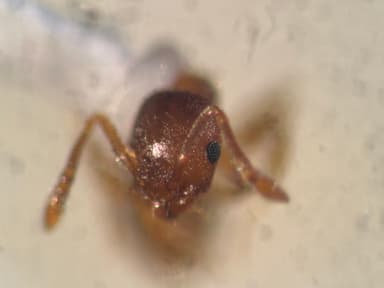
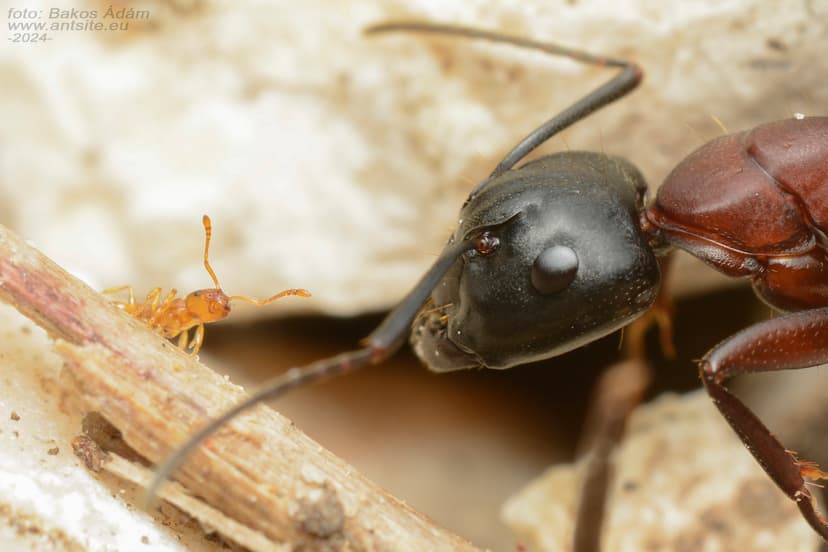
Temnothorax crassispinus, sometimes called the European acorn ant, is a diminutive yet charming species that has earned a devoted following among ant keepers. Workers measure just 2.5 to 3.5 millimetres, with queens only slightly larger at 3.5 to 4.5 millimetres, making them among the smallest ants regularly kept in captivity (Seifert 2007). Their coloration ranges from pale yellowish-brown to a richer chestnut, with a smoothly sculptured head and thorax that catches the light nicely under a hand lens. Colonies are monogynous, typically housing a single queen, and mature nests rarely exceed 400 workers, though many plateau at half that number (Mitrus 2013). There is no worker polymorphism — all individuals belong to a single minor-worker caste — which simplifies observation. What makes this species genuinely captivating is its natural history: in the wild, colonies nest in hollow acorns, dead twigs, or under bark, and researchers have extensively documented their colony-founding strategies, brood raiding, and subtle social dynamics (Czechowski et al. 2012, Mitrus 2013). For the hobbyist, the appeal lies in watching an entire functional society, from egg to forager, play out in a space no larger than a pocket‑sized formicarium.
Care difficulty is squarely at the beginner level, and T. crassispinus is well suited to anyone wanting a compact, undemanding species that still exhibits the full tapestry of ant behaviour. Their small size means they require correspondingly tiny prey items and a secure enclosure, but beyond that, the margin for error is generous. They tolerate brief periods of neglect, are not escape-prone if the barrier is properly applied, and lack a painful sting, having only a mild defensive bite rarely used against keepers. Because the colony is small and the workers move deliberately, even novice myrmecologists can practice observation techniques without being overwhelmed. This species is also an excellent choice for educators or as a desktop pet, as it sparks conversation while demanding little space. The nuptial flights, which occur across Central Europe from July through September on warm, humid afternoons after rain and temperatures above 20°C, give a reliable window each year for acquiring new queens, though many keepers also purchase founding colonies from reputable suppliers (AntWiki).
Housing must accommodate their modest dimensions while respecting their environmental envelope. The optimal temperature range is 18 to 26°C, with a comfortable humidity between 50 and 70 percent; a slight gradient within the nest allows the ants to choose their microclimate. They thrive in small plaster, Ytong, or acrylic nests with a single humid chamber connected to a foraging area. Given their proclivity for acorn nesting, a naturalistic setup with a hollow cork tube or a miniature wood‑based module can elicit fascinating nesting behaviour, but even a simple test‑tube setup plugged with cotton and placed in a dark outer container works perfectly. Substrate in the foraging arena — fine sand or a sand‑soil mix — is optional but aids grip and humidity, and a thin layer of leaf litter or a few small twigs enriches their environment. Crucially, all apertures must be sealed with tightly fitting lids or a PTFE‑oil barrier; a gap that looks minuscule to us is an open door to a 2.5‑millimetre ant. The entrance hole of the nest should be narrow enough to discourage the queen from wandering out, which she occasionally does during the early founding stage.
Feeding Temnothorax crassispinus is straightforward, as they are generalist omnivores with modest appetites. Protein in the form of small, freshly killed insects — fruit flies, pinhead crickets, or chopped mealworm segments — should be offered two to three times a week. Remove uneaten remains promptly to prevent mould. Carbohydrates are usually provided as a droplet of sugar water or diluted honey placed on a small piece of wax paper or tinfoil; the workers will lap it up readily. Because the colony is small, a single droplet once or twice a week is ample, and overfeeding can quickly foul the arena. A constant source of clean water is essential: a plaster block kept moist or a water‑filled test tube plugged with cotton both serve well. Many experienced keepers add a tiny pinch of high‑quality insect‑based fish food as a supplemental protein source, but live or fresh‑killed insects remain the gold standard. During the reproductive season, the queen and larvae benefit from a slightly increased protein supply, though the colony’s intake should always be scaled to its actual consumption rate to avoid waste.
Hibernation is obligatory and a key to long‑term colony health. In nature, these ants endure a distinct winter, and in captivity they must be cooled to around 5°C for a period of three to five months, typically from late October to March. A household refrigerator set to that temperature, a cool basement, or a dedicated wine cooler all work well, provided the nest does not dry out. Before cooling, gradually reduce their temperature over two weeks and cease feeding for a few days to clear their crops; during hibernation, they will remain clustered and barely move. Check monthly that the nest chamber retains sufficient humidity — a slight fog on the inside wall is reassuring — but avoid any major disturbance. At the end of the dormancy, warm them up slowly and resume feeding with a small drop of sugar water. Skipping hibernation leads to lethargic colonies, reduced brood production, and premature queen mortality, so it is not optional (Seifert 2007).
The first days after acquiring a founding queen or a small colony are critical for settling in. Offer the ants a dark, quiet location with a stable temperature, ideally around 22°C, and resist the urge to check on them more than once a day. If you have a single queen in a test tube, she is likely claustral and requires no food until the first workers eclose; placing the tube in a covered box eliminates light stress. For an active colony with workers, a tiny drop of honey and a pre‑killed fruit fly can be introduced on the second day, placed near the nest entrance to signal that food is available in the foraging area. Watch for normal activity — workers will tentatively explore, collect food, and return to the nest. Excessive pacing near the entrance, clumping of workers in a corner, or refusal to leave the nest can indicate humidity or temperature stress, so check the nest’s hydration and the temperature gradient. After a week of calm acclimatisation, you can move the colony to their permanent nest if you have not done so already, using gentle light and a delicate brush to guide them. With patience and minimal interference, your Temnothorax crassispinus colony will soon display the gentle industriousness that makes this species such a delightful addition to any ant‑keeping collection.