Crematogaster
Crematogaster cerasi
Nuptial Flight Calendar
Flight months: Jun, Jul, Aug, Sep, Oct
Care Guide
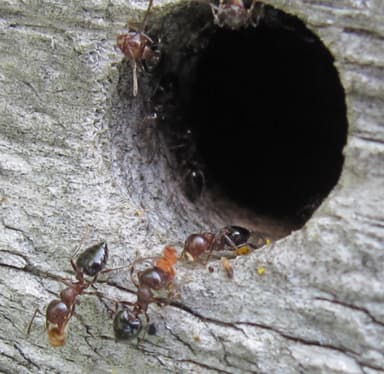
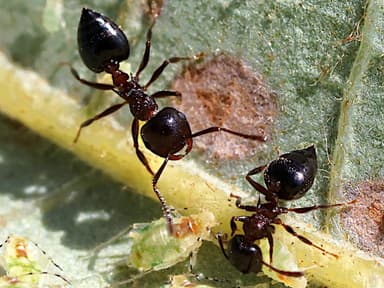
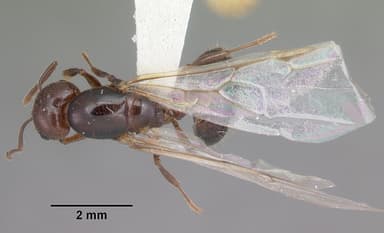
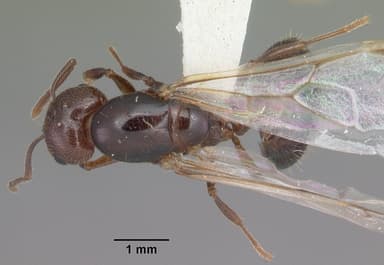
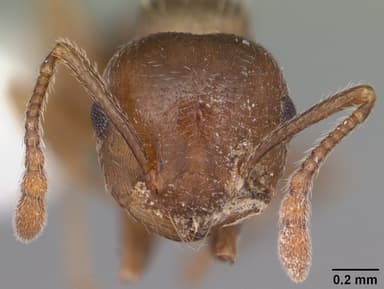
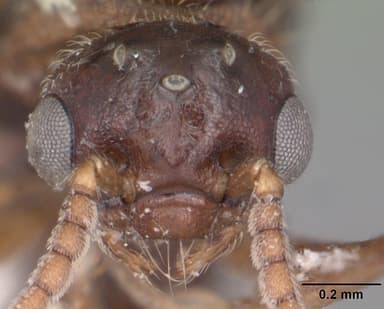
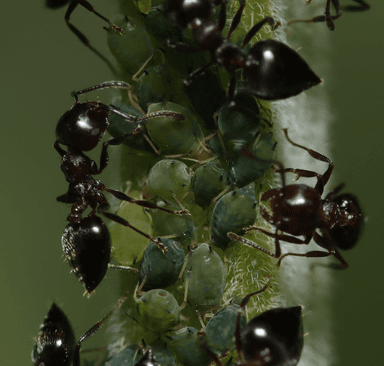
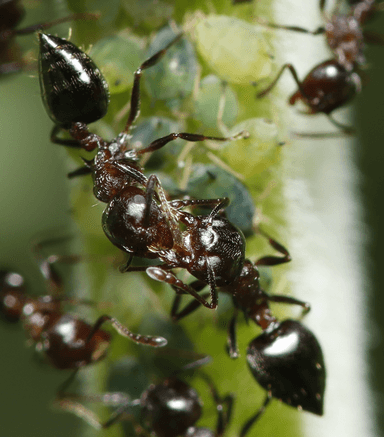
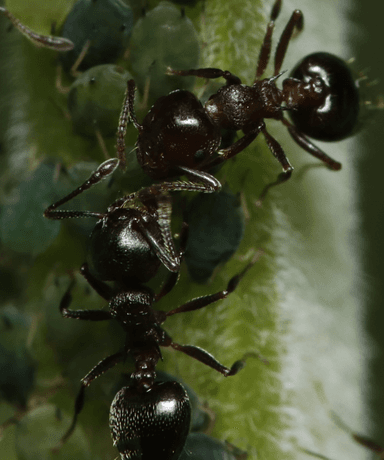
Crematogaster cerasi, the eastern acrobat ant, is a delightfully charismatic species and a perennial favorite among North American ant keepers. The workers are small and uniform in size, measuring between 2.5 and 4 millimeters, and they lack the distinct physical subcastes seen in more complex genera — there is just a single, lively minor worker caste. The queen, at a robust 7 to 9 millimeters, is noticeably larger and establishes new colonies claustrally, sealing herself away to raise her first brood without foraging. What truly sets these ants apart is their defensive behavior: when disturbed, they raise their distinctive heart-shaped gasters high over their thorax in a posture that gives the genus its common name. Mature colonies can grow to impressive sizes, often reaching 10,000 individuals, creating a bustling, entertaining display (Ellison et al. 2012; AntWiki). In nature, C. cerasi ranges across eastern North America from southern Canada to the Gulf Coast, where it typically nests in dead wood, hollow twigs, or under bark, making it a highly adaptable and consistently observable species in the field (Coovert 2005).
For the beginning myrmecologist, few ants are more rewarding or forgiving. This species is rated unequivocally for beginners. The claustral founding process requires almost no intervention, and the workers are hardy across a broad range of captive conditions so long as a few basic parameters are met. A newcomer to the hobby will find their first season with C. cerasi an excellent introduction to ant behavior, as the colony quickly settles into predictable patterns of foraging, brood care, and nest expansion. Even keepers with years of experience often return to this species for its energetic temperament and the amusing acrobatic displays that follow a gentle tap on the outworld. Because the colony grows steadily rather than explosively, housing upgrades can be planned well in advance, eliminating the panic of sudden overcrowding that plagues some rapidly multiplying species.
Designing a home for your acrobat ants is straightforward. They thrive in a wide thermal range from 20 to 28°C, and a humidity gradient of 50 to 70 percent mimics their natural under-bark habitat. Standard formicaria — whether acrylic, 3D-printed, or grout — work beautifully, but the ants particularly appreciate nests that offer small, tight chambers where they feel secure; a stack of cork bark tiles inside a naturalistic setup often becomes their favorite brood chamber. A thin layer of sand or coconut coir in the outworld permits natural foraging behaviors, though the ants themselves will not dig extensive tunnels if a pre-made nest is provided. Crucially, avoid materials they can gnaw through excessively, though C. cerasi is not the most destructive chewer; still, soft plastics and thin silicone seals should be monitored. A well-ventilated space that prevents stagnant condensation while retaining high humidity in the nest area is ideal.
Feeding these active foragers is a joy, as they recruit enthusiastically to both protein and sugar sources. Offer small insects such as fruit flies, pinhead crickets, and chopped mealworms two to three times per week, always removing uneaten food within a day to prevent mold. Carbohydrates can be supplied via a simple syrup, honey diluted with water, or commercially prepared ant nectars; they will greedily drink from a cotton-plugged tube or a small feeder dish. Clean water must be available at all times, usually in a test tube waterer or through a moisture gradient in the nest itself. During the warm months, when brood production peaks, the colony’s appetite may noticeably increase, so be prepared to match their intake. Like most ants, they are adept at regulating their own consumption, so slight fluctuations in demand are normal.
Hibernation is not a suggestion but a biological requirement for C. cerasi. Colonies that skip this cool dormancy period often see unexplained queen death, shrinking worker populations, and a failure to resume brood production the following year. Plan for a three- to four-month diapause at a steady temperature around 8°C, mimicking the cool but not freezing conditions of a basement or wine cooler. Begin the process by gradually reducing temperatures over two weeks, then keep the ants in darkness, ensuring the nest never dries out entirely — a slightly damp substrate is sufficient. As spring arrives, warm them slowly and watch for the first new eggs, a sure sign that the annual cycle is on track. Coovert (2005) and Ellison et al. (2012) both note the synchronized phenology of this species in its native range, a rhythm you should honor in captivity.
When your queen and her first workers arrive, the most important thing is to give them quiet. Place the test tube or nest in a dim, vibration-free area and resist the urge to check on them for at least two days. Attach a small sugar source immediately — a dot of honey on a slip of parchment paper works perfectly — and a tiny piece of fresh insect within 24 hours once the workers show exploratory behavior. If the queen still has workers inside the tube, they may not venture far at first, so place the food right at the entrance. Monitor hydration in the water reservoir, watch for mites or mold, and let the ants set their own pace. Avoid strong light during this settling-in phase; a red film or dim corner will help them feel secure. Within a week, you should see confident foraging trips and the first signs of a thriving, growing colony.