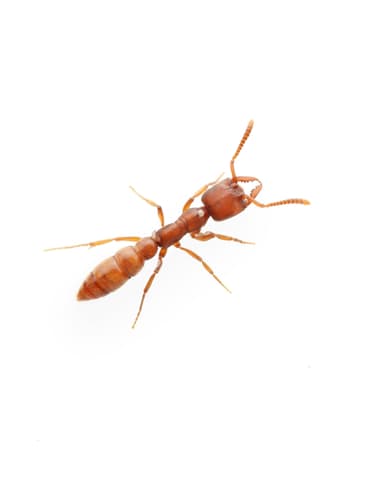
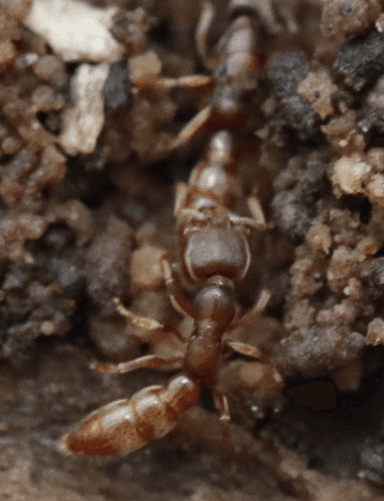
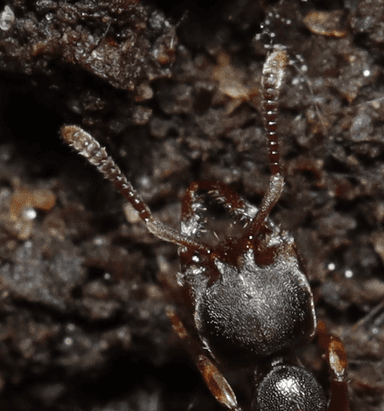
Stigmatomma pallipes photo 1

Stigmatomma

Stigmatomma pallipes

Intermediatesemi-claustralHibernates
NEST TEMPERATURE
20–25°C
NEST HUMIDITY
70–90%
Max colony size
100
Queen size
5–6 mm
Worker size
4–5 mm
Hibernation
8°C

Care Guide

Stigmatomma pallipes is a fascinating species that offers ant keepers a glimpse into the predatory world of primitive ponerine ants. Often referred to as “dracula ants” due to their unusual feeding habits, these small but formidable hunters rely on a unique method of subduing prey. Workers sting their victims — typically centipedes, millipedes, or other soil arthropods — and then feed on the hemolymph through a puncture wound they create, often leaving the prey alive but paralyzed for days. Colonies remain modest, rarely exceeding 20 to 100 workers, and the queen, at 5–6 mm, is only slightly larger than her workers. The entire colony is monomorphic, with all workers measuring 4–5 mm, but what they lack in size they make up for in tenacity and specialized behavior.

Care difficulty

Keeping Stigmatomma pallipes is an intermediate challenge, best suited for keepers who have some experience with subterranean or humidity-dependent species. Their semi-claustral founding means the queen must forage for food during the early stages of colony establishment, which adds a layer of complexity compared to fully claustral species. Unlike seed-harvesters, their diet consists exclusively of live or freshly killed insects — primarily soft-bodied arthropods like small centipedes, isopods, or flightless fruit flies. Maintaining a steady supply of appropriate prey is essential, as they show little interest in standard ant food such as sugar water or protein jellies. Their need for constant high humidity (70–90%) and a relatively cool temperature range (20–25°C) also requires careful monitoring, making them a rewarding but demanding species for dedicated hobbyists.

Housing

Providing the right environment for Stigmatomma pallipes means prioritizing moisture and darkness. These ants are strictly subterranean and will rarely venture into open, dry areas. A formicarium with deep, humid chambers — such as a naturalistic setup with clay or peat substrate — works best. The nest should be kept consistently damp but not waterlogged, with a clear humidity gradient so the ants can regulate their own microclimate. A connected outworld can be provided for feeding, but it must also remain humid and dimly lit. Because the colony is small, even a modest nest size will suffice for years. Hibernation is mandatory: from late autumn to early spring, the colony requires a prolonged diapause at around 8°C with reduced disturbance. Failing to provide this cooling period can lead to queen exhaustion and colony decline.

First days after purchase

Upon receiving your Stigmatomma pallipes colony, place the entire setup in a quiet, dark location and allow the ants several days to acclimate without disturbance. Ensure the nest substrate is already moistened to the correct level before introducing the ants. During the first week, offer small, soft prey items — such as a freshly killed small centipede or a crushed roach nymph — placed directly into the nest chamber or near the entrance. Observe from a distance to confirm feeding activity; these ants are shy and may refuse food if stressed. Maintain stable humidity by checking condensation levels daily, and resist the urge to open the nest frequently. Patience is key — once settled, your colony will reveal its remarkable hunting behavior and close-knit social structure, making every careful preparation worthwhile.

Photos120

Stigmatomma pallipes — queen photo 1
Stigmatomma pallipes — queen photo 2
Stigmatomma pallipes — queen photo 3
Stigmatomma pallipes — queen photo 4
Stigmatomma pallipes — queen photo 5
Stigmatomma pallipes — queen photo 6
Stigmatomma pallipes — queen photo 7
Stigmatomma pallipes — queen photo 8
Stigmatomma pallipes — queen photo 9
Stigmatomma pallipes — queen photo 10
Stigmatomma pallipes — worker photo 11
Stigmatomma pallipes — worker photo 12
Stigmatomma pallipes — worker photo 13
Stigmatomma pallipes — worker photo 14
Stigmatomma pallipes photo 15
Stigmatomma pallipes photo 16
Stigmatomma pallipes photo 17
Stigmatomma pallipes photo 18
Stigmatomma pallipes photo 19
Stigmatomma pallipes photo 20
Stigmatomma pallipes photo 21
Stigmatomma pallipes photo 22
Stigmatomma pallipes photo 23
Stigmatomma pallipes photo 24
Stigmatomma pallipes photo 25
Stigmatomma pallipes photo 26
Stigmatomma pallipes photo 27
Stigmatomma pallipes photo 28
Stigmatomma pallipes photo 29
Stigmatomma pallipes photo 30
Stigmatomma pallipes photo 31
Stigmatomma pallipes photo 32
Stigmatomma pallipes photo 33
Stigmatomma pallipes photo 34
Stigmatomma pallipes photo 35
Stigmatomma pallipes photo 36
Stigmatomma pallipes photo 37
Stigmatomma pallipes photo 38
Stigmatomma pallipes photo 39
Stigmatomma pallipes photo 40
Stigmatomma pallipes photo 41
Stigmatomma pallipes photo 42
Stigmatomma pallipes photo 43
Stigmatomma pallipes photo 44
Stigmatomma pallipes photo 45
Stigmatomma pallipes photo 46
Stigmatomma pallipes photo 47
Stigmatomma pallipes photo 48
Stigmatomma pallipes photo 49
Stigmatomma pallipes photo 50
Stigmatomma pallipes photo 51
Stigmatomma pallipes photo 52
Stigmatomma pallipes photo 53
Stigmatomma pallipes photo 54
Stigmatomma pallipes photo 55
Stigmatomma pallipes photo 56
Stigmatomma pallipes photo 57
Stigmatomma pallipes photo 58
Stigmatomma pallipes photo 59
Stigmatomma pallipes photo 60
Stigmatomma pallipes photo 61
Stigmatomma pallipes photo 62
Stigmatomma pallipes photo 63
Stigmatomma pallipes photo 64
Stigmatomma pallipes photo 65
Stigmatomma pallipes photo 66
Stigmatomma pallipes photo 67
Stigmatomma pallipes photo 68
Stigmatomma pallipes photo 69
Stigmatomma pallipes photo 70
Stigmatomma pallipes photo 71
Stigmatomma pallipes photo 72
Stigmatomma pallipes photo 73
Stigmatomma pallipes photo 74
Stigmatomma pallipes photo 75
Stigmatomma pallipes photo 76
Stigmatomma pallipes photo 77
Stigmatomma pallipes photo 78
Stigmatomma pallipes photo 79
Stigmatomma pallipes photo 80
Stigmatomma pallipes photo 81
Stigmatomma pallipes photo 82
Stigmatomma pallipes photo 83
Stigmatomma pallipes photo 84
Stigmatomma pallipes photo 85
Stigmatomma pallipes photo 86
Stigmatomma pallipes photo 87
Stigmatomma pallipes photo 88
Stigmatomma pallipes photo 89
Stigmatomma pallipes photo 90
Stigmatomma pallipes photo 91
Stigmatomma pallipes photo 92
Stigmatomma pallipes photo 93
Stigmatomma pallipes photo 94
Stigmatomma pallipes photo 95
Stigmatomma pallipes photo 96
Stigmatomma pallipes photo 97
Stigmatomma pallipes photo 98
Stigmatomma pallipes photo 99
Stigmatomma pallipes photo 100
Stigmatomma pallipes photo 101
Stigmatomma pallipes photo 102
Stigmatomma pallipes photo 103
Stigmatomma pallipes photo 104
Stigmatomma pallipes photo 105
Stigmatomma pallipes photo 106
Stigmatomma pallipes photo 107
Stigmatomma pallipes photo 108
Stigmatomma pallipes photo 109
Stigmatomma pallipes photo 110
Stigmatomma pallipes photo 111
Stigmatomma pallipes photo 112
Stigmatomma pallipes photo 113
Stigmatomma pallipes photo 114
Stigmatomma pallipes photo 115
Stigmatomma pallipes photo 116
Stigmatomma pallipes photo 117
Stigmatomma pallipes photo 118
Stigmatomma pallipes photo 119
Stigmatomma pallipes photo 120

🍪 🍪 Настройки cookie

Мы используем файлы cookie для оценки производительности. Политика конфиденциальности