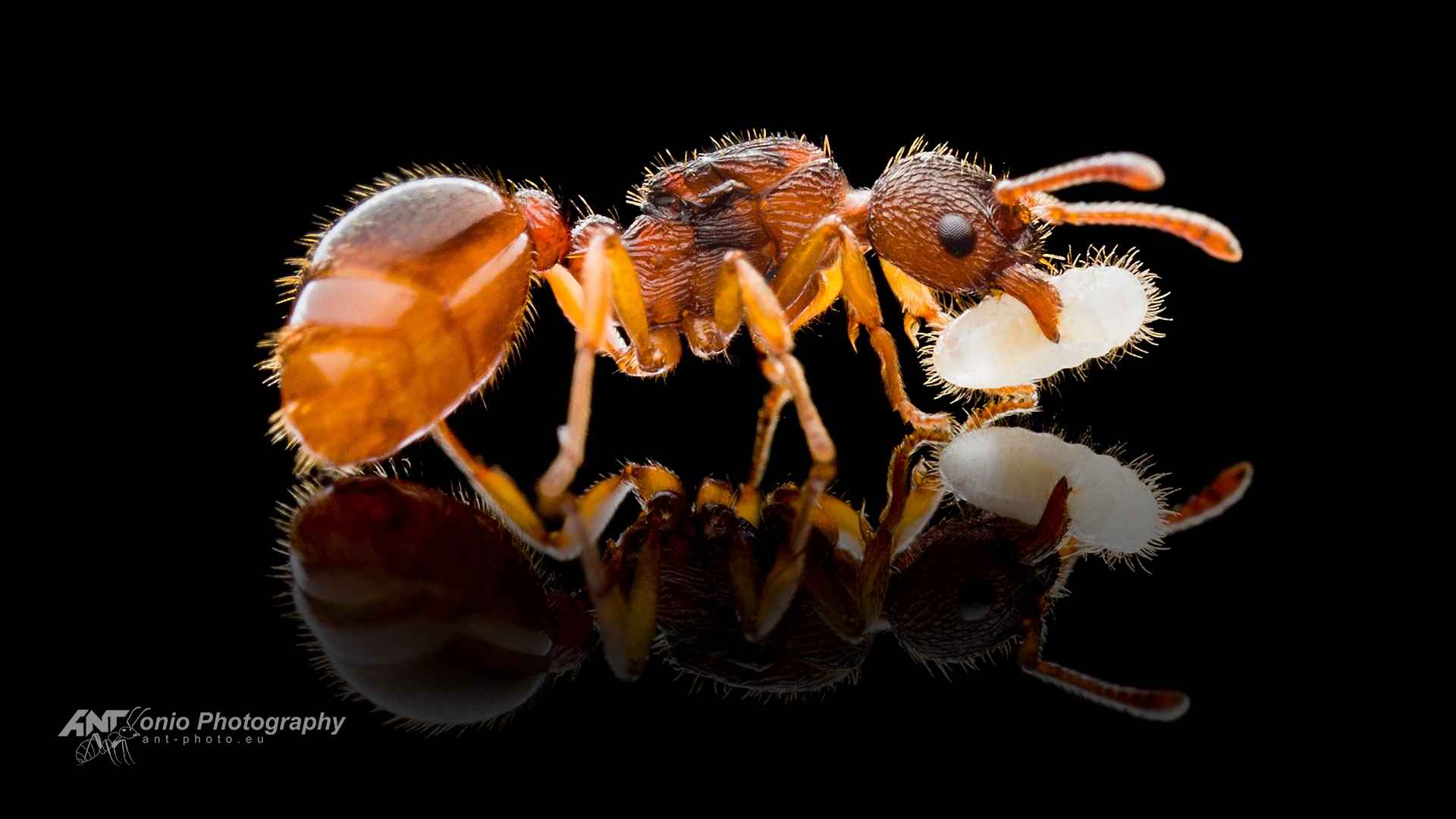
Myrmica
Myrmica scabrinodis
Nuptial Flight Calendar
Care Guide
Myrmica scabrinodis is a fascinating and charismatic ant species native to much of Europe, often found in moist grasslands and bogs. Unlike many common beginner species, these ants are semi-claustral, meaning the queen must leave the nest to forage during the founding stage. The queen is moderately sized at 5.5–7 mm, while workers range from 4–5.5 mm and are uniformly sized — no major polymorphism here, but they compensate with a powerful sting that makes them effective hunters. A mature colony can grow to between 500 and 3,000 workers, forming a lively, highly active society that is a joy to observe.
What truly sets Myrmica scabrinodis apart is their complex social behavior and strong response to chemical cues. They are aggressive foragers, readily taking live or freshly killed insects such as fruit flies, mealworms, or crickets. Their diet should be protein-rich, supplemented with sugar water or honey water to provide energy, and occasional soft fruits or seeds can be offered. In the wild, they also tend aphids for honeydew. Providing a varied diet will keep your colony thriving and workers active. Unlike seed-harvesters, they do not store dry seeds, so fresh protein is essential, especially during brood rearing.
Care difficulty
Keeping Myrmica scabrinodis is best suited for intermediate ant keepers. The semi-claustral founding stage requires patience, as you will need to provide the queen with small prey items and sugar water until her first workers arrive. She cannot seal herself in a dark chamber like claustral queens, so frequent but gentle feeding is necessary. Once workers appear, the colony grows steadily but not explosively. Their sensitivity to temperature and humidity, plus the mandatory hibernation period, adds a layer of responsibility. However, their responsive behavior and willingness to accept a wide range of prey make them deeply rewarding.
Housing
These ants thrive in cooler temperatures — ideal range is 18–24°C, with humidity kept between 55–75%. A formicarium with good ventilation and a moisture gradient works best, as they prefer slightly humid nesting areas but not waterlogging. Use a substrate that retains moisture, such as plaster or clay, and provide a separate outworld for foraging. Because Myrmica scabrinodis stings when threatened, avoid excessive vibrations or disturbances. They are less light-sensitive than some species, but a dark nesting area remains important. Hibernation is non-negotiable: from late autumn to early spring, gradually reduce temperature to around 5°C for three to four months, ensuring they have a drop of water but no food. Skipping hibernation weakens the colony and can prevent successful brood production the following year.
First days after purchase
Upon receiving your Myrmica scabrinodis colony, transfer them carefully into their new formicarium. Place them in a quiet, dimly lit spot and allow at least 24 hours to settle. For a semi-claustral queen or small colony, offer a tiny piece of insect (e.g., a crushed fruit fly) and a drop of sugar water near the nest entrance. Observe from a distance — if the queen accepts food, you are off to a great start. Avoid opening the nest frequently during the first week. Ensure the humidity in the nest area is stable, and check that the temperature remains within the cool range. With patience and gentle care, you will soon watch your Myrmica scabrinodis colony grow into a bustling, stinging little powerhouse.