Odontomachus
Odontomachus haematodus
Nuptial Flight Calendar
Flight months: Jan, Feb, Mar, Apr, May, Jun, Jul, Aug, Sep, Oct, Nov, Dec
Care Guide
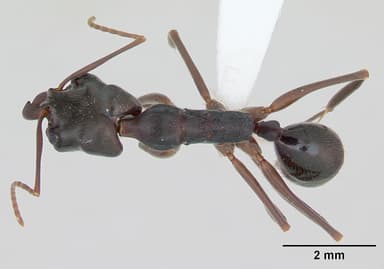
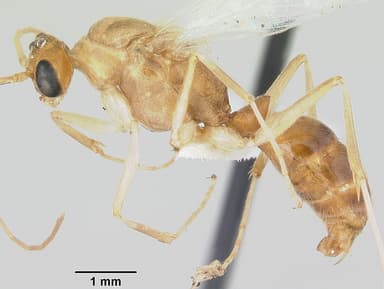
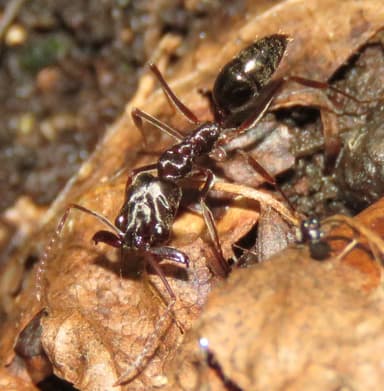
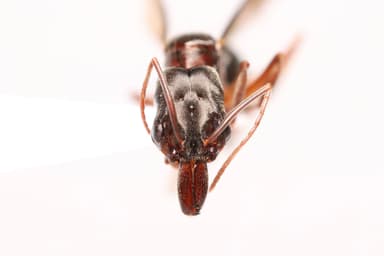
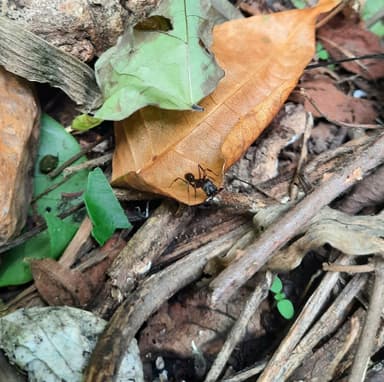
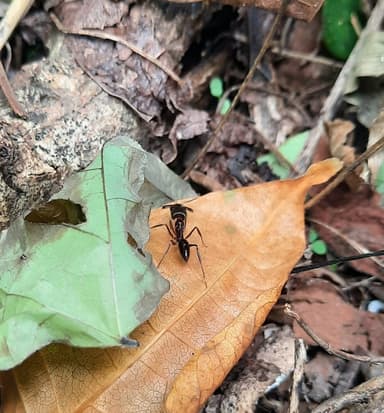
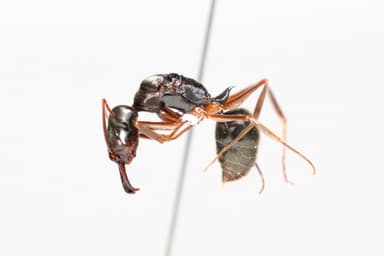
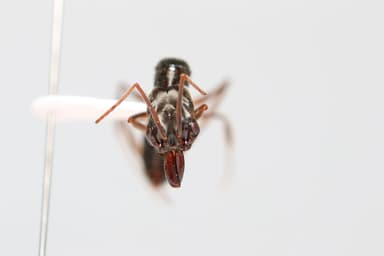
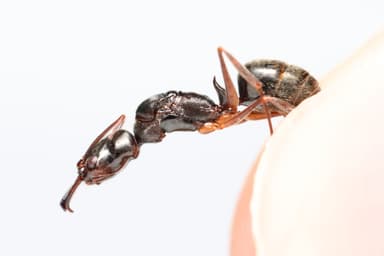
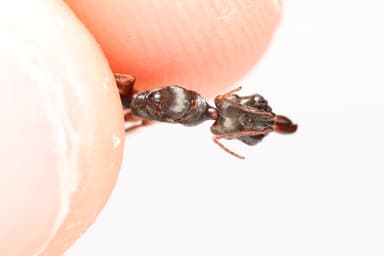
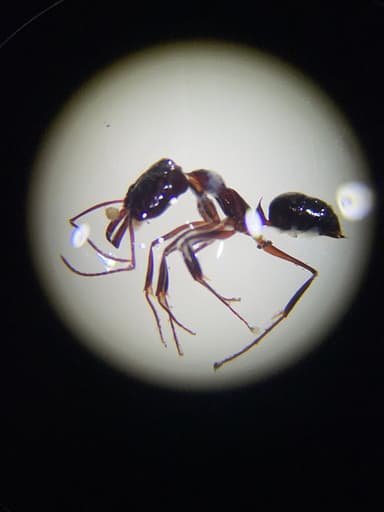
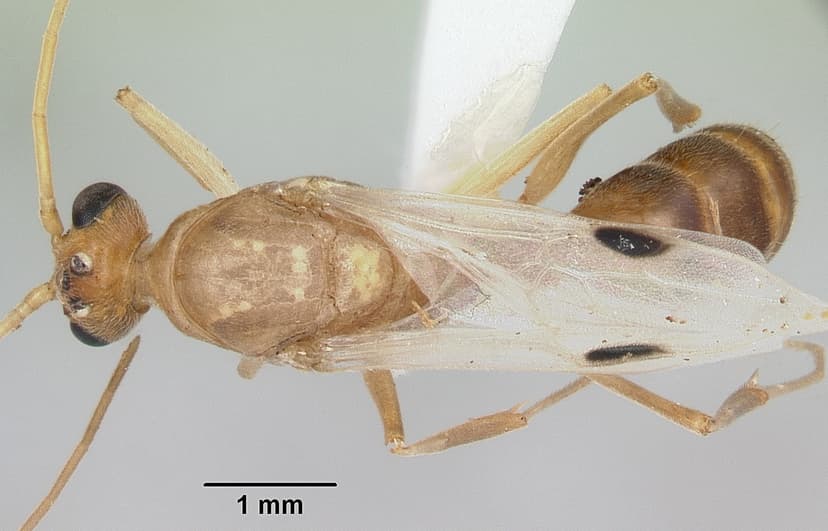
Few ants command attention quite like the trap-jaw ant Odontomachus haematodus, a sleek and formidable predator whose mandibles snap shut at speeds exceeding 200 kilometers per hour — among the fastest animal movements ever recorded. Queens measure 12 to 14 millimeters, with workers only slightly smaller at 11 to 13 millimeters, all sharing a uniform, monomorphic body plan that lacks physical castes beyond minor workers. The slender, dark reddish-brown to black exoskeleton gives them an almost sculpted appearance, accentuated by elongated heads and large, forward-facing eyes that betray their visual hunting style. Colonies remain modest, rarely exceeding 200 individuals, and are founded semi-claustrally: freshly mated queens must emerge periodically from their nascent nests to hunt, making them especially vulnerable and demanding in the early stages. Native to the Neotropics — from southern Brazil to Mexico — this species has recently established itself in the southeastern United States as an introduced exotic (MacGown et al. 2014), adding an interesting biogeographical twist for North American keepers who may now encounter it both in the wild and in captivity. Unlike many temperate ants, Odontomachus haematodus does not undergo hibernation; its tropical heritage means it remains active year-round, requiring stable warmth. The combination of astonishing predatory mechanics, manageable colony size, and year-round activity makes it a deeply rewarding display species for those prepared to meet its specific needs.
With a care difficulty rated as intermediate, this ant is best suited for keepers who have already mastered the basics and are looking for a species that demands more attentive husbandry. The queen’s semi-claustral founding phase requires dedicated feeding, a source of challenge for novices, while the adult colony’s rapid movements, strong jaws, and capacity for a painful sting call for respect and careful handling. Escape prevention is paramount: these ants can jump and climb smooth surfaces, so a tightly fitting lid and a robust barrier such as PTFE (often sold as Fluon) are non-negotiable. Their extraordinary speed also means routine maintenance should be performed with deliberation, ideally using long forceps and with the setup positioned to contain any accidental escapes. The keepers who thrive with Odontomachus haematodus are those who enjoy observing a predator’s full behavioral repertoire — from stalking prey with quivering antennae to the lightning-quick trap-jaw strike — and who can commit to a stable, disturbance-minimized environment. If you have successfully maintained claustral or fully claustral species and are eager to explore a more interactive feeding experience, this ant offers a compelling next step.
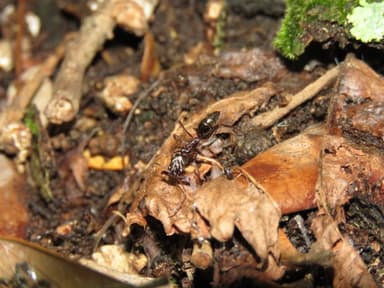
Creating the right physical environment is central to their well-being. Odontomachus haematodus thrives at temperatures between 22°C and 30°C, with an ideal band around 25–28°C, and requires consistently high humidity in the range of 60% to 85%. These conditions mimic the warm, moist forest floor habitats of its native range. A well-constructed formicarium that provides a humidity gradient is ideal: nests made of plaster, ytong, or a similar material that can be kept moist on one side while offering a drier area for foraging will allow the ants to self-regulate. In nature, they often nest in rotting wood or soil, so a deep, excavatable substrate — such as a mix of coconut fiber and sand — can also work beautifully, especially if you enjoy watching tunneling behavior. Regardless of nest type, the foraging area should include a constant water source, either a test tube with cotton or a small water tower, and be thoroughly escape-proofed. Because these ants are sensitive to vibrations, place their setup on a stable surface away from heavy foot traffic. Small colonies do well in modest enclosures; as worker numbers approach 100–200, a larger nest and outworld become necessary to prevent stress and aggression.
A diet centered on live protein is essential to trigger natural hunting behavior and support brood development. Crickets, cockroaches (Dubia, red runners), mealworms, and freshly killed fruit flies all serve as excellent staples. While Odontomachus haematodus is primarily insectivorous, workers will sometimes accept carbohydrates in the form of diluted honey or sugar water; offering a tiny droplet once a week provides a supplementary energy source without risking mold in a high-humidity setup. Feed protein items two to three times per week for an average-sized colony, offering only as much as the ants can consume within a day, and always remove uneaten remains promptly to prevent harmful microbial growth. The queen and tiny larvae depend on a steady supply of insect prey during founding, so even a solitary queen needs a small, soft-bodied insect (like a pinhead cricket or Drosophila) placed near her nest entrance every two to three days. Keep in mind that trap-jaw ants are often shy feeders at first, so dropping prey into the foraging area and retreating minimizes disturbance and increases hunting success.
Hibernation is not required for this tropical species. Unlike temperate ants that need a cool winter diapause, Odontomachus haematodus maintains activity throughout the year as long as warmth and humidity are sustained. Keepers in cooler climates should use a heat mat or cable attached to a thermostat to ensure the enclosure never drops below 22°C, even during the coldest months. A slight seasonal fluctuation — such as a few degrees cooler in winter — is acceptable and may occur naturally in a typical home, but there is no need to deliberately induce dormancy. This trait simplifies year-round care and allows continuous observation, making it a particularly attractive pick for those who dislike the dormant periods imposed by many native ants.
The initial days after acquiring a founding queen or small colony are critical and require a delicate touch. If you receive a newly mated queen in a test tube setup, prepare a small founding chamber before her arrival: a plaster insert in a deli cup or a pre-formed mini-nest with a small outworld works well. Add a thin layer of fine sand or coconut fiber for grip, and moisten one section to achieve the humidity target. Gently introduce the queen and immediately provide a few tiny, freshly killed or live fruit flies or a pinhead cricket; because she is semi-claustral, she must feed to produce her first brood. Keep the setup in a warm, dimly lit, vibration-free area and resist the urge to check on her more than once every few days. It may take a week or more for eggs to appear, and the first workers (nanitics) will emerge about six to eight weeks later — a true test of patience. Once workers are present, gradually increase food offerings and ensure they find the external water source. Watch for signs of stress such as excessive escape attempts, lethargy, or refusal to eat; these often point to humidity or temperature imbalances. With quiet, consistent care, your colony will slowly but steadily grow, offering a front-row seat to one of nature’s most spectacular adaptations. The pioneering taxonomic work of Brown (1976) defined much of what we know about this genus, while more recent records (MacGown et al. 2014) have expanded its known range — your captive colony becomes part of that ongoing story of a dynamic, remarkable ant.