Formica
Formica neogagates
Nuptial Flight Calendar
Flight months: Jun, Jul, Aug
Care Guide
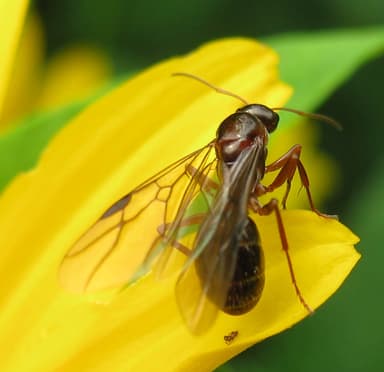
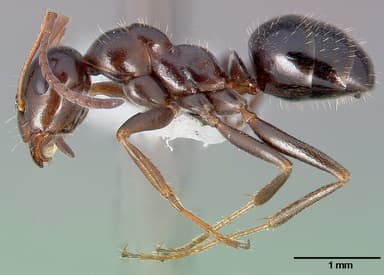
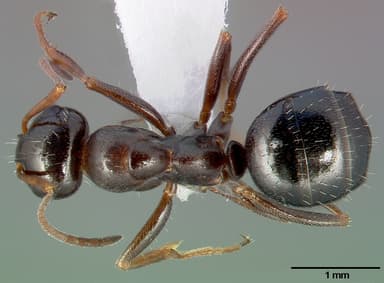
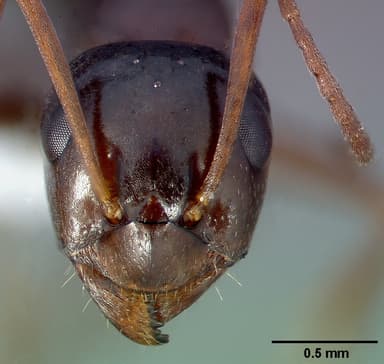
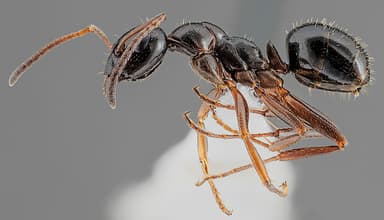
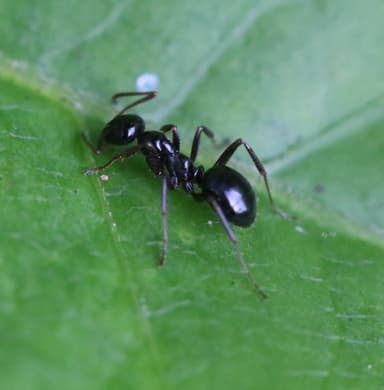
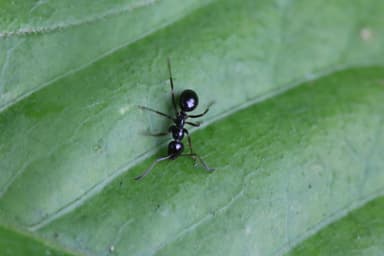
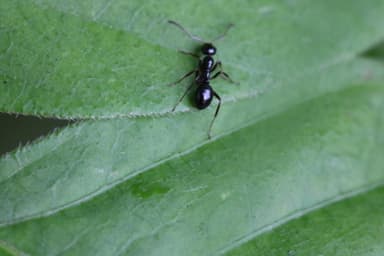
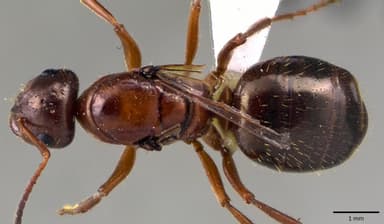
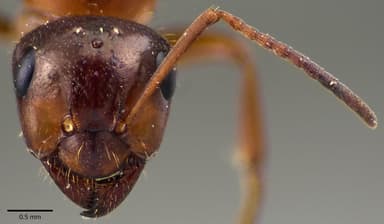
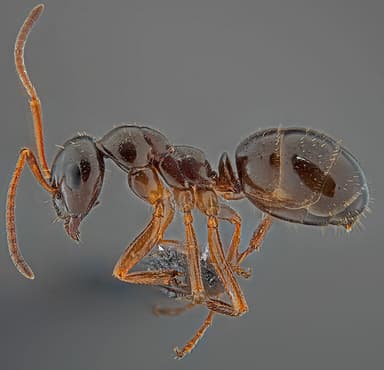
Formica neogagates is a delightfully robust member of the fusca-group, a suite of sleek, darkly colored ants that serve as the ecological backbone of many temperate North American habitats. Queens measure a modest 7 to 8.5 mm, while the workers, all monomorphic minors, range from 3.5 to 5.5 mm and wear a deep brownish-black cuticle that often gleams with a faint silky reflection. A mature colony can reach around 2000 individuals, though in captivity it typically hovers between a few hundred and a thousand. What makes this species so engaging to the hobbyist is its whole-souled foraging behavior: workers fan out in determined exploratory lines, adeptly scouting for both protein and sweets, and they display the classic Formica alertness without the hair-trigger aggression of some of their wood-ant cousins. Their extensive natural range, stretching from the mountains of New Mexico northward into the Canadian prairies and east to the Atlantic coast (GBIF occurrence data), speaks to a remarkable adaptability that, when properly understood, translates into a deeply rewarding captive experience.
I rate the care difficulty for Formica neogagates as intermediate, and I recommend it for keepers who have successfully overwintered at least one temperate species and are comfortable monitoring temperature and humidity gradients. It is not an ideal beginner ant because it demands a committed, temperature-controlled hibernation and can be somewhat sensitive to chronic dampness, yet it is far more forgiving than many of the high-altitude or desert specialists. If you have nurtured a Lasius colony through a full annual cycle, you are well prepared for the rhythm this Formica requires. Their moderate colony size also means they will not rapidly outgrow a well-planned formicarium, making them a manageable long-term resident for the hobbyist with a dedicated ant room or a cool cellar.
Housing should mimic the well-drained, sun-warmed soil in which they often nest in the wild. A ytong or plaster nest block with a shallow, excavated chamber system works beautifully, while a sand-clay mix in a semi-natural terrarium setup can also be very successful. Maintain a temperature gradient from about 20°C in a retreat area to 28°C under a localized heat source; a gentle nighttime drop of a few degrees seems to encourage healthy brood cycles. Humidity is best kept between 40 and 60 percent, with good ventilation to prevent stagnation. Creighton (1950) noted that many fusca-group species are typical of open woodlands and grasslands, and Mackay & Mackay (2002) have recorded this species in the relatively dry, grassy habitats of New Mexico, so the colony tolerates brief drier periods far better than it does persistent saturation. Provide a thin layer of sandy loam substrate in the foraging arena, along with pieces of bark or flat stones under which the ants will establish way-stations and garbage dumps.
As classic generalists, Formica neogagates thrive on a diverse menu. Their protein appetite is satisfied by soft-bodied insects—freshly killed or pre-frozen fruit flies, small crickets, and torn mealworms are all accepted with enthusiasm. Colonies also scavenge on dead arthropods with great efficiency, so you can offer bits of cooked egg yolk or other protein patties in a pinch. Carbohydrates are the colony’s engine, and you’ll see a steady stream of workers lapping up honey, maple syrup, or a simple sugar-water solution offered on a small waxed paper tab. Like many Formica, they eagerly harvest sugary secretions from aphids in the wild, so providing a tiny droplet of extrafloral nectar substitute keeps them vibrant. A fresh water source, such as a test tube with a cotton plug or a water-filled sponge, must always be available; workers drink frequently and will also use the moisture to regulate nest humidity.
An unbroken, cool hibernation is non-negotiable for this species. In nature, they endure winters that hold near freezing for months, and in captivity a stable 5°C for three to four months is ideal. I recommend beginning the cooling-down process in late autumn by gradually dropping the temperature by a couple of degrees per week until the colony rests deep within its nest, the queen surrounded by a tight cluster of motionless workers. A dedicated refrigerator or a reliably cold cellar with a thermometer that never dips below 2°C works well. Ensure the nest entrance is lightly ventilated and that a tiny hydration reservoir remains to prevent desiccation. Never attempt to hibernate them at room temperature; the lack of a proper diapause will lead to dwindling worker populations, reproductive failure, and an eventual colony crash (AntWiki, summarizing decades of field observation).
The first days after acquiring a founding queen or small colony are a quiet, critical window. If you receive a freshly mated queen in a test tube setup, resist all temptation to check on her for at least 48 hours; place the tube in a dark, vibration-free spot at around 25°C and let her settle. A tiny dab of sugar water placed just inside the tube entrance after two days will restore her reserves if she shows interest, but do not offer protein until the first workers, or nanitics, have eclosed and hardened. Once a small worker force is active, you can connect the test tube to a miniature outworld and begin introducing tiny protein portions and a constant carbohydrate source. Watch for the ants carrying the nanitics’ head-down behavior into the foraging arena—this is a sign of confident colony odor. Stress during these early weeks often manifests as refusal to feed, persistent clinging in a tight ball, or queens that tear apart their first brood. If you see any of these, darken the nest, raise the temperature slightly to 26–27°C, and walk away for another three days. With patience and a steady hand, your Formica neogagates will establish itself as one of the most charmingly industrious microcosms in your collection.