Dorylus
Dorylus nigricans
Nuptial Flight Calendar
Flight months: Jan, Oct, Nov, Dec
Care Guide
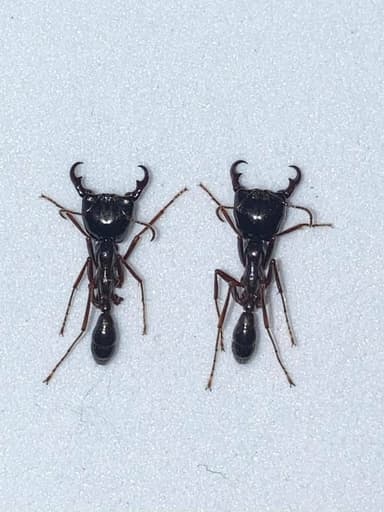
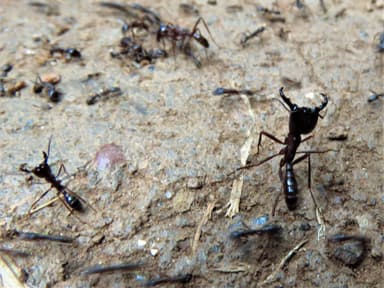
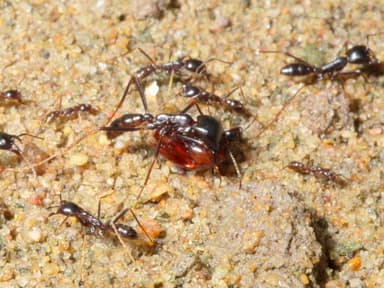
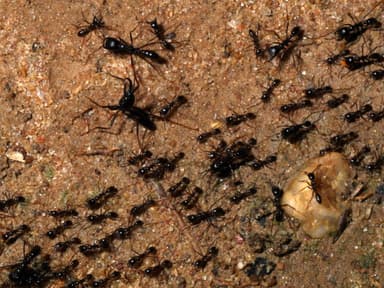
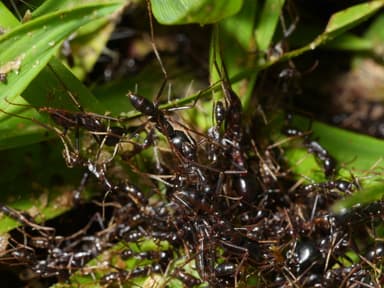
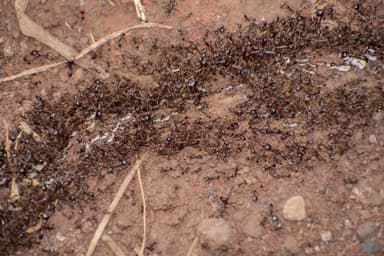
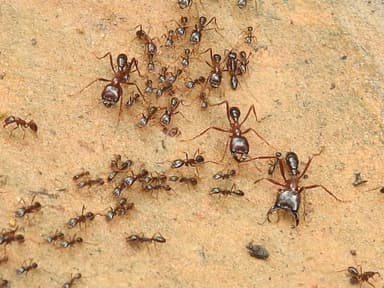
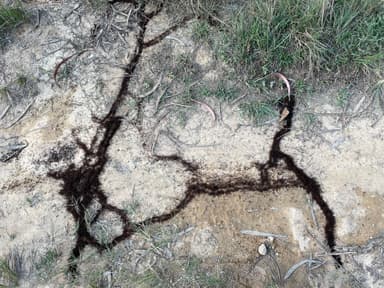
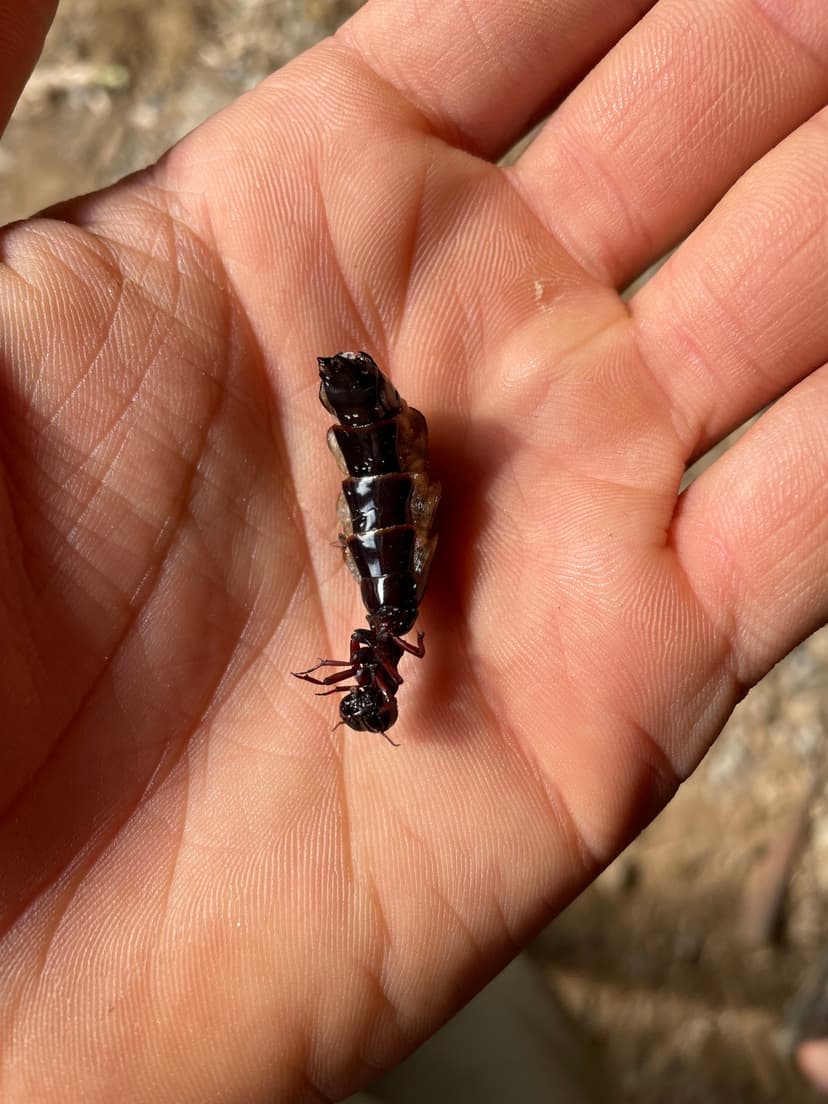
The African driver ant, Dorylus nigricans, is a creature of superlatives that has fascinated naturalists for centuries. This legionary army ant, widespread across sub-Saharan Africa from Senegal to Tanzania and south to Angola, forms the largest known colonies of any ant, with a single mother colony eventually budding to produce sister colonies that together can number an astonishing 22 million individuals (Gotwald 1995). The queen is a physical giant among ants, her engorged abdomen stretching the body to between 40 and 63 mm, while the worker caste is among the most polymorphic in the ant world, spanning a full order of magnitude from delicate 3 mm minors through media and major workers to the iconic, heavily sclerotized soldiers measuring up to 13 mm (Schöning et al. 2005). Unlike most ants that establish new colonies through solitary queen nuptial flights, D. nigricans reproduces by budding: a newly mated queen, having copulated during the night-time rainy season flights of the bizarre, sausage-shaped males that are often attracted to artificial lights between October and January, leaves the natal bivouac accompanied by a large retinue of workers to found a daughter colony. The colony itself is a nomadic force, moving frequently and constructing temporary, living bivouacs out of the interlocked bodies of the workers, protecting the single queen and vast brood stocks. These ants are obligate wanderers, foraying in massive swarm raids that consume any animal matter in their path, making them a keystone predator of the African tropics and, simultaneously, entirely unsuitable for conventional captive care.
Due to their staggering scale, continuous brood cycle, and ceaseless migratory drive, Dorylus nigricans is unequivocally an expert-level species — and in reality, cannot be recommended for any private ant keeper. The care difficulty rating of “expert” here denotes that even highly experienced hobbyists face insurmountable challenges that stretch beyond the limits of almost any domestic setup. These ants cannot be maintained in a typical formicarium; they require a dedicated, walk-in climate-controlled room with floor space of several square meters, deep substrate, and escape-proof barriers, as the workers are highly adept at chewing through silicone, plastics, and thin metals. Even among professional institutions, long-term captive propagation has not been achieved because the colony’s relentless need to move its bivouac in response to brood development and food exhaustion, combined with the sheer biomass of a thriving colony, makes static housing ethically and practically impossible. This guide, therefore, serves more as a window into the extraordinary biology of D. nigricans and a cautionary note, rather than a how-to manual.
The theoretical housing conditions must mimic the warm, humid lowland forests and savannah margins this species inhabits. A stable temperature gradient of 22–30°C is vital, with the bivouac core maintained near the upper end during brood production. Humidity should never drop below 70% and is best kept at 80–90% to prevent desiccation of the unprotected larvae and pupae, which lack cocoons. They do not dig permanent nests, but a deep layer of moist, finely textured soil mixed with rotting wood and leaf litter allows them to construct temporary subterranean chambers as they move. In practice, any enclosure would need to be enormous and furnished with structural features like buried logs and rock piles through which the colony can channel its endless marches, and it must be sealed with a tight-fitting, escape-proof barrier incorporating a moat or non-drying sticky trap, as drivers will relentlessly test boundaries. Because they do not hibernate and have no dormant phase, conditions must remain constant year-round. The notion of a “nest” in the usual ant-keeping sense simply does not apply; you are providing a three-dimensional migratory landscape, not a fixed home.
Feeding a Dorylus nigricans colony is an exercise in industrial-scale logistics. These ants are obligate mass raiders that require an almost continuous supply of live, protein-rich prey. In the wild, their swarms overwhelm insects, spiders, earthworms, and even small vertebrates; in captivity, one would need to provide tens of thousands of crickets, roaches, locusts, and earthworms daily, supplemented occasionally with pre-killed pinky mice or chopped day-old chicks to meet the calcium and fat demands of the enormous brood (Gotwald 1995). They have no need for carbohydrate-rich honeys or sugar water — workers rely entirely on the proteinaceous trophallactic fluids exchanged within the colony and the haemolymph of their prey. Water must be available in the form of constantly damp substrate, misting systems, and shallow drinking stations that are regularly refreshed; open water sources will quickly become choked with foraging workers, so automated drip systems or moisture-retaining agar blocks are more practical. The sheer organic waste generated by a colony of even a few hundred thousand workers — a fraction of the maximum size — presents a sanitation nightmare, requiring a bioactive clean-up crew on a grand scale or daily physical removal.
Hibernation is completely absent from this equatorial species; colonies remain active throughout the year, their nomadic rhythm governed solely by the 30–40 day brood developmental cycle, alternating between a stationary phase when larvae are young and a highly mobile phase when the voracious final-instar larvae demand constant food (Kronauer 2009). There is no need to simulate a winter cooling period, and any attempt to do so would be fatal. If you were to legally obtain a queen and a starter worker retinue — a scenario virtually unheard of in the pet trade — the first days would be critical. Immediately introduce them into the prepared enormous arena, already saturated to the correct humidity and temperature. Offer a large tray of live, moving prey (crickets or small roaches) within an hour of introduction; the workers will quickly organize a raid. Observe that the queen is attended and begins laying eggs within a few days; if the workers fail to settle into a compact bivouac and wander aimlessly, the stress is too high and the attempt will likely fail. Given that D. nigricans is not available through any responsible vendor, and its keeping poses profound ethical and practical challenges even for zoos, the most rewarding way to engage with this magnificent insect is through field observation, where one can truly appreciate the sublime spectacle of a driver ant migration.