Tapinoma
Tapinoma sessile
Nuptial Flight Calendar
Flight months: May, Jun, Jul, Aug
Care Guide
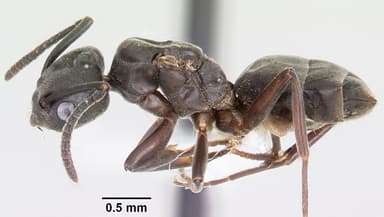
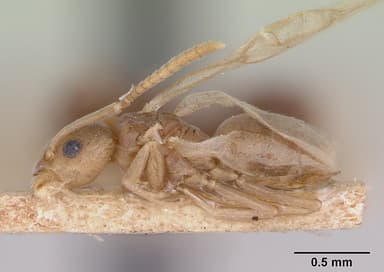
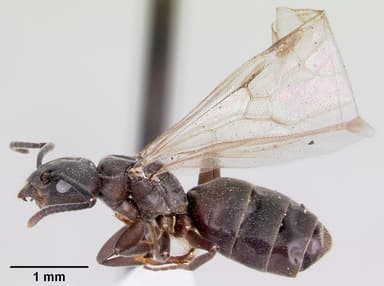
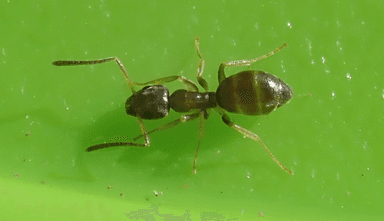
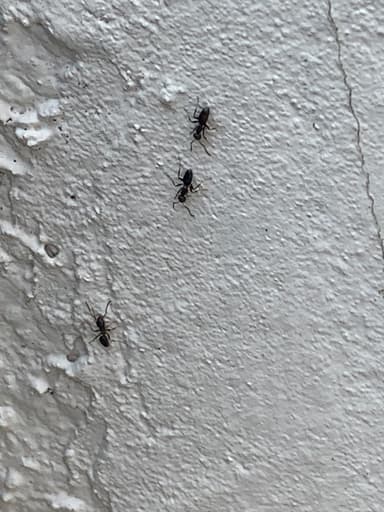
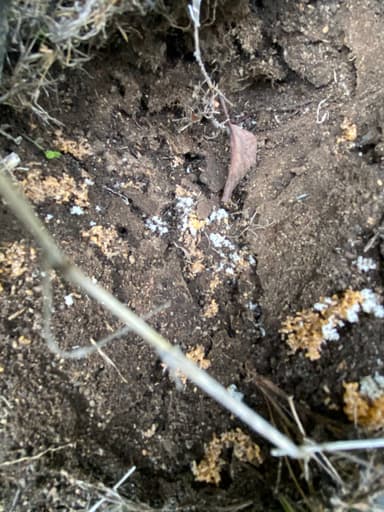
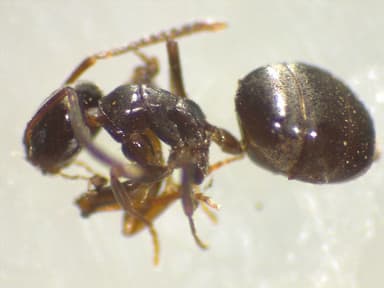
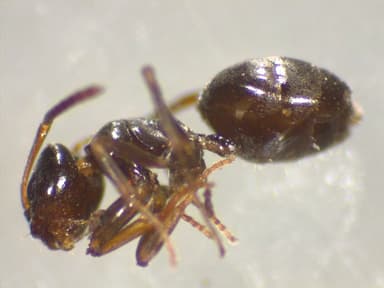
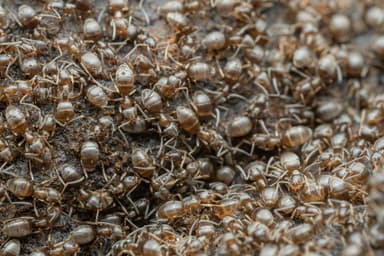
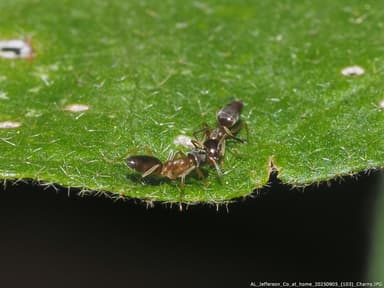
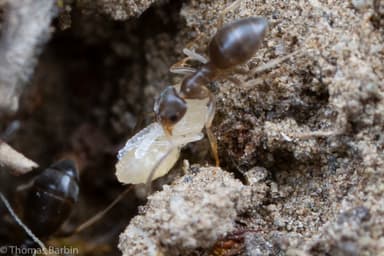
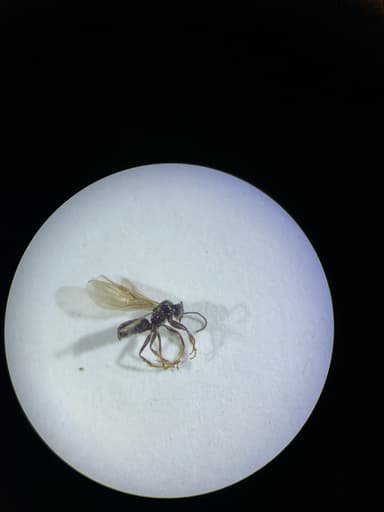
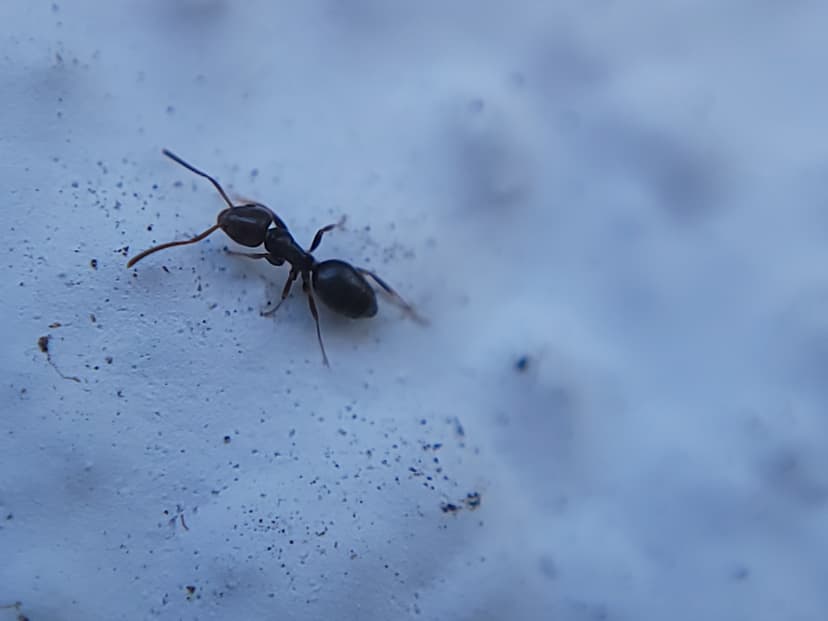
Tapinoma sessile, the odorous house ant, is a widely distributed native of North America, ranging from the humid Gulf Coast to the cool forests of southern Canada, as reflected by its occurrence spanning latitudes 18° to 60° N and longitudes 130° to 52° W. Workers are small and uniformly monomorphic, measuring between 2.4 and 3.3 mm, while queens are noticeably larger at 3.5 to 5 mm. This species gets its common name from the pungent, coconut-like scent released when workers are crushed, a defensive secretion that serves as an excellent field identification tool (Smith 1928). Colony structure is remarkably fluid: in nature, T. sessile frequently exhibits seasonal polydomy, moving between multiple nest sites, and populations can become unicolonial, with interconnected nests containing up to 10,000 workers (Buczkowski & Bennett 2008). New colonies are founded claustrally by a single queen, and nuptial flights occur across its range from May through August on warm, humid afternoons following rain, with temperatures above 20°C adding to the atmospheric trigger.
As a beginner-level species, Tapinoma sessile is forgiving and endlessly fascinating, making it a superb choice for hobbyists just starting their anting journey. The ants are hardy and adaptable, tolerating minor husbandry mistakes that would seriously stress more delicate species. However, keepers must be mindful of their small size and inclination to explore; any gap in a setup’s security will be exploited, and because colonies readily bud when conditions are good, escaped workers can quickly establish satellite nests. Despite this, their care requirements are straightforward, and the colony’s moderate maximum size means they can be comfortably housed in standard formicariums for years without requiring constant upgrades. Their lack of polymorphic workers simplifies observation, as every individual is built for the same tasks, yet the colony’s social dynamics—such as frequent nest relocations—offer a rewarding window into ant behavior (Fisher & Cover 2007).
Housing these ants successfully starts with choosing an enclosure that can retain such diminutive escape artists. A securely lidded plaster or gypsum nest is ideal, though a classic test tube setup with a small outworld works excellently for young colonies. Crucial to their wellbeing is maintaining a temperature range of 21 to 27°C, with most keepers finding the upper end of that range encourages faster brood development. Moisture is equally important, and the nest chamber should sustain a relative humidity between 50 and 70 percent, achieved through regular, light misting of a corner of the nest or by using a water tower. Substrate is not strictly necessary, but adding a layer of sand or fine soil to the outworld can help regulate microclimate and gives workers a place to deposit refuse. The outworld must be coated with a reliable fluon or PTFE barrier, applied thickly and refreshed often, as T. sessile workers are persistent climbers. While they do not require elaborate heating, a gentle heat mat attached to one side of the nest creates a welcome thermal gradient, allowing the colony to self-regulate.
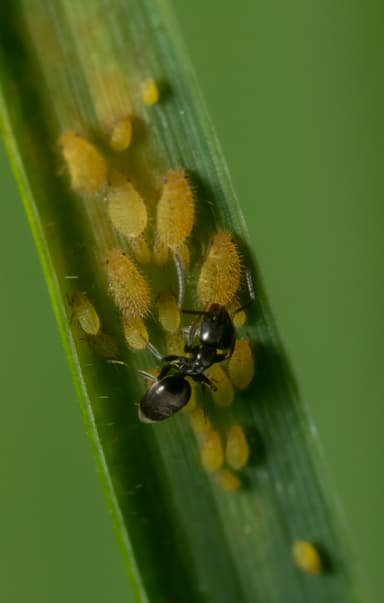
Diet for Tapinoma sessile mirrors their opportunistic habits in the wild, where they avidly seek both protein and sugary resources. Provide protein in the form of pre-killed fruit flies, small mealworms, or chopped crickets two to three times per week; larger colonies will consume more, and uneaten prey should be removed after a day to prevent mould. Carbohydrate offerings should lean into their known sweet tooth—a drop of diluted honey, sugar water, or ripe fruit placed on a small dish will be mobbed almost immediately. This species is also fond of sunburst and similar artificial nectar substitutes. Fresh water is essential, and can be supplied via a water-filled test tube stoppered with cotton in the outworld, which has the added benefit of serving as a secondary nesting site. Always keep both food and water shallow enough that workers cannot drown, and offer a varied diet to ensure complete nutrition, as a colony subsisting solely on sugars will fail to produce new larvae.
Hibernation is not optional for Tapinoma sessile; a cold rest is required to maintain the colony’s long-term health and reproductive cycle. In their native habitats, workers survive freezing winters by retreating deep into soil or rotting wood, and captive colonies must be given a similar dormancy period at approximately 8°C. Begin gradually reducing temperatures in late autumn, dropping by a few degrees each week until the target is reached over the course of a month. The colony can be kept in a wine cooler, refrigerator, or cool basement, provided the temperature remains steady and the nest does not freeze. Keep the nest substrate slightly moist, and a water source available, as ants will occasionally wake to drink. A diapause lasting three to four months mimics northern populations and satisfies their physiological need; after this, slowly rewarm the colony to active temperatures to trigger new egg-laying.
Upon receiving your new Tapinoma sessile colony, patience is paramount. Place the test tube or nest in a darkened, quiet area at around 24°C and resist the urge to check on them for the first twenty-four to forty-eight hours, allowing the queen and workers to recover from transport stress. During this window, ensure the setup is hydrated and that the outworld barrier is fresh. The first feeding can be offered on day two or three: a tiny droplet of sugar water and a pinhead cricket or fruit fly fragment placed near the nest entrance. Watch for the queen’s activity—if she is grooming and slowly moving about, that’s a positive sign, but do not panic if she remains motionless for hours, as this is normal. Be vigilant for signs of excessive restlessness, workers obsessively patrolling the barrier, or the queen constantly trying to hide; these often indicate overheating or the nest being too bright. Once the colony settles and begins to forage confidently, you can gradually introduce them to a regular care routine, and before long you will be rewarded with a thriving, sweet-scented microcosm.