Pheidole
Pheidole vistana
Nuptial Flight Calendar
Flight months: Jun, Jul, Aug, Sep
Care Guide
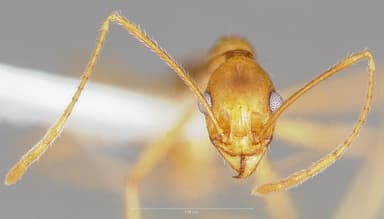
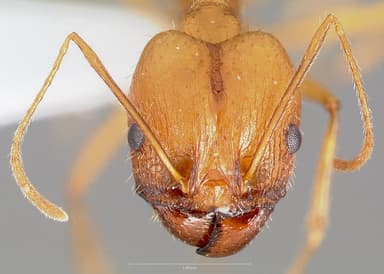
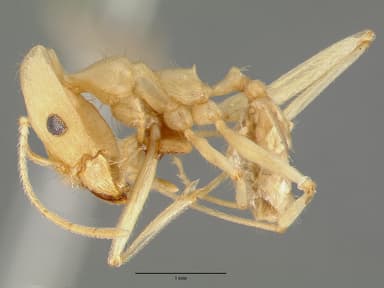
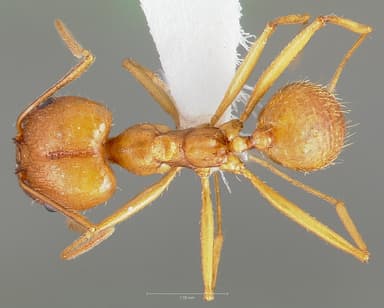
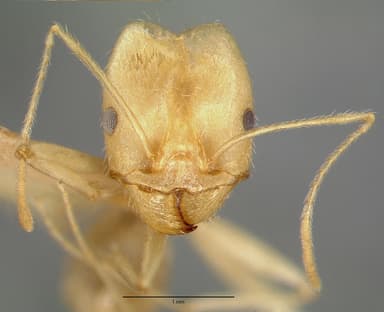
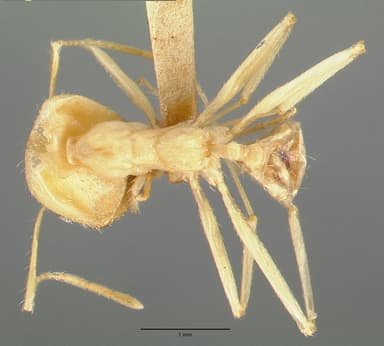
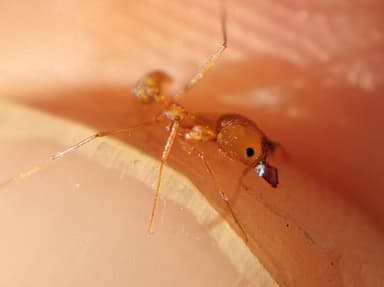
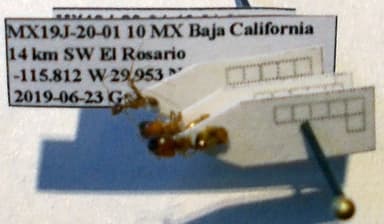
One of the most engaging ants from the arid Southwest, Pheidole vistana delivers the classic dimorphic Pheidole experience in a compact, beginner-friendly package. The queen is a modest 5 to 6.5 millimeters, while the workers range from just 2 millimeters in the gracile minors to a stout 3.5 millimeters in the majors. Their ground color is a warm amber to reddish brown, with the bulbous-headed majors sporting mandibles large enough to be unmistakable. A mature colony can easily reach 10,000 individuals, and the rapid brood development keeps the colony in a constant state of industrious motion. In the wild, this species is found across California and Arizona, from the coastal hills to the interior deserts, typically at lower elevations within a swath bounded roughly by latitudes 23°N to 37.5°N and longitudes 120°W to 109°W (Creighton 1950; AntWeb). What truly captivates keepers is the stark division of labor: slender minors forage and tend brood with frenetic energy, while the broad-headed majors act as living seed mills, heavy lifters, and formidable defenders that completely reshape colony dynamics (Wilson 2003).
As a care difficulty rated for beginners, Pheidole vistana ranks among the most forgiving ants to raise. The founding phase is claustral, so a single newly mated queen needs nothing more than a standard test tube setup with a water reservoir to reliably raise her first nanitic workers. The colony grows fast but remains manageable for years, provided you plan for their numbers. The chief concern is not delicate biology but their small size and relentless hauling instinct — minors can squeeze through gaps you’d never imagine, and a poorly sealed lid will be exploited within hours. Anyone who enjoys watching minor/major interactions and a genuinely large society without the extreme humidity demands of tropical species will find this ant a perfect entry into polymorphic genera.
Housing a thriving colony hinges on balancing the species’ arid heritage with its need for a moisture gradient. Daytime temperatures of 22 to 30°C are ideal, easily maintained with a gentle heat cable or pad applied to one corner of the outworld. Humidity inside the nest should range from 40 to 60 percent, which in practice means providing a well-hydrated plaster or grout nest alongside dry chambers so the ants can self-regulate. An excavated clay or sand-loam setup simulates their natural ground nests beautifully, but many keepers succeed with acrylic or ytong formicaria that include a dedicated hydration basin. The outworld must be thoroughly escapable-proof — a fluon or talcum barrier, fine-mesh ventilation, and tight-fitting feeding ports are non-negotiable. A sandy substrate with scattered pebbles and small pieces of bark encourages natural foraging behaviors and gives quarantined colonies a sense of security.
Nutrition for this species is a straightforward mix of protein and sugars, with a secret talent for granivory. In the wild, P. vistana majors mill seeds into a fine paste that nurses share colony-wide, so offering a pinch of finely crushed seeds (poppy, chia, or grass seeds) once a week is a rewarding spectacle and an excellent dietary supplement. Primary protein can come from fruit flies, freshly killed small crickets, or chopped mealworm segments; avoid overly large prey until the colony’s population can quickly subdue it. Carbohydrates are essential and most conveniently delivered as a drop of sugar water, honey diluted with water, or an artificial ant nectar. Always have a clean water source, ideally a cotton-plugged test tube or a specialized feeder, and remove uneaten food within two days to prevent mold. With robust colonies, feeding every two to three days keeps brood production soaring.
Hibernation is a mandatory annual cycle that mirrors the species’ Mediterranean-like winter. In captivity, colonies must be kept at a steady 15°C for roughly three to four months. Begin by slowly reducing temperatures in late autumn, and as the ants grow sluggish, scale back food offerings. A wine cooler or a cool basement set to the correct temperature works well; just ensure the nest retains a small amount of moisture so they do not desiccate. In nature, nuptial flights climax on warm, humid evenings after the summer monsoon rains from July through September (Creighton 1950; AntWiki). Your captive colony won’t produce alates without a deep hibernation, and a cool rest period seems to refresh the queen and workers alike, leading to explosive growth the following spring when you gradually warm them back to 22°C.
When you first unpack your queen or small colony, patience is everything. Place the test tube or small starter nest in a dark, vibration-free spot at 24–26°C and let them settle for at least 24 hours without any disturbance. For a founding queen, she will not need food until her first workers eclose; simply check that she has a full water reservoir and resist the urge to peek more than once a week. For a colony with a dozen or more workers, offer a tiny droplet of sugar water on a slip of foil immediately, then wait another day before introducing a freshly killed fruit fly. Watch for workers that immediately begin dragging brood to the hydration plug and excising trash — these are signs of a healthy transition. Small colonies are often shy, so a red film over the nest glass allows you to observe without triggering alarm, and within a few weeks you should see the first majors emerge, signaling the colony is ready to expand into a larger, well-sealed formicarium.