Pheidole
Pheidole obscurithorax
Nuptial Flight Calendar
Flight months: Jan, Feb, May, Jun, Jul, Aug, Sep, Nov, Dec
Care Guide
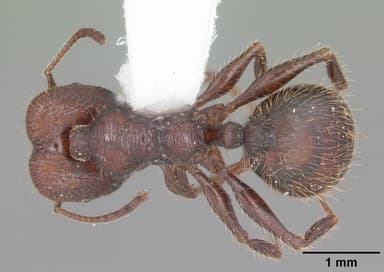
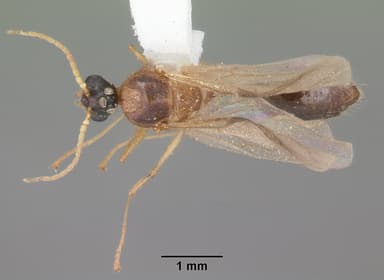
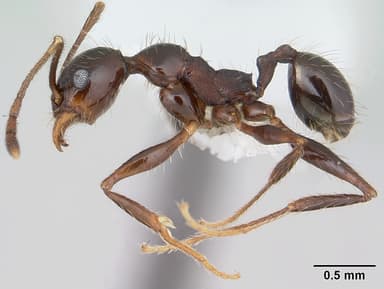
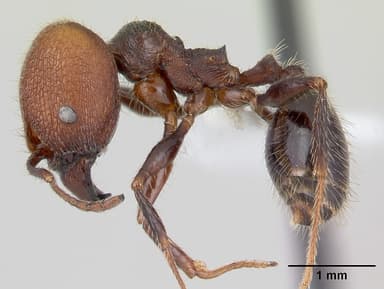
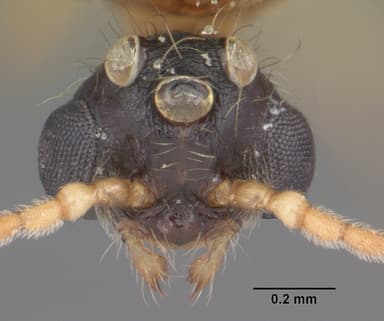
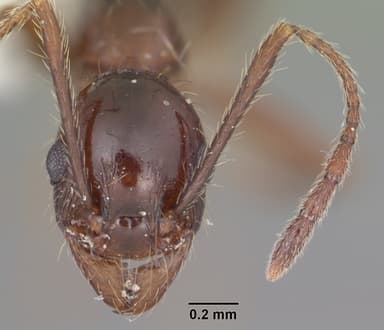
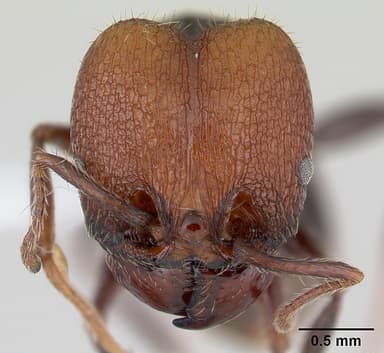
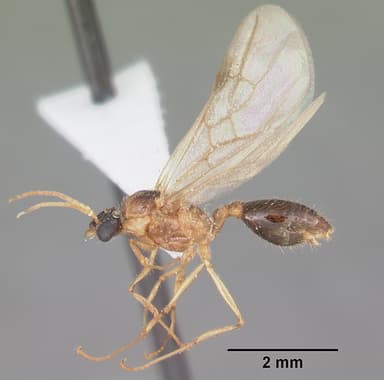
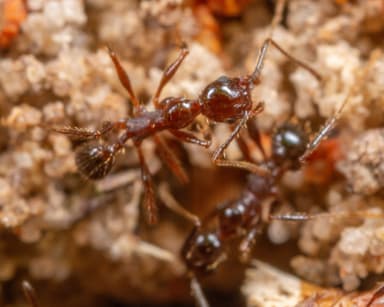
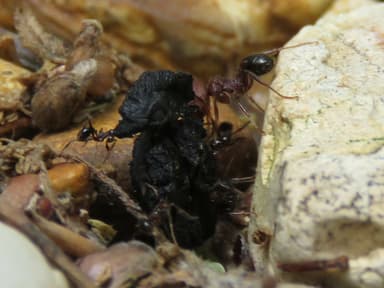
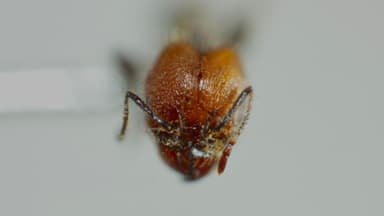
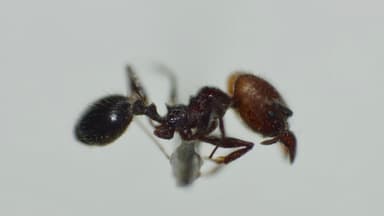
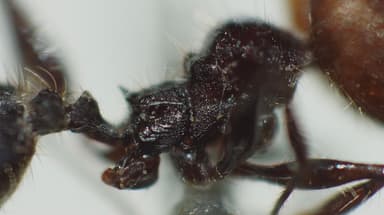
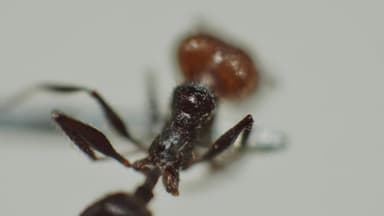
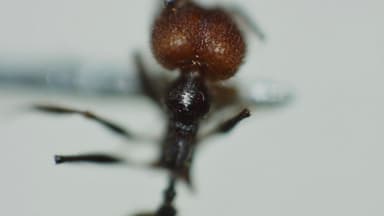
Pheidole obscurithorax is a remarkable, fast-growing ant that has captivated keepers with its striking worker dimorphism and robust colony dynamics. Queens measure a substantial 7.5 to 9 mm, while the worker caste is split into two visually distinct forms: minor workers, which range from 2.5 to about 4 mm, and soldiers, or major workers, which can reach 5.5 mm and sport massively enlarged, heart-shaped heads packed with muscle for cracking seeds and dismembering prey. Native to the Paraná River basin of northern Argentina and Paraguay, this species has become well-established in the southeastern United States, particularly along the Gulf Coast, where warm, humid summers mirror its ancestral climate (Storz & Tschinkel 2004). Colonies are claustral, meaning a single queen initiates her nest in seclusion using internal fat reserves, and over several years a mature colony can swell to an astonishing 50,000 individuals. The combination of dramatic head morphology, rapid brood production, and relentless foraging activity makes P. obscurithorax a living theatre of insect behaviour, and ecological studies in Florida have highlighted their competitive displacement of native ants, a testament to their vigour (King & Tschinkel 2007).
For anyone considering this species, the care difficulty is reassuringly rated as beginner. Pheidole obscurithorax is exceptionally forgiving of minor husbandry mistakes and thrives under a fairly broad range of conditions, making it an ideal introduction to polymorphic ants. However, that beginner-friendly label comes with a clear caveat: these ants are escape artists par excellence. The tiny minor workers can exploit even the narrowest gap in a lid or barrier, so a well-sealed formicarium and a meticulously applied PTFE or baby powder-and-alcohol barrier on all foraging arena walls are mandatory from day one. Because the colony can expand at a startling pace, the keeper must be prepared to upgrade their housing regularly; a small founding setup might need a full-sized nest within six months. The species suits hobbyists who delight in observing large-scale foraging columns and intricate caste interactions, and it is equally rewarding for those who enjoy the logistical challenge of managing an explosive population without hibernation breaks.
Housing should mimic the warm, humid retreats these ants favour in the wild. A temperature range of 22 to 30 °C is acceptable, with the most vigorous brood development occurring between 25 and 28 °C. I recommend a heating cable or pad placed against one side of the nest, creating a thermal gradient so the ants can self-regulate. Humidity should be maintained between 50 and 70 percent; in artificial nests made of plaster, ytong, or acrylic, this is easily achieved with a periodic misting of a hydration chamber or a water-filled sponge. While P. obscurithorax will readily occupy a plain, moist formicarium, a thin substrate of a sand-clay mix or fine vermiculite in the nesting area encourages natural behaviours such as larval cocooning and seed storage. A dedicated foraging arena is essential—not only to keep the nest clean but to provide the dry, warm space where minors and majors will hunt and scavenge. Ventilation must be balanced against desiccation; small mesh-covered ports that allow air exchange without dropping humidity steeply are ideal. Given the massive colony size potential, plan for modular, expandable nests from the outset.
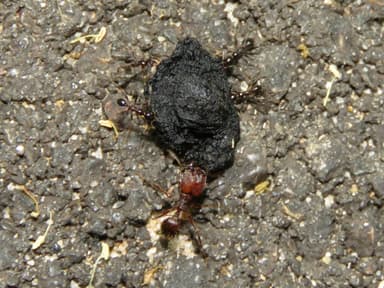
Diet is one of the great satisfactions of keeping this species. Pheidole obscurithorax are omnivorous scavengers with a particular talent for granivory. In the wild, minors gather seeds which majors then efficiently crack using their powerful mandibles, and this behaviour can be replicated by offering a mix of small seeds (like crushed nyjer, canary grass, or finely chopped nuts) alongside more traditional insect proteins. Fruit flies, freshly killed small crickets, and chopped mealworms are all taken with gusto; protein is especially critical during the exponential initial growth phase when the queen is raising her first batches of workers. For carbohydrates, provide a dilute honey-water solution, byFormica Sunburst, or a sliver of fresh fruit—always served on a liquid-proof tray or cotton ball to prevent drowning. A permanent fresh water source, either a test tube waterer or a small water feeder, ensures hydration. Remove uneaten protein after 24 hours to prevent mould, but dry seeds can be left for days as a cache, closely mimicking natural foraging rhythms.
One of the most convenient aspects of Pheidole obscurithorax is that it requires no hibernation. In its native and introduced ranges, winter temperatures stay mild enough for year-round activity, and the colony simply slows down if temperatures dip toward the lower end of the recommended range. Keepers should maintain a consistent temperature and photoperiod, feeding and hydrating as usual throughout the year. This continuous growth cycle does mean, however, that you cannot rely on a winter pause to control population size; the colony will march forward relentlessly, and you must be ready to manage that momentum responsibly.
When your queen and her first fragile workers arrive, resist the urge to immediately offer a feast. Place the test tube setup in a dark, quiet spot at 24–26 °C and leave them undisturbed for 24 to 48 hours. This settling period reduces stress, and the workers will hydrate themselves from the tube’s reservoir while the queen continues to lay eggs. For the first feeding, introduce a minuscule droplet of sugar water right at the tube entrance and a single pre-killed fruit fly or pinhead cricket, ideally split so the minors can carry pieces easily. Watch for the rapid recruitment that follows—within minutes, minors will swarm the offering while one or two majors may appear to guard the entrance. At this stage, be meticulous about barrier integrity; a single escaping minor can lead to a colony-wide break-out. Keep the foraging area simple, and avoid offering large amounts of food that could spoil. Within weeks, the colony will outgrow the tube, and you can attach a small founding nest, gradually expanding as the population explodes toward its full, bustling potential.