Pachycondyla
Pachycondyla harpax
Nuptial Flight Calendar
Flight months: Jan, Feb, Oct, Nov, Dec
Care Guide
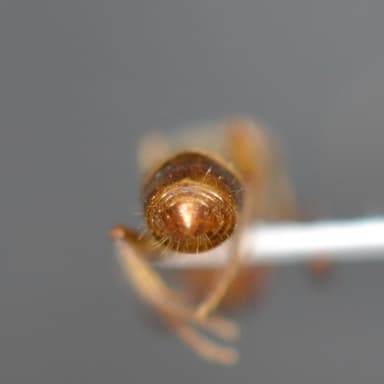
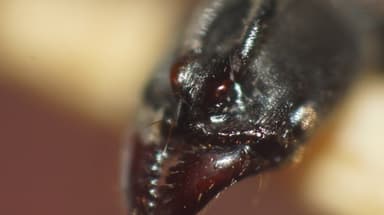
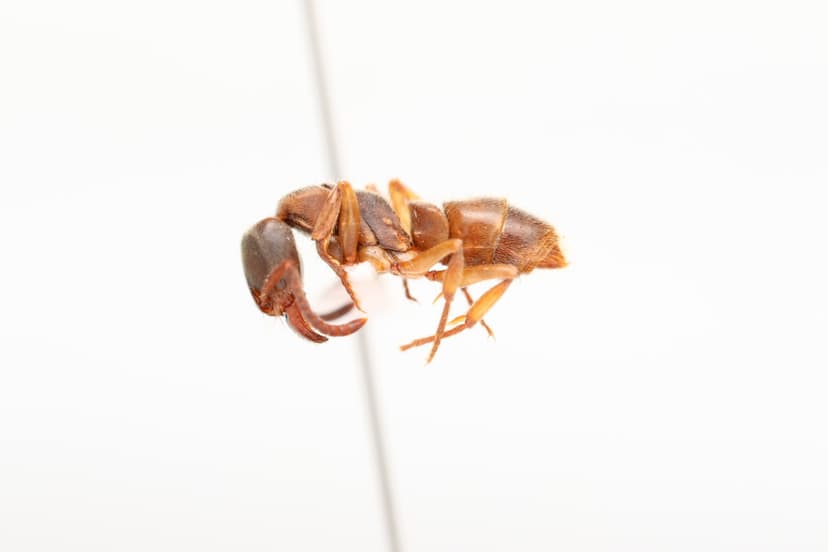
Pachycondyla harpax is a robust, strikingly large ponerine ant whose native range sweeps across the Neotropics from Mexico to Argentina (Wild 2005). Queens measure a substantial 11 to 13 millimeters, while their monomorphic workers range between 9 and 11 millimeters, all clad in a dark, sculptured exoskeleton that gleams faintly under light. Colonies are modest in size, rarely exceeding 200 individuals, which makes them a manageable yet captivating addition to a keeper’s collection. What truly sets this species apart is its predatory prowess: workers are solitary hunters that subdue live prey with a venomous sting, a behavior that echoes through the Pachycondyla lineage (Mackay & Mackay 2010). Their claustral founding means a single queen raises her first brood in seclusion without foraging, a process that offers intimate observational windows for the patient hobbyist.
With an intermediate care difficulty, Pachycondyla harpax is best suited to ant keepers who have already mastered basic humidity and temperature control. This is not a beginner’s species: they demand consistently warm, humid conditions and are highly sensitive to desiccation. Hobbyists comfortable with tropical setups—perhaps those who have kept Camponotus or Pseudomyrmex—will find the challenge rewarding. The ants’ potent sting, while not medically significant, serves as a reminder to handle them with respect during outworld maintenance. Their small colony size and lack of worker polymorphism (only a single worker caste exists) simplify long-term housing, but their predatory nature and need for live prey demand a dedicated feeding regimen.
Housing must replicate the warm, moist microhabitats these ants favor in the wild. A naturalistic formicarium with a deep layer of coconut fiber or a sand-clay mixture allows workers to excavate and establish brood chambers; alternatively, a plaster or ytong nest with an integrated hydration reservoir works beautifully. Temperatures should hover between 22 and 28°C, with a gentle gradient that permits the colony to self-regulate. Humidity is critical—maintain 65 to 85 percent relative moisture in the nest, using regular misting or a water-filled bottom layer. The foraging arena, or outworld, should be similarly humid but with good ventilation to prevent mold. Provide plenty of cork bark, leaf litter, and a water tube; these ants are adept climbers and potential escape artists, so a tight-fitting lid with a fine mesh or a barrier of fluon is non-negotiable. Lightly packing the nest entrance with a small plug of cotton will help the colony manage airflow and microclimate, especially in drier homes.
Diet reflects their lifestyle as obligate hunters. Offer a steady supply of live insect prey—crickets, dubia roaches, small locusts—preferably pre-killed or stunned to reduce stress on the young colony. Workers will also readily accept sugars, and a biweekly drop of diluted honey or sugar water on a small feeding platform provides a carbohydrate boost that fuels their activity. Clean water must be available at all times, either via a dedicated test tube or by saturating a portion of the substrate. For founding queens tucked into their claustral chambers, no feeding is necessary until the first workers eclose; after that, gradually introduce tiny fruit flies or pinhead crickets, observing that the queen and nanitics can subdue their meals. Remove any uneaten prey after 24 hours to prevent mold and mite outbreaks.
There is no hibernation period—Pachycondyla harpax hails from equable tropical and subtropical climates where seasonal temperature swings are minimal. Keep the nest at a steady 22–28°C year-round, and maintain high humidity regardless of the calendar. Attempting to cool them can be detrimental, so simply continue their normal care cycle. If you live in a temperate region, a heating cable or mat connected to a thermostat is essential during winter months to compensate for cooler ambient temperatures.
The first days after purchase are pivotal for acclimation. Upon arrival, place the carrier tube or container in a dark, quiet space and allow the ants to recover from transit stress for at least an hour before introducing them to their prepared setup. If you have acquired a founding queen, she should already be in a test tube arrangement with a water reservoir; add a tiny droplet of sugar water near her, then seal the tube with cotton and place it in a dark incubator, resisting the urge to check for at least a week. For an incipient colony with workers, gently connect the test tube to the hydration port of the formicarium and allow the ants to discover their new nest in their own time—this may take several days. Offer a minuscule protein source, such as a freshly killed fruit fly, on the second day, and watch that workers locate and accept it. The queen may initially appear nervous, but with minimal disturbance and stable conditions, she will settle. Keep lighting dim and vibrations low during this delicate settlement phase; once you see workers foraging confidently, you can begin a regular feeding schedule. Vigilance for signs of stress, such as a tightly huddled cluster that refuses to move, will tell you if the humidity or temperature needs fine-tuning.