Messor
Messor structor
Nuptial Flight Calendar
Flight months: Mar, Apr, May, Jun, Jul, Aug, Sep
Care Guide
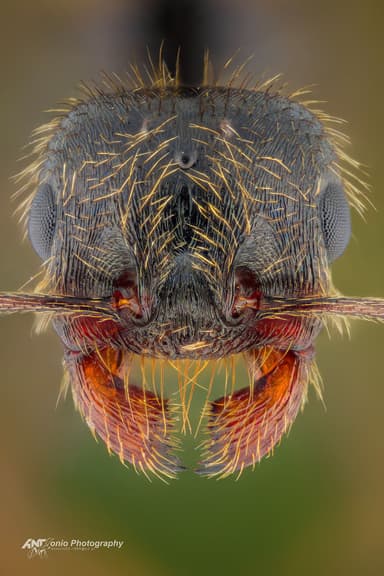
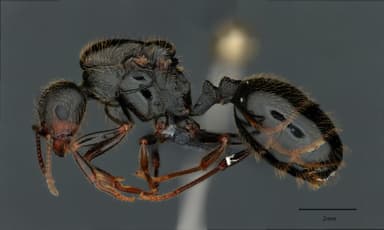
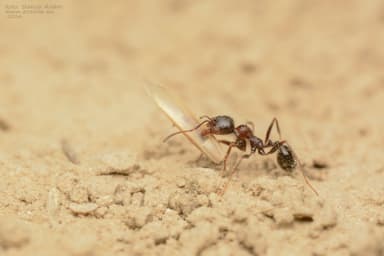
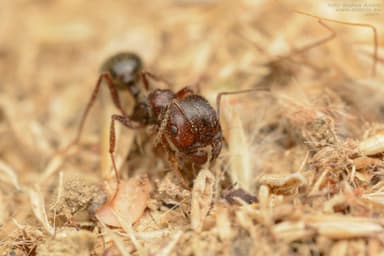
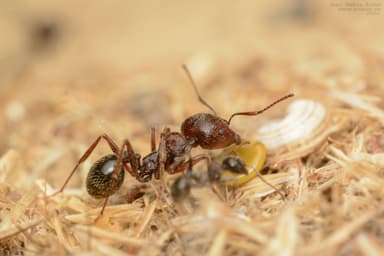
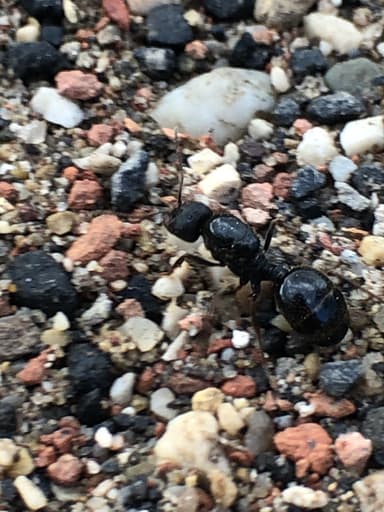
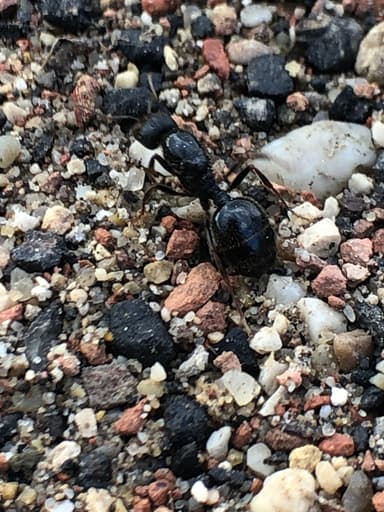
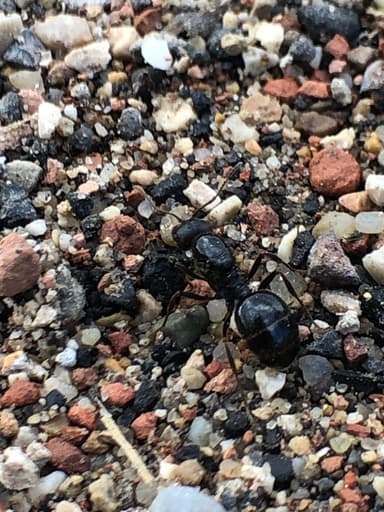
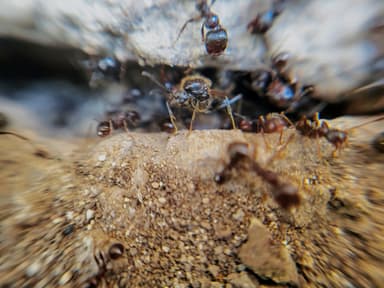
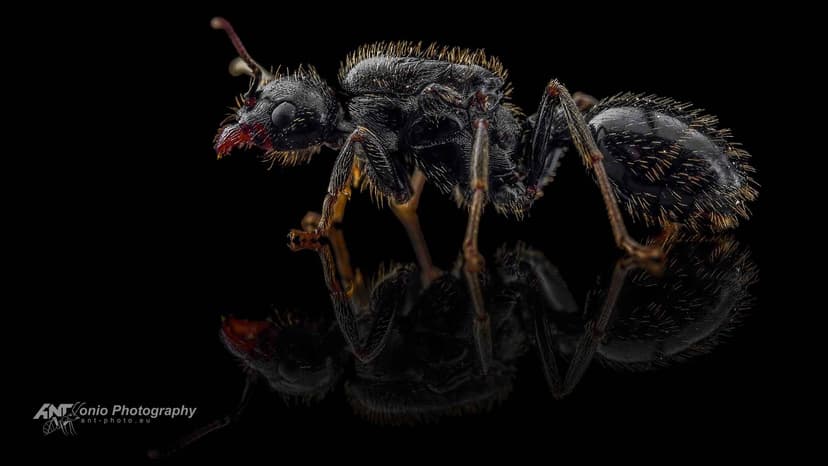
Messor structor is a robust and endlessly fascinating harvester ant that has long captured the hearts of European myrmecologists and hobbyists alike. Formerly considered part of a cryptic species complex, the name now refers to a clearly defined taxon after the comprehensive revision by Steiner et al. (2018). Queens are substantial creatures, measuring 11 to 14 millimetres and coloured a deep, glossy black, while workers display pronounced polymorphism, with a size range from a diminutive 4.5 millimetres up to an imposing 9 millimetres. This variation gives rise to three distinct castes — minor workers, media workers, and the impressively large-headed majors — a trait that makes colony watching endlessly dynamic. In nature, colonies can swell to ten thousand individuals, and the spectacle of majors methodically cracking seeds with their powerful mandibles while minors tend the brood is a miniature drama of division of labour that never grows old. Their natural distribution stretches in a broad band from the Iberian Peninsula eastwards deep into Central Asia, bounded roughly by latitudes 35° and 55°N, a testament to their adaptability to warm, dry Mediterranean and continental climates.
For the beginner ant keeper, M. structor is an almost ideal choice. The care difficulty is firmly in the beginner category, primarily because this species is claustral, meaning newly mated queens require no food during the founding stage and can be safely left alone in a test tube setup for weeks. Their foraging habits are predictable and forgiving — they store seeds, so a missed feeding day is rarely a crisis. The species’ tolerance for a range of humidity levels (30% to 60%) and temperatures (22°C to 28°C) also means that minor fluctuations in a typical home environment are unlikely to cause stress. While they are hardy, they truly suit the keeper who delights in observation rather than rapid growth. They are not the fastest brood-rearing species, but the patient keeper is rewarded with a stable, long-lived colony that unveils increasingly complex behaviours as major workers appear in the second or third year.
Housing a Messor structor colony requires a nest that can accommodate both their dry-loving disposition and their need for a humidity gradient. A ytong, plaster, or 3D-printed nest with a hydration chamber works beautifully, allowing the ants to select their preferred microclimate. The bulk of the nest should remain quite dry, with only one corner or a small chamber slightly humidified, as prolonged high humidity can be fatal, encouraging fungal growth on their stored seed piles. Temperature is best maintained between 22°C and 28°C using a heat mat or cable placed only under a portion of the nest or outworld, so the ants can thermoregulate. A substrate is not required inside the nest itself, but a dry sand or loam layer in the outworld not only mimics their natural steppe-like habitats but also gives the major workers a satisfying surface on which to process seeds. A generous foraging area is essential; these ants are active explorers and will quickly map every inch of their territory.
Diet for a primarily granivorous species like M. structor revolves around seeds, but they are by no means strict vegetarians. Small, oil-rich seeds such as canary grass, chia, and poppy form the staple, as they can be carried and stored whole or cracked open by the majors. In addition to seeds, the colony requires a regular supply of insect protein for the queen and developing larvae — freshly killed fruit flies, small crickets, or mealworm pieces offered once or twice a week are eagerly accepted. Carbohydrates in the form of sugar water or honey will be lapped up by workers, though they are less dependent on sugars than many other ants; a small drop once a week suffices. Water should always be available, preferably via a test tube waterer or a cotton-plugged liquid feeder, as open water dishes pose a drowning risk. Watch for seed piles that turn mouldy: remove any uneaten insect remains within 24 hours and replace damp seed caches with fresh, dry stores.
Hibernation is a non‑negotiable physiological requirement for this species. Colonies that are kept warm year‑round will inevitably decline, with queens gradually ceasing egg‑laying and workers losing vigour. In their native range, M. structor experiences a pronounced winter, and captive colonies must be given a cold, dormant period at around 8°C for three to four months, typically from November to February. Gradually lower the temperature over the course of October, stopping all feeding except water, and once they are sluggish, move the entire nest into a frost-free place at the hibernation temperature — a wine cooler or a cold room works well. Check monthly that the nest has not completely dried out; a single drop of water on the nest material is usually sufficient. When spring arrives, reverse the process slowly, and within a week or two of returning to warmth, the queen will resume laying, often with renewed vigor.
The first days after bringing home a new Messor structor colony — perhaps a founding queen or a small starter set with a few workers — are a delicate time when restraint pays dividends. If the queen is still in her founding test tube, resist the impulse to offer food; claustral queens have no need for it and will only be stressed by disturbance. Keep the tube in a dark, quiet location at around 25°C, wrapped in a cloth or slipped inside a tube holder. After a few days, you may gently connect the tube to a small outworld. Offer a few tiny seeds and a droplet of water, but do not panic if she ignores them. Once the first workers (nanitics) have eclosed and the colony numbers a handful, begin introducing freshly killed insects. Watch for any sign of excessive mould or frantic behaviour, which could indicate the tube is too humid. A small, dry substrate area in the outworld will give the pioneers a place to deposit waste. Patience is everything; in these early weeks, the colony’s world should be tiny and secure, allowing the queen to define the core of what will one day become a bustling granary of thousands.