Camponotus
Camponotus floridanus
Nuptial Flight Calendar
Flight months: Apr, May, Jun, Jul, Aug, Sep
Care Guide
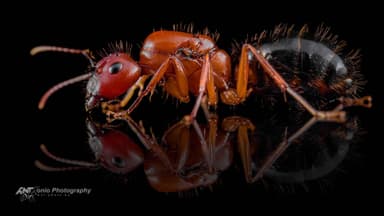
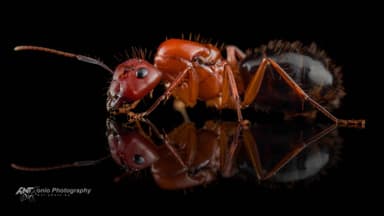
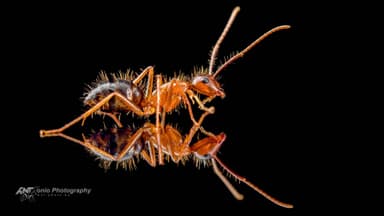
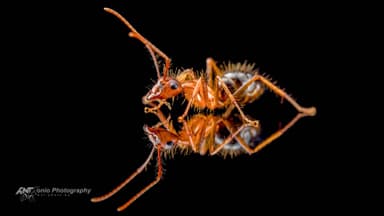
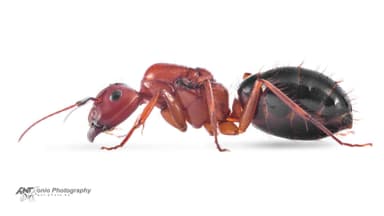
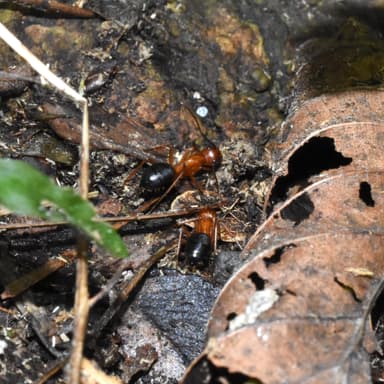
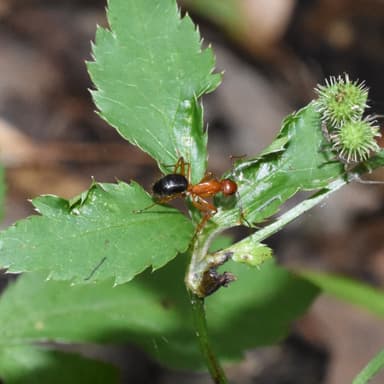
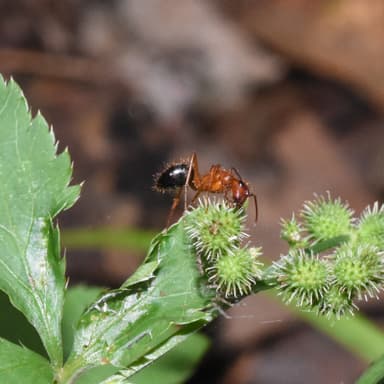
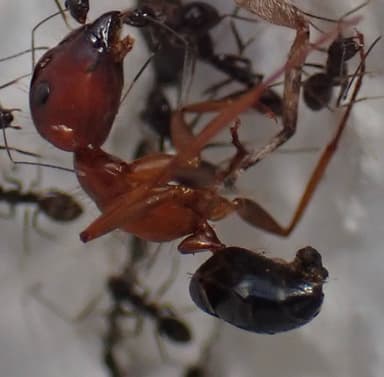
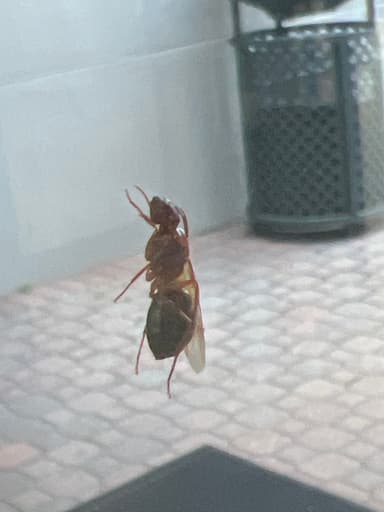
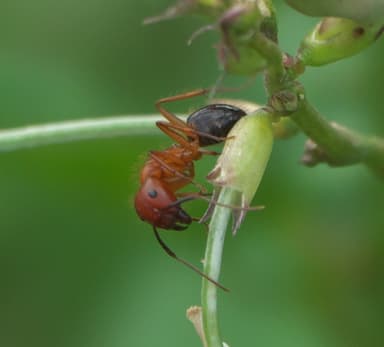
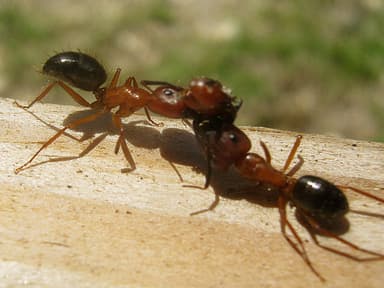
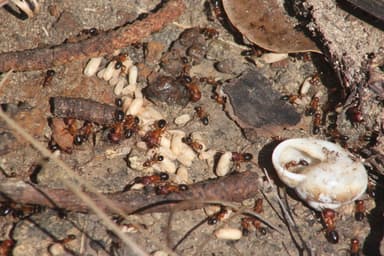
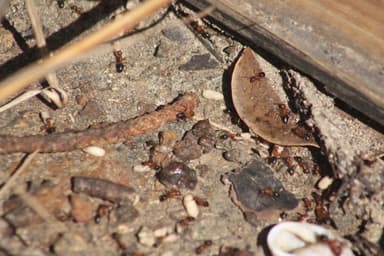
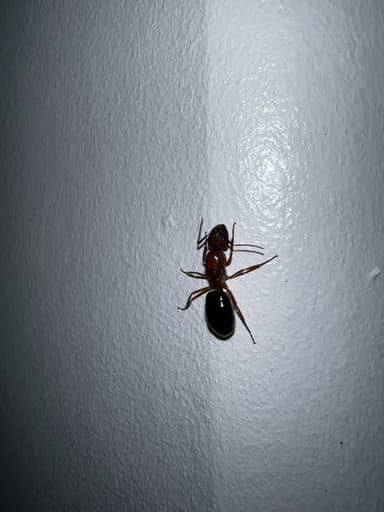
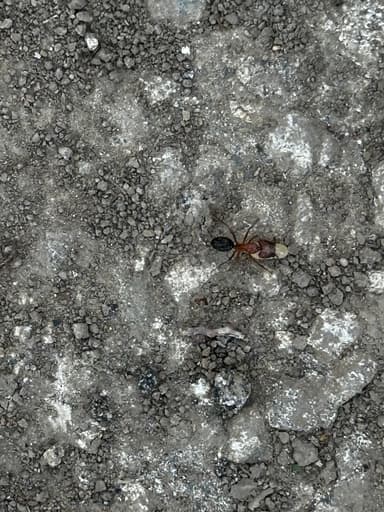
Camponotus floridanus, the Florida carpenter ant, is one of the most iconic ant species for keepers across North America, combining striking appearance with engaging behaviors. Workers are distinctly bicolored, sporting a dark head and gaster and a reddish-brown thorax, and they exhibit true worker polymorphism. Minors begin at a mere 5.5 mm, while the heavily built majors, with their blocky, muscle-packed heads, can reach 11 mm. Queens are substantial, measuring between 15 and 18 mm, and found new colonies claustrally. Mature colonies can eventually house up to 10,000 individuals (Deyrup 2017). In their native range, spanning the subtropical lowlands of the southeastern United States—most abundantly Florida—they nest in rotting wood and tree hollows, flying on warm, humid nights in late spring after rains (Tschinkel 2002). Their genome, sequenced alongside the jumping ant Harpegnathos saltator, has provided fascinating insights into the molecular roots of caste differentiation and social behavior (Bonasio et al. 2010). For the hobbyist, their large size, constant activity, and the clear division of labor between minor foragers and major defenders make every observation session rewarding.
This species is rated as beginner-friendly, suiting first-time keepers as well as experienced enthusiasts who want a fast-growing, robust colony. The ants are forgiving of minor husbandry mistakes, and captive queens typically settle and produce well. However, potential keepers should be aware of their eventual colony size and appetite for space; they are best suited to those who can eventually provide a larger formicarium. No special permits are normally required outside Florida, but always verify local regulations. With straightforward needs and an engaging temperament, C. floridanus is an ideal introduction to the world of polymorphic Camponotus.
Housing should reflect their natural arboreal nesting preferences. As carpenter ants, they thrive in nests that mimic a wooden cavity—cork-lined formicariums, ytong, or plaster nests with pre-formed chambers all work beautifully. Maintain a temperature gradient of 24–28°C and a relative humidity between 50 and 70 percent. A slight moisture gradient inside the nest allows the colony to self-regulate, but the nest should never become saturated, and good ventilation is critical to prevent mold. A dry outworld with a sand or soil substrate provides a foraging arena; many keepers add twigs or bark for climbing. A heat mat placed against one side of the nest can establish the thermal gradient without desiccating the whole setup.
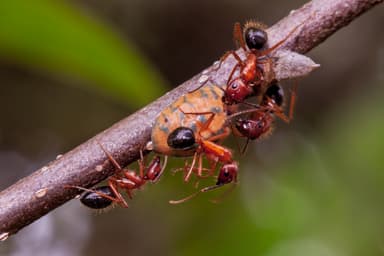
Diet for Camponotus floridanus follows the typical carpenter ant pattern: a balance of protein for brood development and carbohydrates for adult energy. In the wild, they avidly tend aphids for honeydew (Tschinkel 2002), so in captivity they relish sweet liquids. Offer small drops of honey, sugar water, or pieces of ripe fruit such as apple or banana several times a week, replacing them frequently to avoid fermentation. For protein, provide freshly killed insects—crickets, mealworms, or fruit flies—two to three times per week, ensuring all prey are free of pesticides. Always keep a clean water source, like a test tube with a cotton plug, available in the outworld. Majors are especially enthusiastic about sugary offerings, while minors handle most protein retrieval and brood care; a varied diet will keep the colony vigorous and growing steadily.
One of the significant advantages of this species is that no hibernation or winter diapause is required. Unlike temperate Camponotus that need a cold period, C. floridanus originates from a frost-free range (Deyrup 2017) and evolved without a mandatory dormancy. You can maintain them at the recommended temperatures year-round, and the queen will typically continue to lay provided conditions remain stable. Some keepers observe a mild slowdown if ambient temperatures dip slightly during winter, but this is not harmful and does not require intervention—simply avoid prolonged exposure below 20°C.
When your queen and her first workers arrive, prioritize a quiet settling-in period. Transfer them gently to a standard test tube setup with a water reservoir and place it in a dark, undisturbed spot at 24–28°C. Because she founded claustrally, she will not need food until the first workers emerge; resist the urge to offer anything too soon. Wait until you see a handful of workers actively exploring before introducing a tiny drop of sugar water and a pre-killed fruit fly. Disturbance during these early weeks is the most common cause of failure, so limit checks to once every few days. Once the colony reaches 10–20 workers, attach a small outworld and begin a regular feeding routine. Watch carefully for signs of mold, mites, or a stalled queen, which may indicate stress. With patience, your Camponotus floridanus colony will expand rapidly, rewarding you with a captivating window into ant social life.