Aphaenogaster
Aphaenogaster texana
Nuptial Flight Calendar
Flight months: May, Jun, Jul
Care Guide
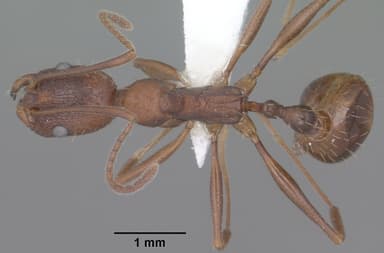
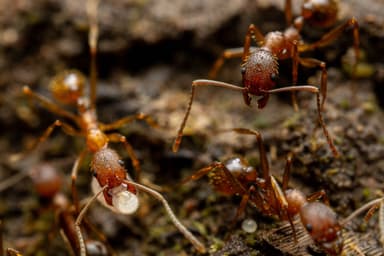
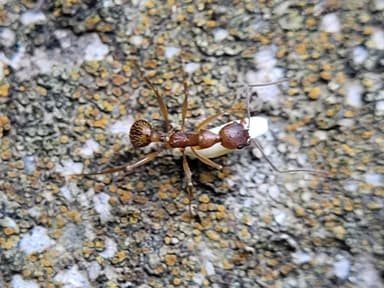
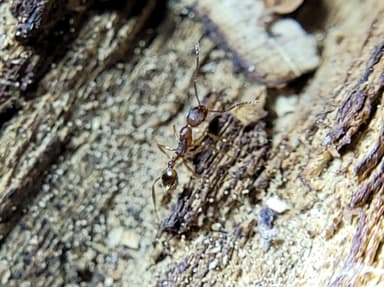
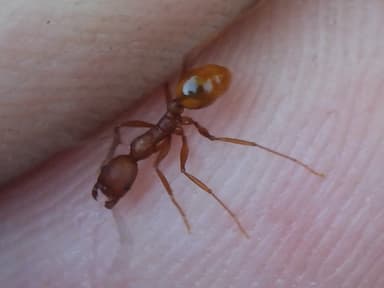
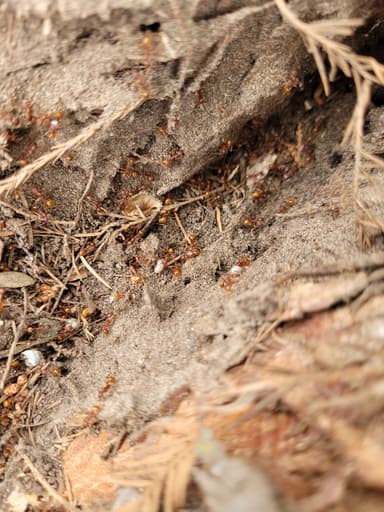
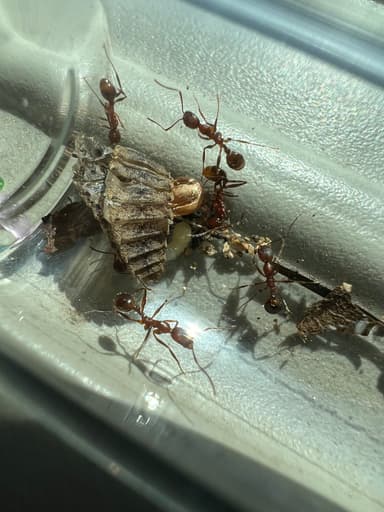
Aphaenogaster texana is a graceful, reddish-brown ant whose colonies bring a touch of the American Southwest into the home formicarium. Queens measure a robust 8–10 mm, while the monomorphic workers range from 4.5 to 6.5 mm, both adorned with a slender, long-legged silhouette and a characteristic pair of curved propodeal spines. The species is distributed across Texas and adjacent regions—Creighton (1950) mapped it from central Texas west into New Mexico and south into northern Mexico—where it nests in soil beneath rocks and in decaying wood. Colonies are moderately sized, eventually reaching up to 3,000 individuals, and are headed by a single claustral queen. What makes this ant particularly engaging to observe is its quick, deliberate foraging gait and the subtle metallic sheen on its gaster, as well as its remarkable nuptial flight behavior: in the wild, alates typically emerge on warm, humid evenings from May through July, following summer rainstorms that drench the landscape.
For the aspiring ant keeper, Aphaenogaster texana is an excellent starting point. Its care is rated as beginner-level, thanks to a forgiving nature and uncomplicated requirements. The species tolerates minor husbandry mistakes that might stress more delicate taxa, and its claustral founding means a newly mated queen can be left undisturbed in a test tube for weeks without feeding. This ant suits anyone from school-age enthusiasts to adults seeking a low-maintenance display colony. While it lacks large soldiers or dramatic polymorphism, its active foraging and charismatic posture more than compensate, making it a dependable choice for educators and beginner hobbyists keen to witness the full life cycle of an ant colony.
Housing Aphaenogaster texana starts with selecting an appropriate nest. Because they appreciate moderate humidity, a plaster or ytong nest with a moisture gradient works well, as do naturalistic setups with a sandy loam substrate that mimics their native soil. Keep the temperature between 20°C and 28°C; a gentle warmth at the warmer end encourages brood development, but avoid prolonged spikes above 28°C. Humidity should range from 50% to 70%, with a slightly drier area for storing seeds or refuse. These ants do not require a sprawling foraging arena, but they are lively explorers, so provide a secure outworld with a thin layer of sand or fine gravel for texture. A water source, such as a test tube with a cotton plug or a small water feeder, must be available at all times to prevent desiccation.
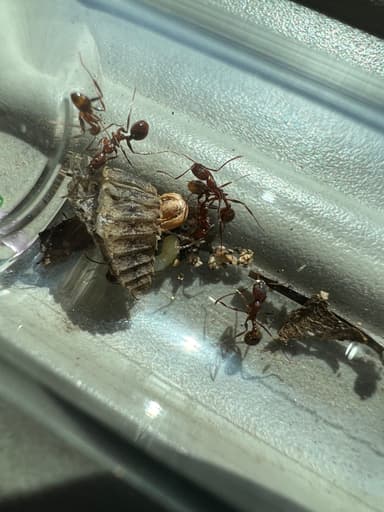
Feeding Aphaenogaster texana is straightforward. As opportunistic omnivores, they thrive on a diet of insect protein and carbohydrate-rich liquids. Offer small, soft-bodied insects like fruit flies, pinhead crickets, or chopped mealworms twice a week. For sugars, a drop of diluted honey, sugar water, or a piece of fresh fruit will be eagerly received. Remove uneaten food after 24 hours to prevent mold. During the active season, the colony’s appetite grows with its brood pile; workers will readily recruit nestmates to a new food source, making it easy to judge when to adjust portion sizes. Always supply fresh water separately from sugar solutions to avoid drowning, especially in smaller colonies.
A proper hibernation period is essential for the long-term health of Aphaenogaster texana. In their native range, winters are mild but distinct, and the colony requires a rest period of roughly three to four months at around 15°C. Begin reducing the temperature gradually in late autumn, moving the setup to a cool, dark spot such as a basement or a dedicated wine cooler. During diapause, activity slows to a near standstill; the queen ceases laying, and workers cluster tightly. Do not offer food during this time, but keep a small water source available. When temperatures rise again in early spring, the colony will awaken and quickly resume brood production.
After purchasing a queen or small founding colony, the first days are critical for settling in. Place the test tube or starter nest in a quiet, dimly lit area and avoid the temptation to check it repeatedly—excessive vibrations and light can cause stress and brood cannibalism. For a claustral queen, no feeding is necessary until the first workers (nanitics) emerge, which typically takes six to eight weeks under warm conditions. If you receive a young colony with workers, offer a tiny dab of sugar water and a pre-killed fruit fly after 24 hours, then observe from a distance to ensure they find and accept the meal. Watch for signs of mold in the nest, and ensure the water reservoir remains full. With patient, hands-off care in those early days, your Aphaenogaster texana colony will establish a steady rhythm and reward you with years of dynamic, miniature natural history.