Pheidologeton
Pheidologeton diversus
Care Guide
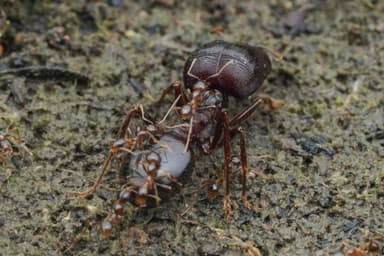
Pheidologeton diversus is a truly spectacular species, best known for its dramatic mass raiding behavior and extreme worker polymorphism. A single colony contains a continuous size gradient from tiny minor workers, just 2 mm long, up to massive major workers reaching 8 mm, whose enormous heads are packed with powerful muscles used for crushing prey and defending the column. The queen, measuring 12–14 mm, is the largest individual and the sole reproductive powerhouse of the colony. These ants are often called “marauder ants” for good reason — when a foraging column hits a food source, they recruit thousands of workers in a coordinated swarm that can strip a cricket or a pile of honeydew in minutes.
Care difficulty
Keeping Pheidologeton diversus is an advanced undertaking, best suited for experienced keepers who can provide ample space and manage high feeding demands. These ants are voracious and grow quickly from a claustral foundation into a colony numbering thousands. Their protein and carbohydrate needs are substantial: a diet of live or freshly killed insects (crickets, roaches, mealworms) must be supplemented with sugar water or honeydew. Unlike seed-eaters, they require constant protein to support the growth of their polymorphic brood. The colony’s rapid expansion and high activity level make them fascinating to observe, but also demanding in terms of maintenance and containment.
Housing
Due to their large colony size and aggressive foraging, a spacious formicarium with a connected outworld is essential. The nest area must be kept humid — 60–80% relative humidity — with a warm zone of 24–28°C. Pheidologeton diversus does not hibernate, so conditions must remain stable year-round. The nest should offer multiple chambers to accommodate the growing population and allow for brood segregation. A tight-fitting lid or escape-proof barrier is crucial, as these ants are skilled climbers and will exploit any gap. Provide a clean water source in the outworld, and offer food in a location that minimizes disturbance to the nest. The colony can be sensitive to vibration and sudden light changes during early stages, so place the setup in a quiet, dim area.
First days after purchase
Upon receiving your Pheidologeton diversus colony, transfer them carefully into the prepared formicarium and outworld. Let them settle for at least 24–48 hours without disturbance. Ensure the nest is moist and that a small drop of sugar water and a piece of insect (like a crushed mealworm) are accessible near the entrance. Do not attempt to feed heavily or open the nest during this acclimation period. Observe from a distance — if the colony begins to explore and collect food, they are adjusting well. Patience is key; once established, these ants will reward you with one of the most thrilling displays of coordinated hunting in the ant world.