Aphaenogaster
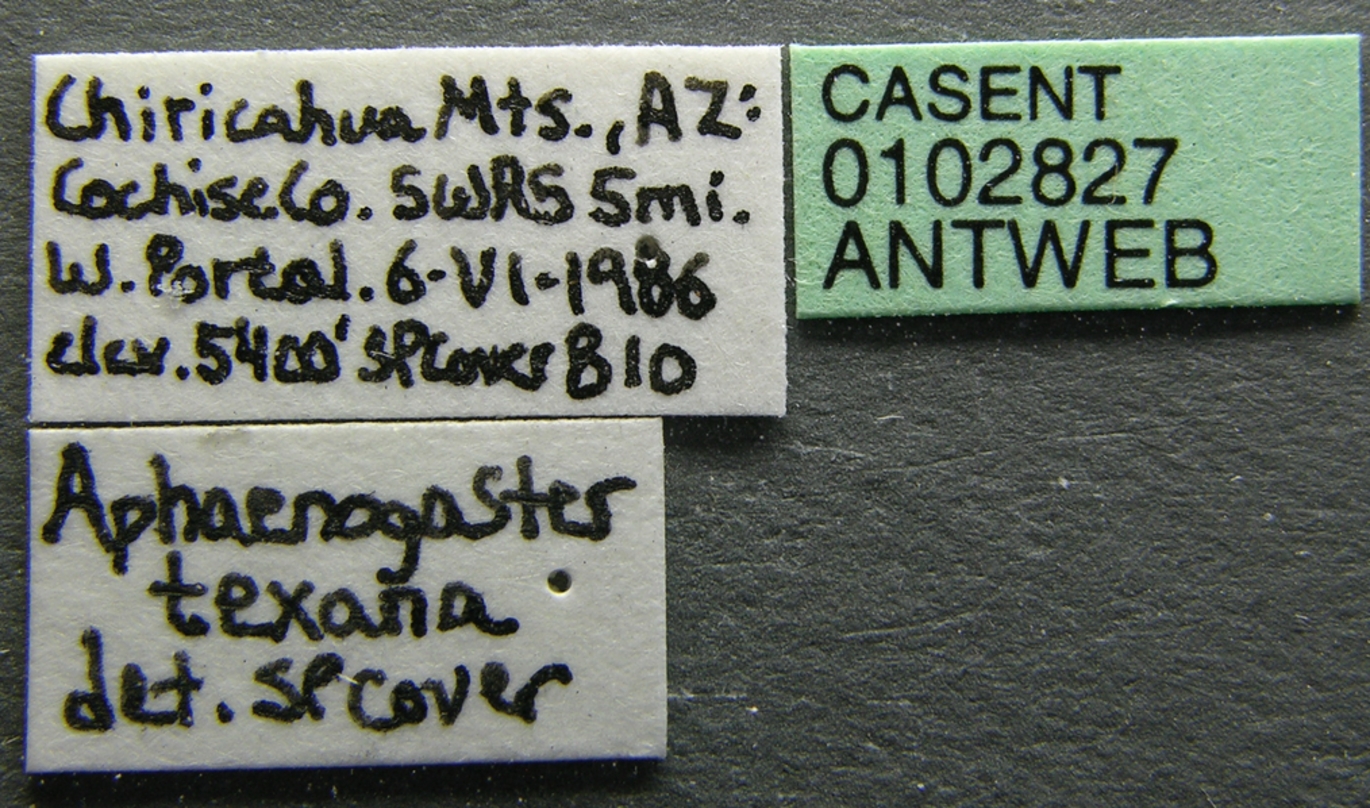
Aphaenogaster texana
Nuptial Flight Calendar
Care Guide
Aphaenogaster texana is the southernmost representative of the genus in North America, ranging across Texas, Oklahoma, and adjacent parts of the Gulf coast. The queen reaches 7.5–9 mm, with workers measuring 4.5–6 mm. Coloration is a warm orange-brown, very similar to the eastern A. rudis but adapted to a notably warmer climate.
Unlike its more northern relatives, A. texana does not require winter hibernation in captivity. Its native range experiences only mild winters, and colonies remain active or only minimally slowed during the cooler months. This makes the species attractive to keepers in warmer climates who lack a dedicated cool space for diapause.
Behaviorally A. texana is a generalist forager, hunting small invertebrates, scavenging carrion, tending sugary food, and collecting seeds with elaiosomes. Colonies are modest in size, typically 500 to 3,000 workers at maturity.
Founding is semi-claustral, so the queen must be provided with small prey and a droplet of sugar water during establishment.
Care difficulty
Intermediate, mostly because of the semi-claustral founding. Once established, A. texana is a hardy and adaptable species that thrives at standard room temperatures without any seasonal cycling.
Housing
A small starter setup with a slightly moist nest and a drier outworld works well. Maintain temperatures between 24 and 28 °C year-round with humidity at 50–70 %. Offer fruit flies, small crickets, sugar water, and occasional seeds two or three times per week. No hibernation is required, although a brief cooler rest of around 18 °C for a few weeks can mimic natural seasonal slowdown if desired.
First days after purchase
Place the queen or young colony in a calm, dim spot. Offer a freshly killed fruit fly and a tiny droplet of sugar water within the first 24 hours. Refresh water regularly without disturbing the brood. Transition to a small formicarium once around 30 workers are present.