Messor
Messor angularis
Nuptial Flight Calendar
Flight months: May, Jun, Jul
Care Guide
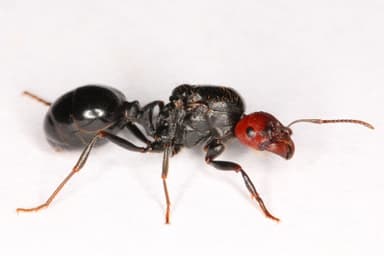
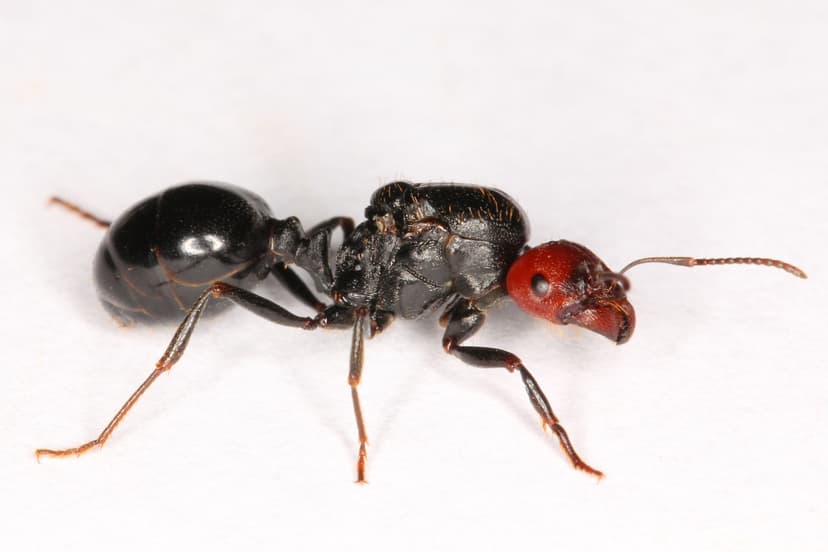
Messor angularis is a robust, polymorphic harvester ant from the arid steppes and semi-deserts of Central Asia, with a range spanning from eastern Iran through Turkmenistan and into the foothills of the western Himalayas. As a member of a genus renowned for its seed-storing behaviour, this species instantly captivates the hobbyist with its clearly differentiated worker castes. The minor workers, a nimble 5–7 mm in length, manage brood and process seeds, while the strikingly large major workers reach up to 10 mm and possess heavily muscled heads equipped with powerful mandibles capable of cracking the toughest grains. Queens are an impressive 12–15 mm, typically a deep reddish-brown to black, and can sustain colonies of up to 10,000 individuals over many years (Arnoldi 1968; Bolton 1995). What makes M. angularis particularly fascinating is its granivorous lifestyle: the colony painstakingly husks and chews seeds into a protein-rich paste called “ant bread,” storing it in dry chambers and creating a visible, dynamic pantry that the keeper can observe in a well-designed nest. Unlike many ants that require frequent live feedings, a thriving Messor angularis colony largely runs on its processed seed reserves, with major workers serving as mobile grain silos, making their internal logistics a pleasure to witness.
With an intermediate care difficulty, Messor angularis is best suited to keepers who have successfully maintained a founding colony of a beginner species and are ready to manage more nuanced environmental needs. The challenge lies not in aggression or escape artistry—these ants are relatively placid and climb well only on dusty surfaces—but in replicating their xerophilic conditions and a mandatory winter diapause. A keeper must be attentive to humidity gradients and temperature control, as neglecting hibernation or allowing persistent high humidity will quickly stress the colony, leading to fungus outbreaks or brood cessation. Thus, while this ant is forgiving in its diet, it demands a deliberate seasonal approach. For those ready to invest in a small heating setup and a dedicated hibernation space, M. angularis rewards with colony longevity, fascinating caste-driven behaviours, and the spectacle of seed mills at work.
Housing must echo the ants’ natural habitat of dry grassland and rocky outcrops. A plaster, aerated concrete (Ytong), or 3D-printed nest with a hydration gradient is ideal, allowing the colony to choose between a near-dry granular chamber and a slightly moister brood zone. The ambient humidity should be maintained at the lower end of the 30–60% range—excess moisture causes seed germination and mould, so avoid spraying directly into the nest. Temperature is most critical for brood development: provide a gradient from 22°C in the nest’s cool area up to 30°C at a basking spot, best achieved with a heat mat or cable placed under one-third of the nest. A deep outworld lined with a sand–loam mix not only mimics their natural foraging grounds but also offers major workers a grippy surface to haul seeds. Because these ants store vast quantities of husks, design the setup for easy removal of debris. The foraging arena should be large, as workers can recruit heavily when a favoured seed cache is discovered, and a secure lid with a PTFE-based escape barrier is essential.
Diet largely centres on a diverse seed mix, which forms the staple carbohydrate and protein source once processed. Offer small, oil-rich seeds such as amaranth, chia, and poppy for the minors, alongside larger items like canary grass, sesame, and crushed nuts for the majors to split and transport. A colony in full growth will consume seeds in staggering quantities, but worry less about measured daily portions—provide a seed pile in the outworld and let the workers manage their own stores. For protein, freshly killed insects (small crickets, fruit flies, or mealworm pieces) are crucial for larval growth, particularly in spring after hibernation. Feed protein once or twice a week, removing any uneaten prey after two days to prevent mites. While Messor ants obtain most moisture from seeds and metabolic water, always keep a water test tube or a drinking tower available. Sugar water or honey is rarely taken and not needed, but a tiny droplet offered to a newly arrived stressed colony can give them an immediate energy boost.
A strict hibernation period is not optional but a biological necessity. In their native region, winters are cold, with soil temperatures dropping to around 12°C. Without a 3–4 month diapause at this temperature, queens often stop laying, workers become agitated, and long-term colony health declines. Plan hibernation from November to late February. Two weeks before, cease protein feeding and reduce seed offer to allow the colony to clear their digestive tract. Gradually lower the temperature to 12°C, using a wine cooler, a cold basement, or a controlled fridge. During this time, the ants will cluster tightly, and movement will almost cease; simply keep a small water source available and check monthly for any signs of desiccation. In early March, warm them gradually back to active temperatures, and resume feeding with small seeds and a piece of insect.
When your Messor angularis colony first arrives, often as a queen with a small clutch of workers in a test tube, resist the urge to feed immediately. Place the tube in a dark, vibration-free spot at around 25°C and let them settle for 48 hours. After this period, offer a minuscule drop of diluted honey on a slip of wax paper and a few poppy or grass seeds just outside the tube entrance. Watch for the workers to discover these gifts—their first seed-husking may occur within hours. Do not introduce insects until you see a healthy pile of eggs and developing larvae, usually after one week. The greatest pitfalls in these early days are overfeeding and checking too frequently: keep disturbances to a minimum, and never force the ants out of their tube. Once the colony reaches 20–30 workers and begins hauling seeds to a designated midden, you can connect them to a small nest module, letting them expand at their own pace into what will become a mesmerizing living granary.