Cyphomyrmex
Cyphomyrmex rimosus
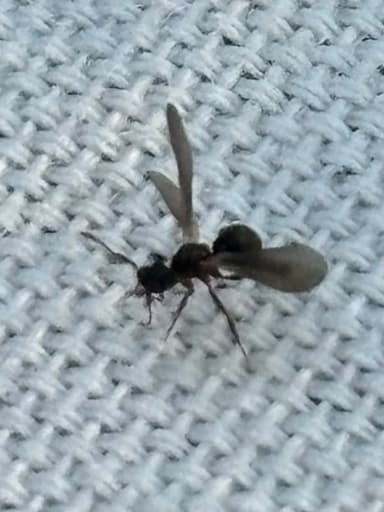
Nuptial Flight Calendar
Flight months: Jan, Feb, Mar, Apr, May, Jun, Jul, Aug, Oct, Nov, Dec
Care Guide
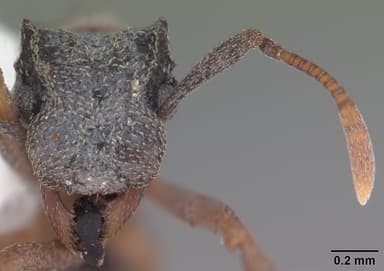
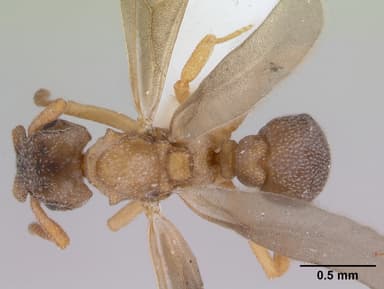
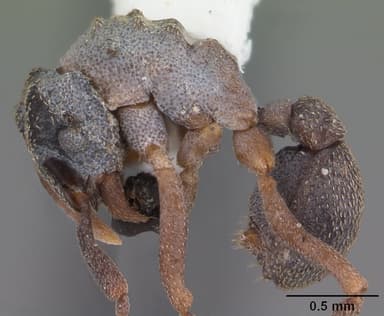
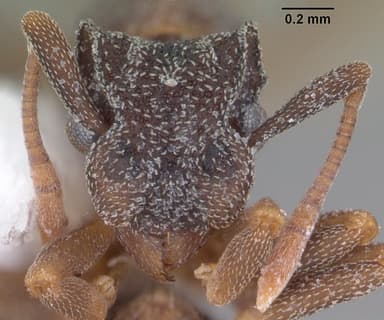
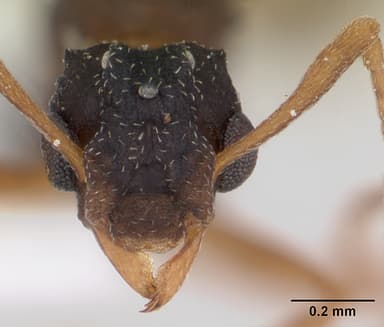
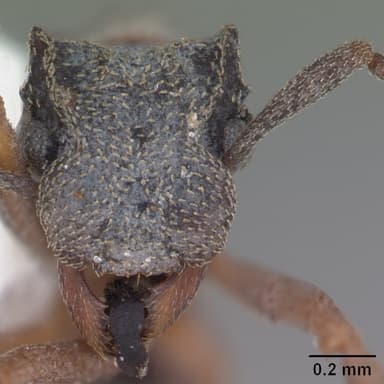
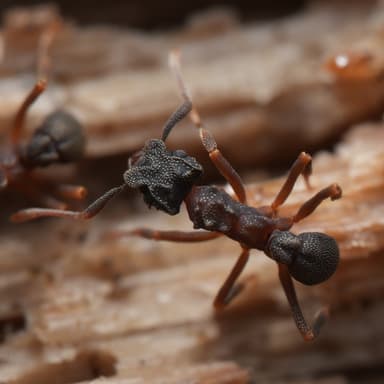
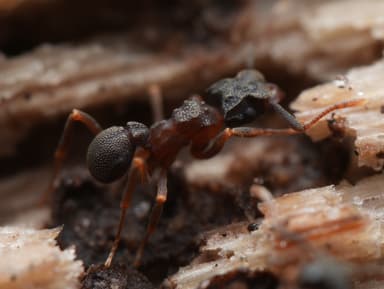
Cyphomyrmex rimosus is a diminutive yet endlessly fascinating fungus-growing ant belonging to the tribe Attini, but unlike the famed leaf-cutters, this species cultivates a yeast-like fungal symbiont on a substrate of insect frass and decaying plant debris (Snelling & Longino 1992). Workers measure a mere 2–3 mm, while the claustral queen reaches 3.5–4.5 mm, and the entire mature colony rarely exceeds 500 individuals, all of a single monomorphic caste (Deyrup 2017). Their native distribution spans an enormous range from the southeastern United States, especially Florida and the Gulf Coast, down through the Neotropics, bounded roughly by latitudes 35°N and 35°S (GBIF occurrence data). What makes this ant so rewarding to keep is the quiet, constant choreography of fungus tending — workers delicately fertilize their gardens with gathered bits, creating a living tapestry that shifts and grows under your care.
This species is comfortably rated as intermediate in difficulty. It suits the keeper who has already mastered stable humidity control, perhaps with other small-bodied ants or even beginner fungus-growers. The primary challenge lies in balancing warmth and moisture: temperatures should remain steady between 22°C and 28°C, while relative humidity must hover between 70 and 90%. Fluctuations can stress the fungal garden, leading to decline. Because there is no need for a cool hibernation period, year-round care is simplified, yet the demand for consistently high humidity excludes this ant from the casual set-and-forget approach often applied to arid-clade species. Keeper attentiveness, without over-disturbance, is the secret to success.
Housing must replicate the sheltered, moisture-laden microclimates where these ants naturally nest, such as leaf litter cavities or soft, rotting wood. Plaster or ytong nests work beautifully, because they absorb water and release it gradually, maintaining an ambient humidity without soaking. A small foraging arena, connected by narrow tubing, allows workers to explore and collect food while the nest remains a safe, humid environment. Because the ants are so minute, escape-proofing is critical — a tight-fitting lid or a continuous PTFE barrier will suffice. A light dusting of fine, sterile sand or soil in the nest chamber can be offered, as workers may incorporate organic particles into their fungus substrate, but avoid excessive loose material that can turn into a moldy midden. Heat can be supplied by a heating mat placed under one end of the nest, creating a gentle gradient, and a digital hygrometer is an invaluable tool for fine-tuning your misting routine.
Diet for Cyphomyrmex rimosus is intimately tied to the fungal garden; these ants are not leaf-cutters but scavengers. They provision their fungus with freshly killed, protein-rich insects such as flightless fruit flies, pinhead crickets, or finely chopped mealworm segments. Workers carry these offerings directly to the garden, where the fungus breaks them down. A drop of diluted sugar water or a trace of honey, offered on a small piece of waxed paper, may occasionally be taken by the workers themselves, but the fungus supplies the bulk of their carbohydrate needs. Always provide a clean water source, ideally a test tube with a cotton plug, separate from the nest’s humidity supply. Remove uneaten insect fragments after 24–36 hours to prevent mold, and never overfeed — small, frequent portions are safer than large, decaying meals.
These ants do not require a hibernation period. Populations from the northern limits of their range, such as those in the southeastern US, may experience mild winter cool-downs in nature, but in captivity it is far safer to keep the colony at a steady 22–28°C year-round. Attempting to chill them can fatally stall the fungal garden’s growth, and since their native range is predominantly tropical and subtropical, constant warmth keeps both ants and fungus in optimal health.
When your Cyphomyrmex rimosus colony first arrives, embrace patience above all else. Place the shipping tube or container in a dim, vibration-free spot and avoid peeking for the first day. If you have a newly mated queen alone with a wisp of fungus, she must be left utterly undisturbed for at least one to two weeks — her founding is claustral, and any disruption can cause her to abandon her garden. For an established colony with workers, wait 24 hours, then offer a micro-drop of sugar water; introduce a single tiny, freshly killed insect a day later. Watch the fungus: healthy growth appears as a thin, grayish-white film. If it recedes or darkens, gently increase humidity without soaking the nest. Do not move them into a larger quarters until the workforce has grown to at least a dozen individuals, as too much space overwhelms these delicate ants. With gentle, consistent care, a Cyphomyrmex rimosus colony becomes a living jewel box, offering a rare window into the ancient art of ant agriculture.