Cataglyphis
Cataglyphis hispanica
Nuptial Flight Calendar
Flight months: May, Jun, Jul, Aug, Sep
Care Guide
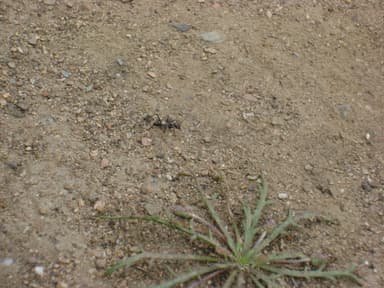
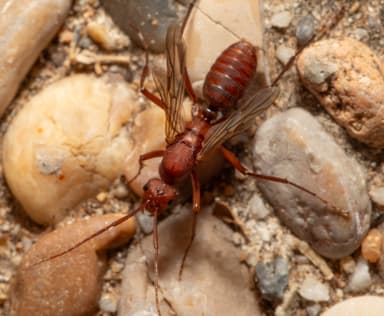
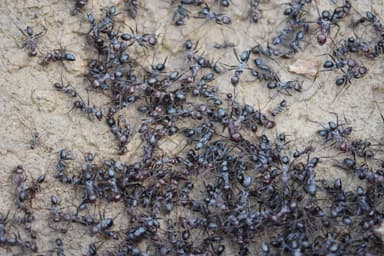
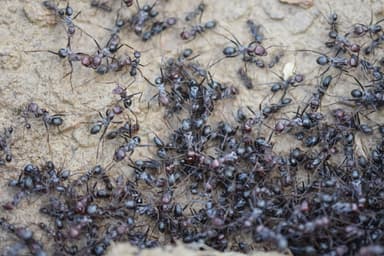
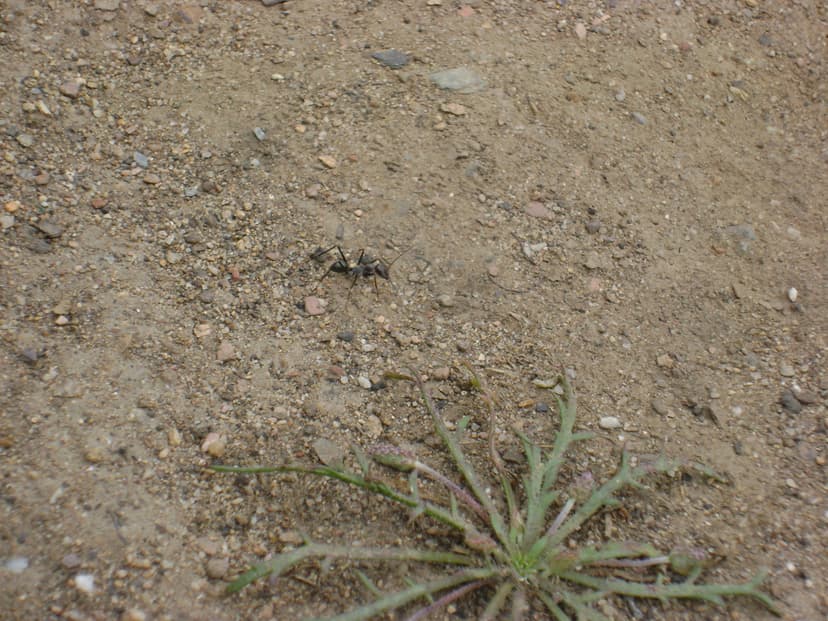
Cataglyphis hispanica is a jewel of the Iberian ant fauna, restricted to warm, arid regions of Spain and Portugal within a bounding box that hugs the Mediterranean coast and inland basins (Cagniant 2009). This medium-sized desert runner exhibits striking size polymorphism with two distinct worker castes: petite, slender minor workers around 4 mm, and robust major workers that can reach a full 8 mm, while queens measure a sturdy 8–10 mm. Mature colonies are modest by ant standards, rarely exceeding 1,500 individuals, yet what they lack in numbers they make up in biological intrigue. The species practices a rare form of reproduction known as social hybridogenesis; queens produce their worker force clonally, but new queens and males are generated through a sexual, hybridogenetic mechanism each generation (Leniaud et al. 2012). This genetic chimaera, coupled with caste determination influenced by both maternal and paternal genomes (Darras et al. 2014), places Cataglyphis hispanica at the forefront of evolutionary biology, making it a captivating — if demanding — captive specimen.
This species is unambiguously for the expert keeper. Its semi-claustral founding means a solitary queen cannot sequester herself away with only fat reserves; she must emerge periodically to hunt, requiring the keeper to offer regular small meals during the delicate founding stage. Every environmental parameter demands precision. The dry, hot conditions essential for their long-term health leave no room for error, and the colony’s reliance on a sharp temperature gradient, combined with an obligatory cool hibernation, adds layers of complexity. Prior experience with desert-adapted ants, mastery of hydration control, and patience with slow, methodical colony growth are non-negotiable prerequisites. If you are looking for a forgiving first species, look elsewhere; if you thrive on the meticulous craft of mimicking Mediterranean microclimates, Cataglyphis hispanica will reward you with ceaseless diurnal activity and a window into one of nature’s oddest genetic contracts.
Housing must replicate the sun-baked steppe. Choose a formicarium constructed from a breathable, low-moisture material such as ytong or fine-pored plaster, with a small hydration chamber or external water source to keep humidity between 30% and 50% — never let the nest become damp. A thermal gradient is vital: provide a basking area that reaches 32 °C via a heat mat or overhead lamp, while the far end of the nest remains a cooler 22 °C, enabling the ants to thermoregulate. The foraging arena should be escape-proof and generously sized, since these ants are lightning-fast, heat-loving sprinters that relish open ground; a thin layer of fine sand or a sandy loam substrate gives them a naturalistic surface to patrol. Ventilation must be ample to prevent any humidity build-up, and a 12‑hour photoperiod replicates their seasonal day length. Avoid live plants — they raise local humidity and serve no purpose in these ants’ arid world.
Feeding Cataglyphis hispanica is straightforward but requires diligence. In the wild, they scavenge dead arthropods, hunt small insects, and gather carbohydrate-rich honeydew or nectar. In captivity, offer freshly-killed or live prey such as fruit flies, pinhead crickets, and chopped mealworms for protein. Carbohydrates come from a droplet of pure honey, diluted agave syrup, or a commercial ant nectar; replace this daily to prevent spoilage. Crucially, a founding queen must be fed two or three times a week with tiny insect fragments and a speck of sugars — neglect here will end the colony before it begins. For an established colony, feed protein every other day during the active season, and always maintain a small water source, such as a test tube filled with cotton-plugged water, in the foraging arena, taking care that spills do not elevate nest humidity.
Hibernation is compulsory and non-negotiable. In their native range, winter temperatures sink consistently to around 12 °C, and this seasonal chill synchronizes the colony’s biological clock. From November to February, gradually reduce the temperature over two to three weeks until the nest stabilises at 12 °C. A wine cooler or a dedicated cool cellar works beautifully. During diapause, keep the nest virtually dry with only the faintest whisper of moisture to prevent desiccation; do not feed, but check fortnightly for excessive condensation or mould. Slow, steady warming in early March will coax the queen out of dormancy and trigger the first egg-laying of the year. Rushing this cycle or skipping it altogether invariably leads to weak, short-lived colonies.
The first days after your queen or small colony arrives set the tone for all that follows. A newly-mated queen should be installed in a standard test tube setup with a water reservoir, to which a tiny sprinkling of sterile sand has been added for grip. Allow her several hours of quiet darkness, then offer a minute drop of honey on a slip of paper and a freshly-killed fruit fly. She will venture out to feed, returning to her tube to rest. Repeat this every two or three days, removing uneaten prey promptly. For a nascent colony, connect the test tube to a small, pre-warmed foraging box, provide a honey droplet and a small source of water, and leave them completely undisturbed for 24 hours. After settling, introduce a few tiny prey items. Watch for behaviours that signal stress: workers persistently gathered at the coolest corner, refusal to forage, or the queen ceasing to lay. If you observe these, re-evaluate your temperature gradient and humidity immediately. With patience and strict adherence to their desert regimen, you will witness the unfolding of one of the ant world’s most unusual societies.