Vollenhovia
Vollenhovia emeryi
Nuptial Flight Calendar
Flight months: Jun, Jul
Care Guide
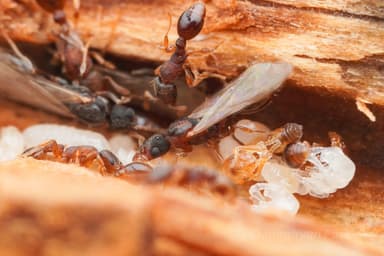
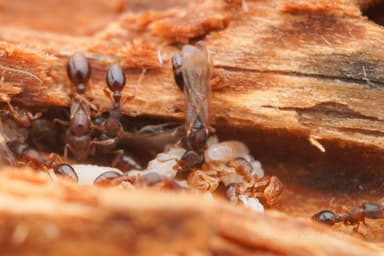
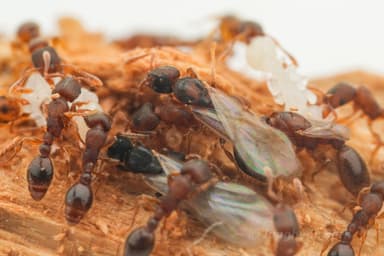
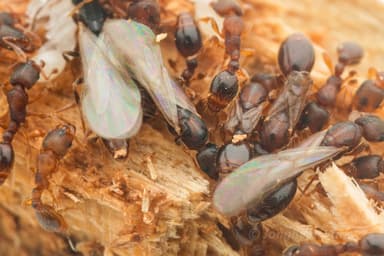
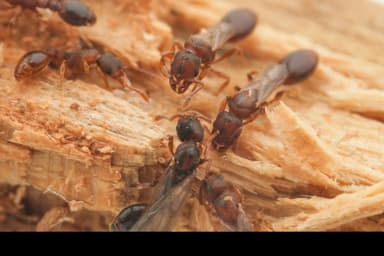
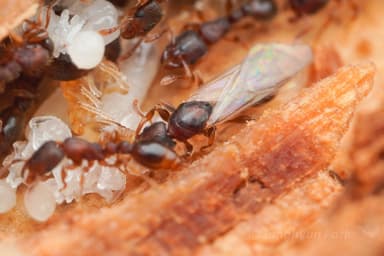
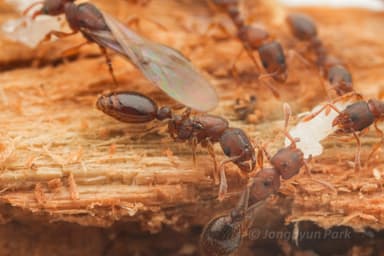
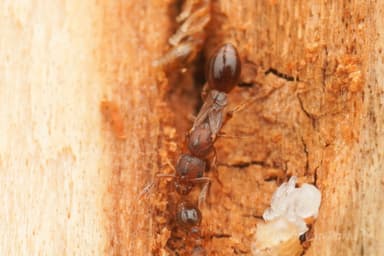
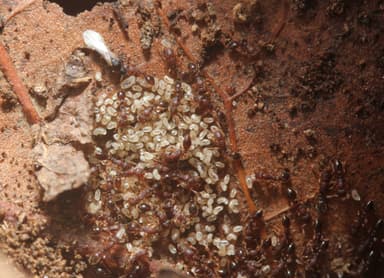
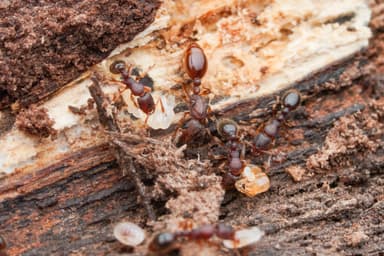
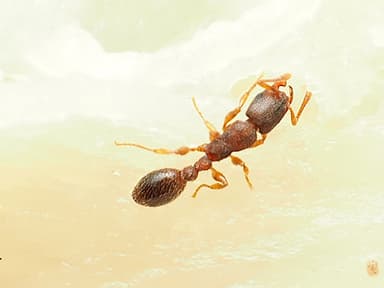
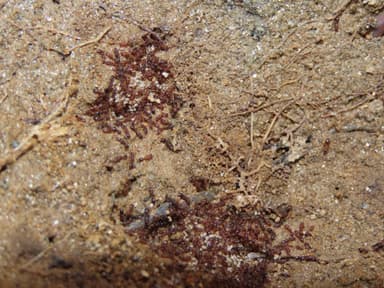
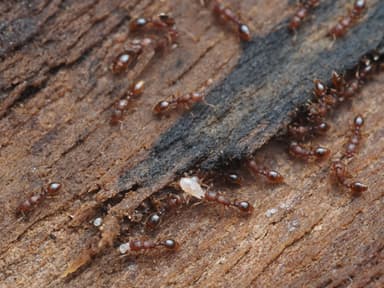
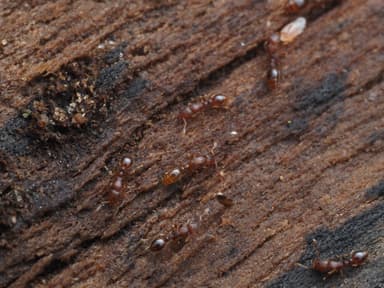
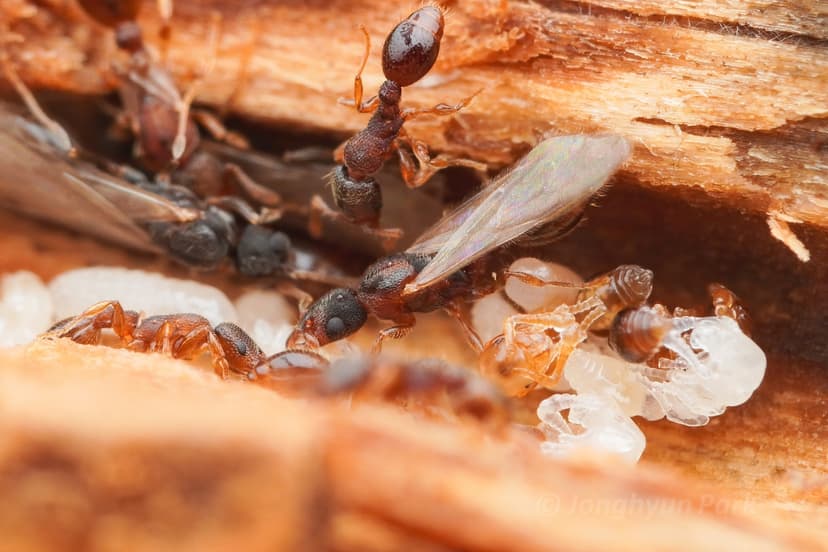
A member of the myrmicine tribe Crematogastrini, Vollenhovia emeryi is a small, monomorphic ant endemic to Japan and parts of East Asia, typically found in the humid broadleaf forests of the region. Queens measure a modest 4–5 mm, while the workers range from 2 to 2.8 mm, all bearing a uniform, darkly pigmented, sleek appearance. Colonies rarely exceed 3,000 workers and reproduce by budding rather than independent founding, meaning new colonies emerge from fractions of the mother nest with a cohort of workers and a queen. The true marvel of this species, however, lies in its extraordinary reproductive biology. Unlike almost any other ant, V. emeryi queens and workers reproduce clonally, with workers laying diploid eggs that develop into additional workers, while queens produce both queens and workers through a unique mode of thelytokous parthenogenesis (Ohkawara et al. 2006). This genetic independence between castes means workers are not daughters of the queen, a phenomenon that challenges classic kin selection models and places Vollenhovia emeryi at the forefront of social evolution research (Kobayashi et al. 2008). For the ant keeper, these tiny ants offer a window into one of nature’s most unusual social contracts.
Care for Vollenhovia emeryi is best described as intermediate, making them well-suited to hobbyists who have successfully maintained a few temperate species and are comfortable managing seasonal cycles and stable humidity. Their diminutive size and modest colony growth are forgiving in some respects, but they are quite sensitive to desiccation and require a dedicated winter dormancy. Beginners might find the mandatory hibernation and precise humidity requirements a touch demanding, but for the intermediate keeper, the sheer biological curiosity of a clonal caste system is ample reward for the extra attention.
Housing should prioritise hydration and security. A nest made from plaster, gypsum, or a well-hydrated ytong block is ideal, as these materials wick moisture predictably and help maintain the 50–70% relative humidity that these ants prefer. A temperature gradient between 18°C and 26°C suits them well, with the nest typically kept around 22–24°C provided by a gentle heat mat placed on one side. Because they are a small species, the nest should have fine galleries—smooth, narrow tunnels no taller than 3 mm—to prevent worker ants from feeling exposed. A small outworld with a barrier of fluon or olive oil is essential, and while no deep substrate is required, a sprinkle of sand or fine leaf litter can aid in foraging and humidity retention. Always provide a water source in the outworld; test tubes with water will suffice, but a small drinking fountain helps, especially during warmer periods.
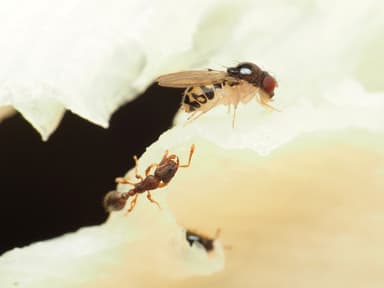
In the wild, V. emeryi forages in the leaf litter for small arthropods and tends honeydew-producing insects. In captivity, they thrive on a diet of fruit flies, freshly killed pinhead crickets, and finely chopped mealworms for protein. Carbohydrates can be offered as a small drop of honey, sugar water, or a commercial ant nectar placed on a piece of aluminum foil or in a micro-feeding dish. Given their tiny size, food portions must be appropriately scaled—one fruit fly per every few dozen workers is a good starting point. Remove uneaten protein after 24 hours to prevent mould, which can rapidly destabilise the high-humidity environment these ants depend on. Always have a clean water source available; a cotton-plugged test tube of water inside the outworld serves double duty as a drinking station and an emergency hydration refuge.
A true hibernation is non-negotiable. As the days shorten in autumn, gradually lower the temperature over several weeks until they rest at a steady 8°C. This cool period should last around three to four months, from late November to early March in the northern hemisphere. During this time, the colony clusters together and becomes almost entirely inactive, requiring no food and only a lightly moistened nest—never wet, as cold and excess moisture invite fungal problems. After the rest period, warm them gently back to room temperature, and within days you will witness a flurry of grooming, brood care, and foraging as the colony awakens in full health.
When your Vollenhovia emeryi colony arrives, give them the quietest possible transition. Place the travel container in the prepared outworld, open the lid, and allow them to discover their new nest at their own pace; gentle warmth encourages exploration. Offer a tiny smear of sugar water on the first day, but hold off on protein until they have settled and at least a few workers are regularly scouting the outworld. Watch closely for excessive huddling or workers lying motionless outside the nest, which can signal temperature shock or suffocation from overly wet conditions. Adjust hydration and ventilation accordingly. With patience and stable care, this miniature marvel will soon unveil its clonal secret, a living lesson in the unpredictable tapestry of ant evolution.