Messor
Messor bouvieri
Nuptial Flight Calendar
Flight months: May, Jun, Jul
Care Guide
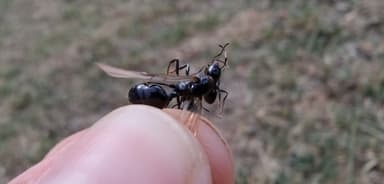
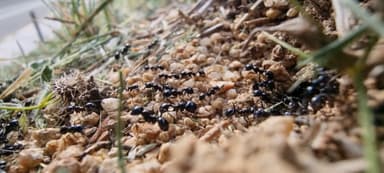
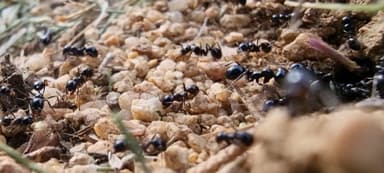
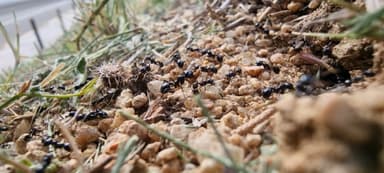
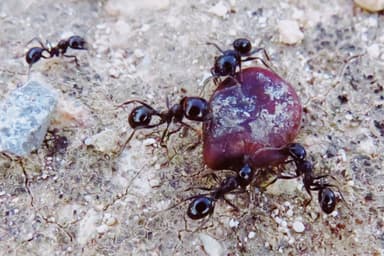
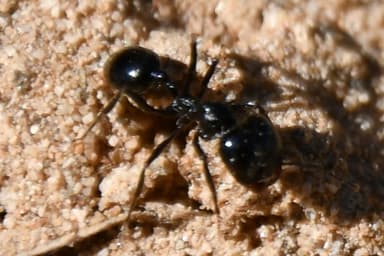
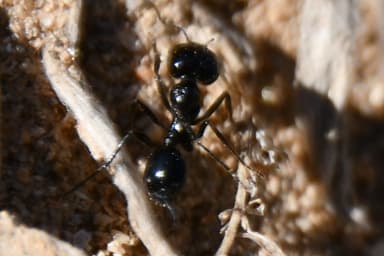
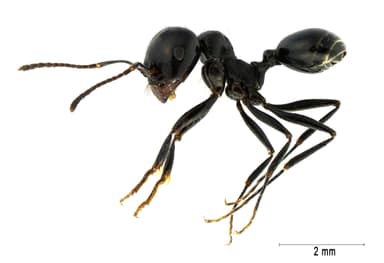
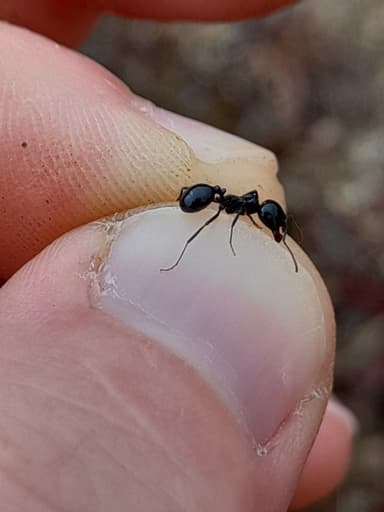
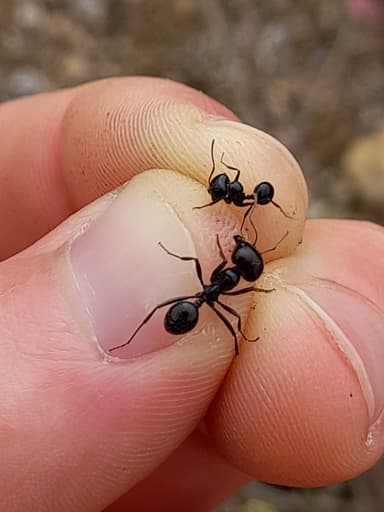
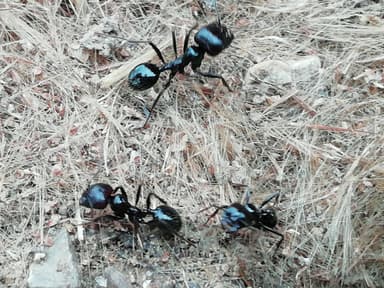
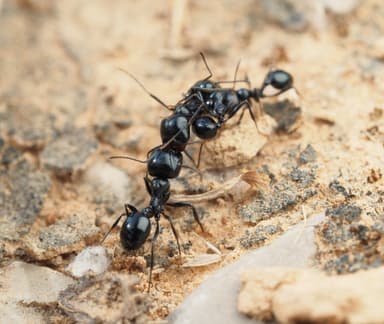
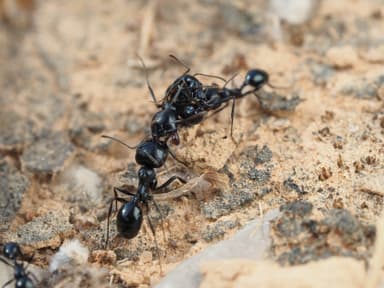
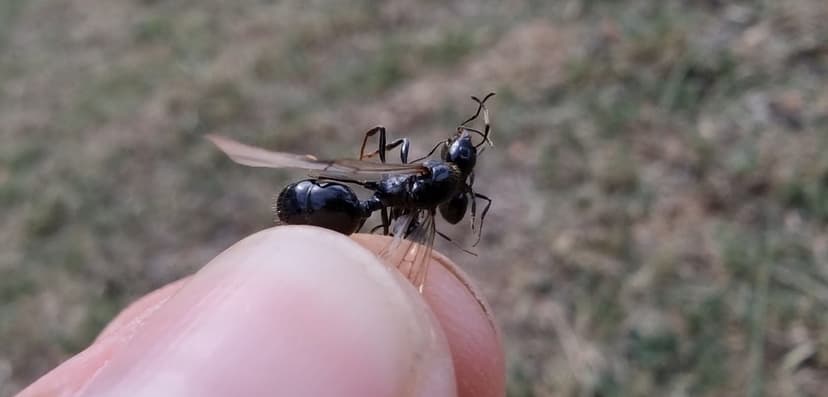
Messor bouvieri is one of the quintessential harvester ants of the Mediterranean rim, a granivorous species whose colonies create bustling seed-cracking factories beneath the sun-baked soils of Iberia, southern France, and Italy. The queen is a robust 11 to 14 mm in length, while her workers display a striking polymorphism that sorts them into three distinct castes: petite minor workers barely 4 mm long, intermediately sized media workers, and large major workers that can reach 9 mm. A fully mature colony hosts up to ten thousand individuals, a teeming city of specialized laborers. What makes this ant so captivating to keep is not only the visual drama of its size variation — watching a tiny minor delicately process a grain while a broad-headed major shears through a hard seed is a constant miniature spectacle — but also its unique dietary reliance on stored seeds, a behaviour deeply rooted in the dry Mediterranean landscapes that Bernard (1968) mapped in his seminal survey of western European ants. Nuptial flights occur on warm, humid mornings following rain in late spring and early summer, usually from May to July, and newly mated queens retreat into the earth to found claustrally, rearing their first workers entirely from internal body reserves.
With a beginner-level care difficulty, Messor bouvieri is an ideal entry point into the world of harvester ants, perfectly suited for hobbyists who appreciate a visually dynamic colony without demanding daily attention. Their feeding habits are refreshingly straightforward: a seed stockpile forms the backbone of the diet, supplemented occasionally with protein and sugars. The ants are resilient and forgiving of minor husbandry errors, provided their basic thermal and humidity requirements are met. Anyone who enjoys observing intricate division of labour — seeds carried by minors, sorted by medias, and crushed by majors — will find this species endlessly engaging. Yet their relative hardiness should not invite neglect; they depend on a well-designed environment that mimics the hot, seasonally dry climate of their native range.
Housing a Messor bouvieri colony means recreating a warm, mostly dry landscape. Aim for an ambient temperature between 22 and 30°C, with a gentle gradient that lets the ants choose their comfort zone — a heat cable or lamp placed at one end of the nest works splendidly. Humidity needs are low, just 30–60%, so good ventilation and a moisture source in only a portion of the nest prevent fungal issues that can plague seed stores. Ytong or plaster nests are excellent, offering a network of chambers that can be kept predominantly dry while a small water tower or test tube provides drinking water and a slightly humid retreat. A fine layer of sand or sandy loam in the outworld helps them get a natural grip, and they will often decorate with discarded seed husks. Because they do not excavate extensive soil nests in captivity, overhead light is not a stressor, but always provide a dark cover for the nest area to make them feel secure. The claustral founding stage typically occurs in a simple test tube setup with a water reservoir, and they will readily move into a prepared formicarium once the worker population grows beyond a few dozen.
Diet centres on a persistent supply of small, hard seeds. Poppy, canary seed, amaranth, dandelion, and various grass seeds are all taken eagerly, often chewed into a nutritious paste known as ‘ant bread’. Place seeds in the outworld; workers will transport them to dry granary chambers inside the nest. Protein, needed primarily by developing larvae, comes from chopped insects such as fruit flies, small crickets, or mealworm pieces — offer a tiny amount once or twice a week, removing uneaten bits before they mold. Sweets, while not a major part of their natural menu, are occasionally relished as an energy boost; a dab of dilute honey or sugar water on a small dish will attract a flurry of attention. Always provide fresh drinking water, either through a test tube refill or a water feeder, changing it regularly to prevent stagnation. Observation of Cagniant’s work on Mediterranean Messor reminds us that in the wild these ants are opportunistic scavengers as well as granivores, so varying the protein sources keeps brood production robust.
A proper cool hibernation is non-negotiable for Messor bouvieri. As days shorten in autumn, gradually reduce heating until the colony experiences a stable 12°C for roughly three months. This can be achieved in a wine cooler, an unheated basement, or a refrigerator set to the correct temperature — just be certain the nest does not freeze. During diapause, activity ceases, the queen stops laying eggs, and workers cluster tightly; they require no food, only a water source to prevent desiccation. In early spring, warm them slowly, and within a few weeks the queen will resume egg production, prompting a gratifying burst of brood. Skipping hibernation leads to dwindling colony vigour and a shortened queen lifespan, as these ants are physiologically tuned to a seasonal rhythm recorded by researchers like Bernard (1968) across their European range.
When your Messor bouvieri colony first arrives, the journey has already been stressful. Set the test tube — with its cotton plug and water reservoir — in a darkened connection to a small outworld, maintaining the recommended temperature range but avoiding direct heat on the tube itself. Give them a full 24 to 48 hours of undisturbed quiet. After that, offer a tiny pinch of mixed seeds and a droplet of honey water on a slip of foil directly in the outworld, then retreat to observe from a distance. A young colony of only a queen and a few workers may not forage boldly, and they may ignore the offering for a day or two. Do not forcibly introduce insects until you see the workers actively collecting seeds and the brood pile growing; a small piece of pre-killed fruit fly can be tried after a week if the colony seems settled. Watch for signs of stress, such as excessive pulling at the cotton or workers dying at the tube entrance. Patience in these early days cements a foundation that will, within a season, grow into a thriving, seed-crunching metropolis.