Meranoplus
Meranoplus bicolor
Nuptial Flight Calendar
Flight months: Jan, May, Jun, Jul, Aug, Sep
Care Guide
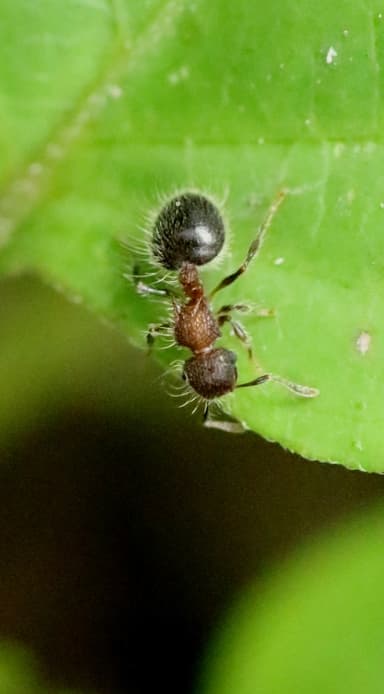
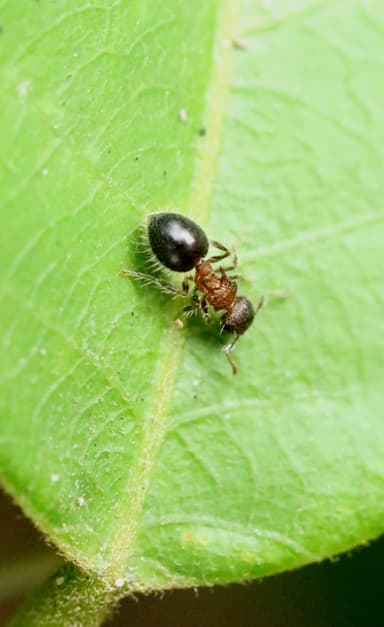
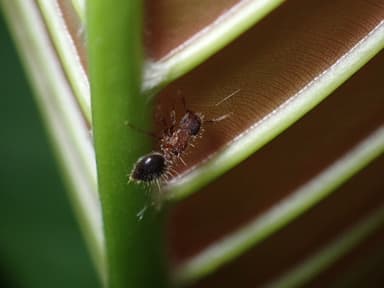
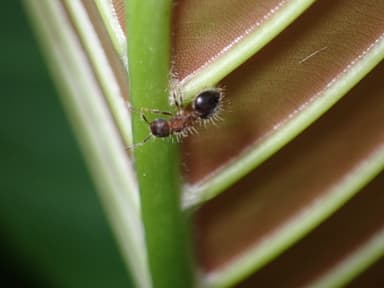
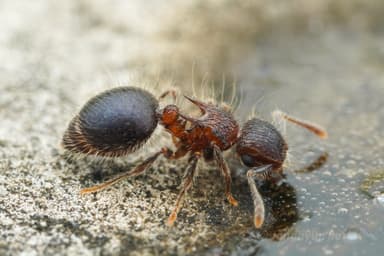
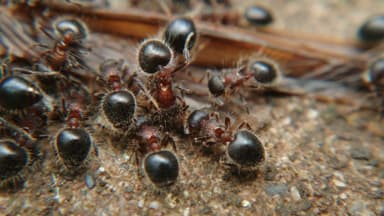
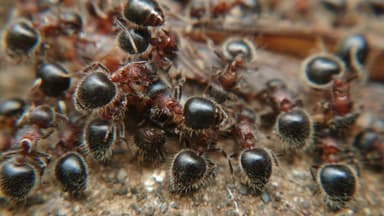
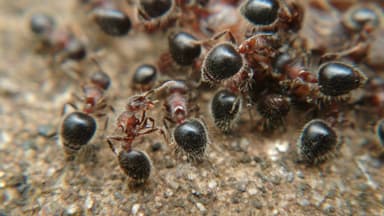
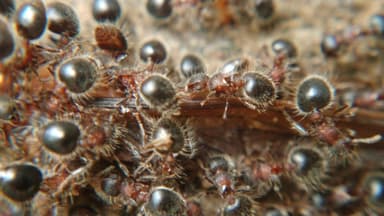
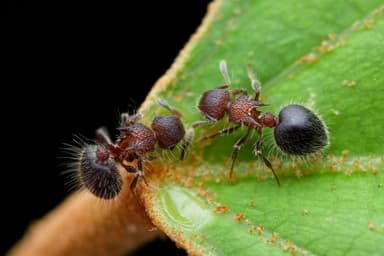
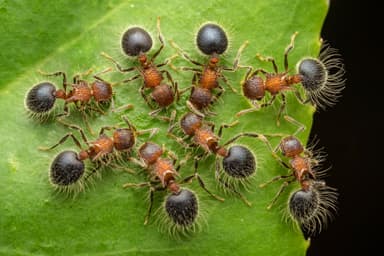
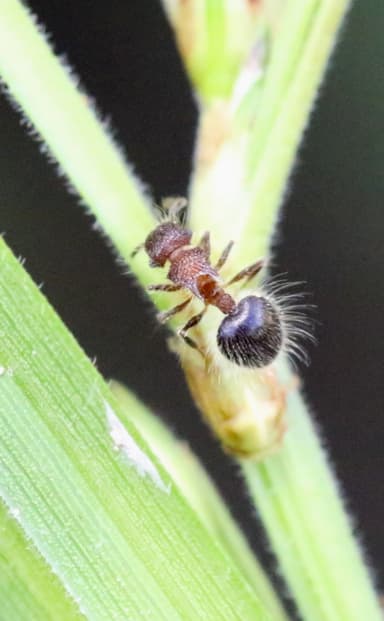
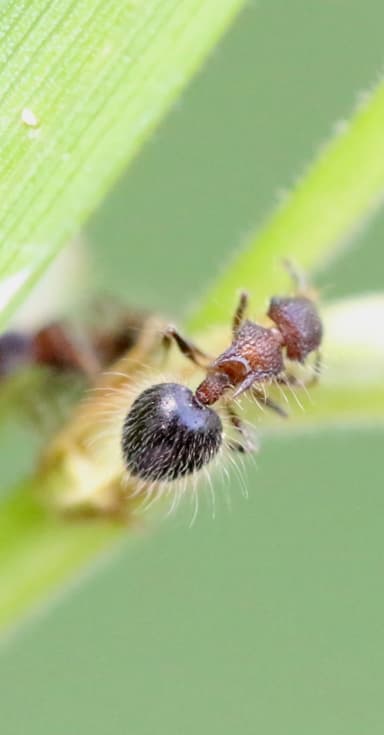
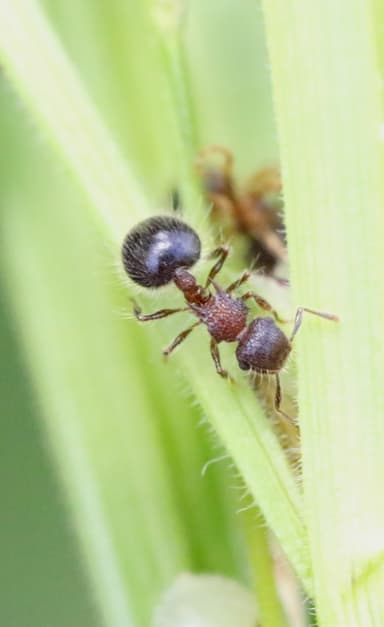
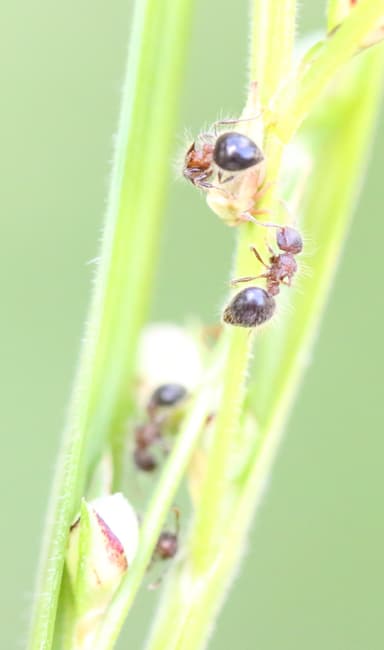
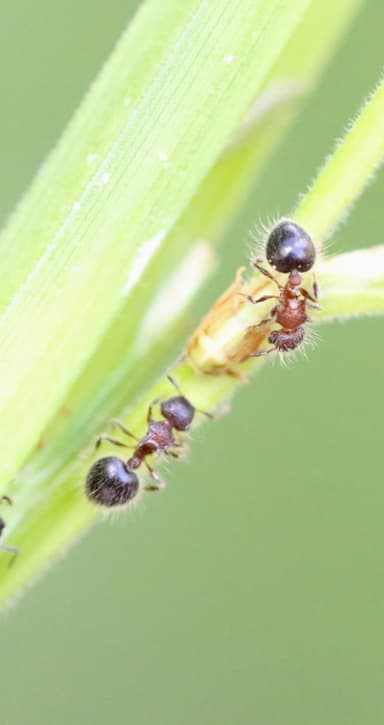
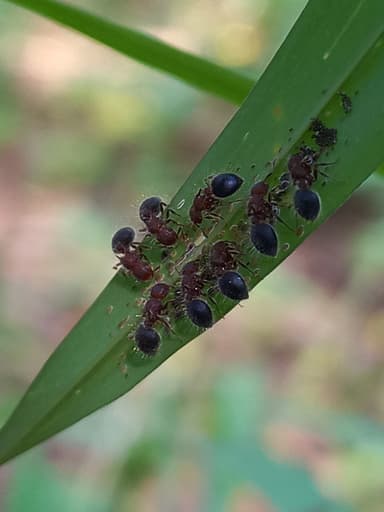
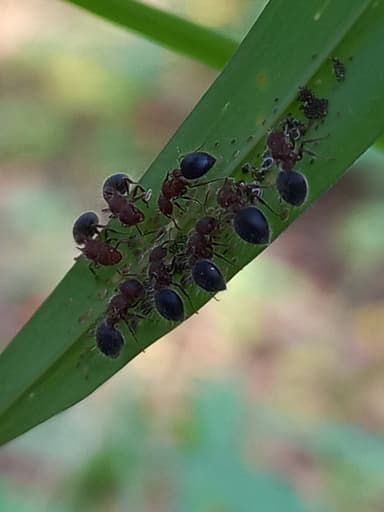
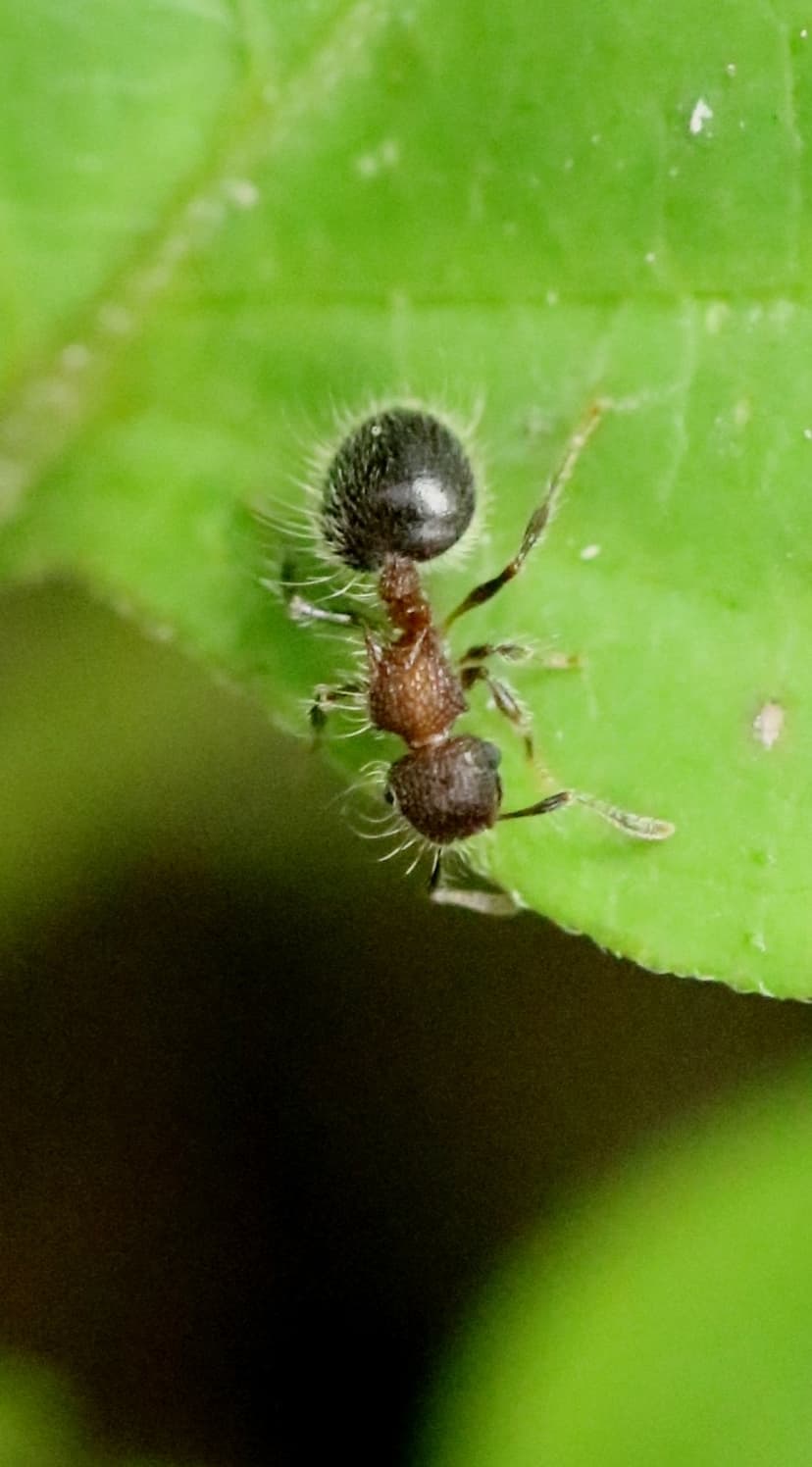
Meranoplus bicolor, often called the bicolor shield ant, is a visually striking and behaviorally fascinating species hailing from the warm lowlands of South and Southeast Asia, with confirmed populations stretching from India across to the Philippines and Indonesia (GBIF). Workers are petite, measuring just 4 to 6 millimeters, while queens are noticeably more robust at 8 to 10 millimeters. Their name hints at their appearance: the head and mesosoma glow a rich reddish-brown, contrasting sharply with a darker, almost black gaster, and the entire body is often dusted with fine golden hairs. The most arresting feature, however, is the heavily armoured, shield-like pronotum that defines the genus. When disturbed, these ants engage in a remarkable behaviour known as thanatosis — shamming death — curling into a motionless ball that can utterly confuse predators and keepers alike (AntWiki). Though the colony remains modest at a maximum of around 3000 workers and caste is limited to a single type of minor worker, their collective foraging, intricate nest building, and this endearing defensive trick make them a truly captivating species for the observant hobbyist.
With an intermediate care difficulty rating, M. bicolor is best suited to keepers who have successfully managed a few beginner species and are ready for a slightly more involved challenge. The primary reason for this rating is the queen’s semi-claustral founding strategy. Unlike ants whose queens seal themselves away to raise the first brood on stored fat, a newly mated M. bicolor queen needs regular access to food. During the fragile founding stage, you must provide a small foraging arena and offer tiny protein meals and sugar droplets, all while minimizing disturbance. Once the first nanitic workers emerge and take over foraging, the colony becomes much more robust and forgiving. Their tolerance for a relatively wide range of temperature and humidity means that, once established, they are not overly delicate, but that initial phase does demand patience and a steady hand. For enthusiasts who enjoy watching the full arc of a colony’s life from a solo forager, this is an incredibly rewarding species.
Creating the right home for Meranoplus bicolor hinges on mimicking their tropical origins without overcomplicating things. Nest temperatures should sit comfortably between 22 and 30°C; room temperature often suffices, but a gentle heat mat placed at one end of the nest can promote faster brood growth during cooler months. Ambient humidity in the nest should be kept within 50 to 70%, but it is crucial to provide a clear humidity gradient with a dry retreat area, as these ants are prone to mold in constantly damp conditions. Ytong or plaster nests with a small hydration chamber work beautifully, as the material wicks moisture gradually. The outworld is where you can really let their natural behaviours shine. A substrate of sandy soil mixed with leaf litter, small pieces of bark, and pebbles allows them to forage, explore, and even excavate shallow piles. A happy quirk is that these ants are rather clumsy climbers: they struggle to scale smooth glass or acrylic, so a lid is often cosmetic, though a band of fluon provides cheap insurance against the odd ambitious worker.
Diet in captivity is simple, mirroring their wild omnivorous scavenging of seeds, small invertebrates, and honeydew. For protein, offer freshly killed insects — fruit flies, pinhead crickets, or small pieces of mealworm — two or three times a week, removing any leftovers after 24 hours to prevent spoilage. Carbohydrates should come from a shallow dab of sugar water, diluted honey, or a commercial ant jelly, renewed every other day. Always make a clean water source available; a test tube waterer with cotton plugged into the outworld is ideal. For the initial founding queen, this regimen is critical: she needs both a tiny protein snack and a minute sugar droplet placed close to her tube right from the start, and she must be fed consistently until her first workers arrive to relieve her of foraging duties.
A major advantage of this species is that it does not require hibernation. Coming from tropical and subtropical latitudes where seasonal temperature changes are mild, M. bicolor can be kept active all year round, making them a wonderful choice for keepers who dislike the long winter pause. When your new ants first arrive, a calm, hands-off approach is essential. If you are starting with a founding queen in a test tube, set the tube into a small outworld; she may remain utterly still or even sham death when exposed to light or vibration. Simply place a grain of protein and a droplet of sugar water near the tube entrance, cover the setup, and leave her undisturbed for at least 24 hours. For a small colony already with workers, attach their travel tube to the outworld and let them discover the new space on their own. You will likely see subdued activity for the first day or two, but soon a few bold foragers will emerge, typically at night. Watch for any signs of mold in the food area, keep the environment stable, and you will be rewarded with a thriving, animated colony whose curled-up feigning displays will never fail to bring a smile.