Formica
Formica gagates
Nuptial Flight Calendar
Flight months: Jul, Aug
Care Guide
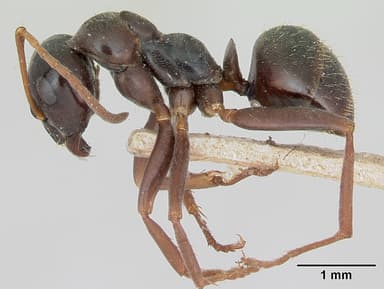
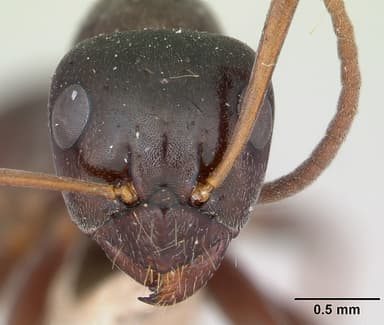
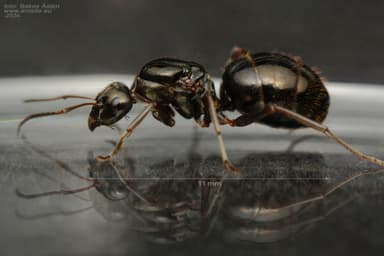
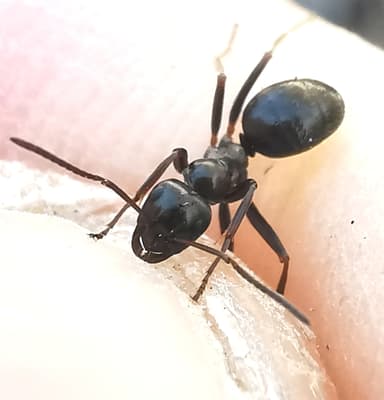
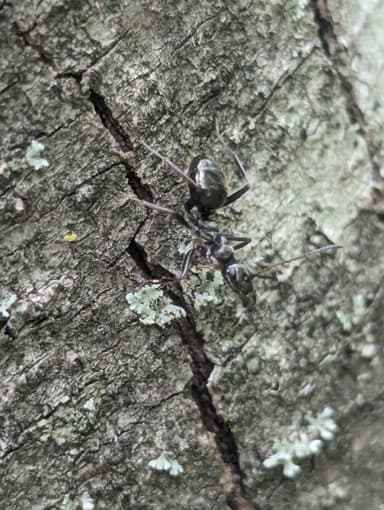
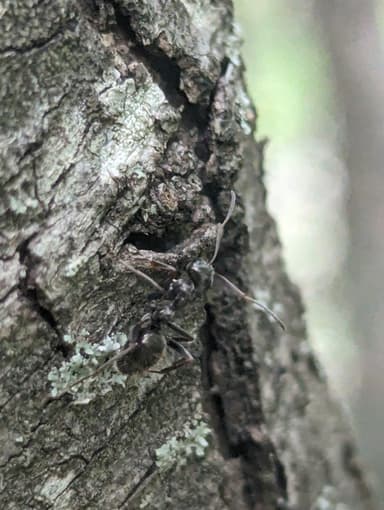
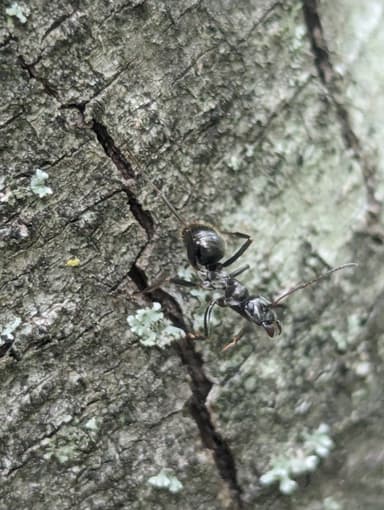
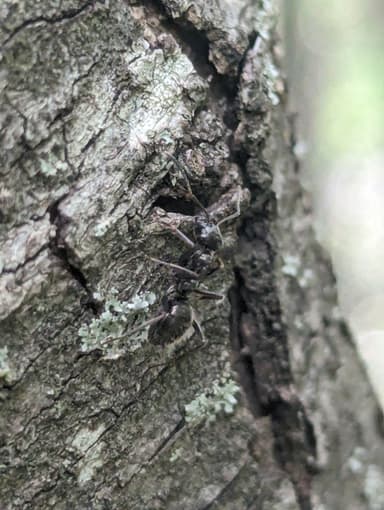
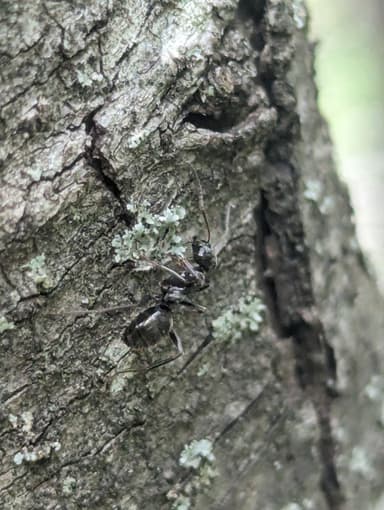
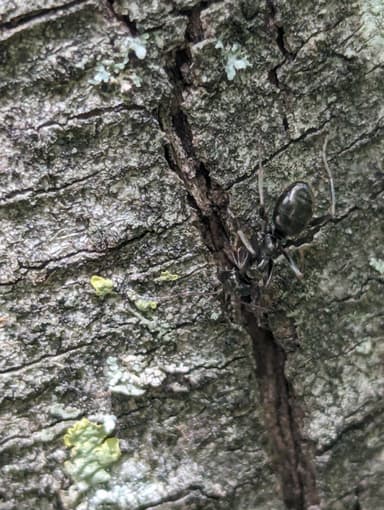
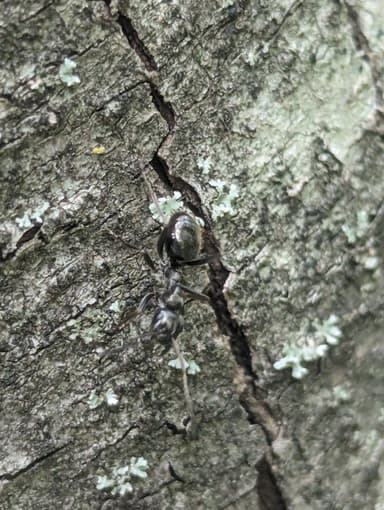
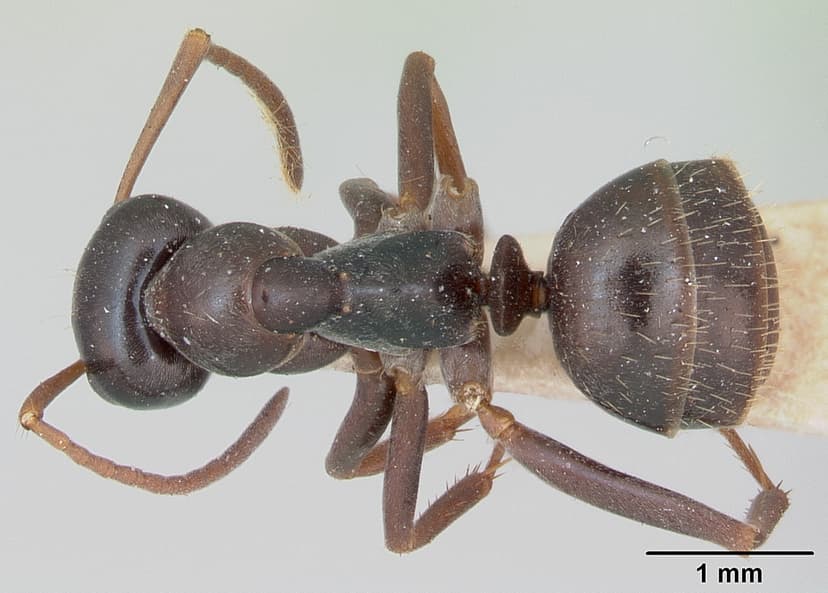
Formica gagates is a captivating ant whose name hints at its most arresting feature — derived from the Latin for jet, a deep glossy black that covers the entire body like polished lacquer. Queens are notably robust at 9 to 11 millimetres, while the workers, though monomorphic, still show a useful size range of 4.5 to 7 millimetres, giving the colony a dynamic visual texture as they hustle through the outworld. In mature colonies that may reach up to 5,000 individuals, these ants exhibit a bustling, almost restless energy that makes them endlessly watchable (Seifert 2018). They are widely distributed across Europe, from the Mediterranean basin northward into southern Scandinavia, and west to east from Portugal to the western Caspian region, always favouring sun-exposed, sandy soils where they nest under stones or in small earthen mounds (Czechowski et al. 2002). Nuptial flights typically occur in July and August on warm, humid afternoons following rain, with reproductives taking to the air in calm conditions. What truly sets F. gagates apart for the hobbyist is their unflinching defensive behaviour — when threatened they can spray formic acid with impressive accuracy — coupled with a diurnal foraging rhythm that fills the outworld with purposeful activity throughout the day.
This combination of speed, acidic spray, and alert temperament places the species firmly at an intermediate level of care. It is best suited to keepers who already have a grasp of escape-proof setups and a steady hand for maintenance, as an open lid or a moment’s inattention can lead to a chaotic scattering of determined, fast-moving workers. Beginners who are methodical by nature might still succeed, but they must be prepared for the additional demands of a mandatory hibernation period and the need to react calmly if defensive behaviours are triggered. That said, the colony’s responsiveness and visibility reward those who enjoy an ant species that feels less like a hidden treasure and more like an ever-present, feisty community within their living space.
Housing for Formica gagates should recreate the aerated, slightly humid microclimate of a soil-covered rock. A ytong or gypsum nest block with integrated water reservoirs is ideal, with relative humidity maintained between 50 and 70 percent and the temperature kept in a comfortable band of 20 to 26 degrees Celsius. Providing a gentle thermal gradient — perhaps by attaching a small heat mat to one end of the nest — lets the ants self-select, but avoid overheating or drying out the nest completely. The outworld must be generously sized, not only to prevent overcrowding stress but also to give them room to forage and to display their natural exploratory drive. A sand-clay mixture or fine loam as substrate in the outworld allows limited digging and gives the setup a naturalistic feel. Given their agility and readiness to climb smooth surfaces, a dedicated barrier of PTFE or an oil-based fluon application, refreshed as needed, is an absolute necessity alongside a tightly fitting lid.
Nutrition is refreshingly straightforward. Protein sources should be offered roughly twice a week: small crickets, chopped mealworms, or fruit flies that have been stunned or freshly killed to protect the workers from injury. A constant supply of carbohydrates in the form of honey or sugar water, presented on a small drip-free feeding tray and renewed every few days, mimics the honeydew they avidly collect from aphid herds in the wild. Always ensure a clean water source, easily provided by a test tube with a cotton plug placed in the outworld or a water-soaked wick. Workers will quickly locate and memorise these resources, and you can expect a steady stream of foragers at the feeding station within hours of a new offering.
Hibernation is not optional — it is a physiological necessity for their long-term health and for the queen’s continued egg production. At a stable temperature of around 5 degrees Celsius, the colony requires a three- to four-month winter rest, typically from November through February. Transition them gently by reducing temperature over two weeks in late autumn, and place the nest in a frost-free but cool environment such as a dedicated refrigerator with a temperature controller or an unheated garage that remains reliably in the target range. During this time, movement virtually ceases and the colony clusters tightly; this is entirely normal, and no feeding is needed. An improper or skipped hibernation leads to dwindling brood, queen failure, and a listless workforce that never regains its vigour.
The first days after bringing your Formica gagates home call for patience and minimal interference. Unpack the sealed transport container and leave it in a dim, quiet spot for a full day so that vibrations and light stress can dissipate. Then connect it to the prepared outworld, but resist the urge to prod or introduce food immediately. After twelve to twenty-four hours, present just a pinhead-sized droplet of sugar water near the nest entrance — not inside the nest itself — to gauge their readiness. Hold off on insect protein until you observe confident, repeated trips to the sugar source, which may take up to a week. Watch for signs of distress such as non-stop rapid circling against the barrier or huddling in a far corner; these often indicate either overly high humidity or excessive disturbance. A temporary cover over the nest glass and strict avoidance of loud noises helps the colony settle into a calm, predictable rhythm. Once workers are returning to the nest with full crops and the queen is seen laying eggs, you can transition smoothly into the regular diet and care routine that will sustain this lively, glossy society for years.