Polyrhachis
Polyrhachis ypsilon
Care Guide
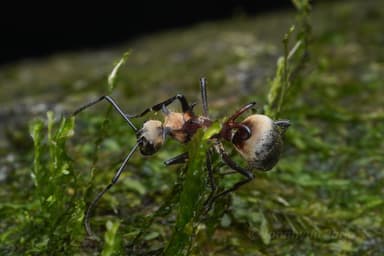
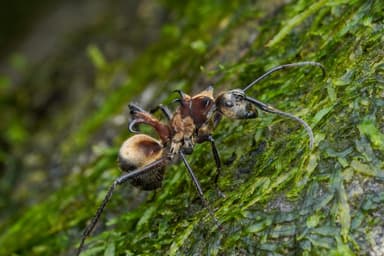
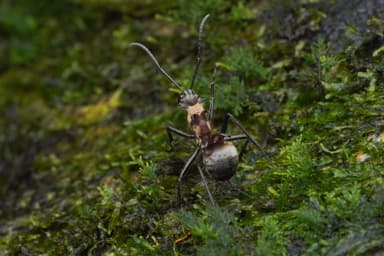
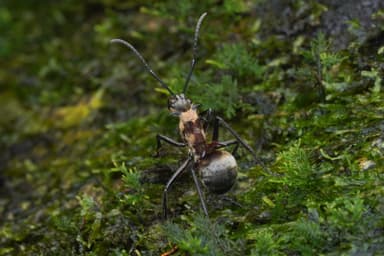
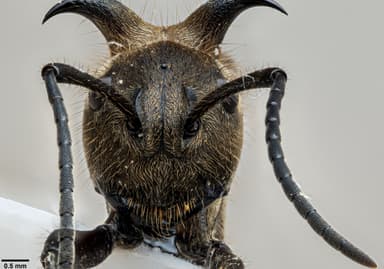
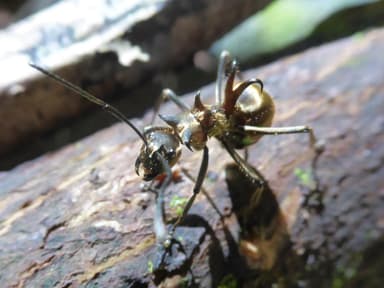
Polyrhachis ypsilon, commonly known as the Y-spined spiny ant, is a visually striking species that brings both elegance and character to any formicarium. The most distinctive feature of these ants is the pair of long, curved spines on the alitrunk (thorax) of the workers, which form a Y-shaped silhouette when viewed from above. These spines are not merely ornamental — they serve as a powerful defense mechanism, making the ants difficult for predators to swallow. The queen, measuring 10–12 mm, is robust and bears a similar spiny armor, while workers range from 6–8 mm. The colony size typically reaches between 200 and 1,000 individuals, creating a lively but manageable community.
One of the most fascinating aspects of Polyrhachis ypsilon is their nesting behavior. Many species in this genus are known as “weaver ants” that use larval silk to glue together leaves, but Polyrhachis ypsilon is more of a ground-nesting or cavity-nesting species, often constructing silk-lined chambers within pre-existing cavities. These ants are agile climbers and appreciate vertical structures in their enclosure. Their diet is broad: they readily accept a variety of insects such as fruit flies, crickets, and mealworms, alongside sugar water, honey, and honeydew. This mix provides all the protein and carbohydrates needed for steady colony growth.
Care difficulty
Keeping Polyrhachis ypsilon is rated as intermediate, mainly due to their semi-claustral founding method. Unlike fully claustral queens that seal themselves away, the queen of this species must leave the nest regularly to forage for food during the early stages. This means she requires a safe, escape-proof setup with accessible feeding areas from day one. Once workers appear, care becomes more straightforward, but the colony remains somewhat sensitive to sudden changes in environment. Regular feeding and stable conditions are key to success.
Housing
A formicarium with good ventilation and climbing opportunities is ideal for Polyrhachis ypsilon. Provide a nesting chamber with a substrate that holds humidity well, such as a mix of sand and soil or a plaster nest. The recommended humidity range of 50–70% supports larval development and keeps the silk they produce from drying out. Temperature between 23–28°C encourages activity and brood growth. An outworld with a secure lid is essential — these ants are excellent climbers and will escape through any gap. Include twigs, bark, or cork for climbing, and a small water dispenser or test tube for hydration.
First days after purchase
Upon receiving your Polyrhachis ypsilon colony, place the formicarium in a quiet, dimly lit spot. Allow the ants at least a day to settle without disturbance. If the queen is still founding, ensure she has access to a small drop of sugar water and a tiny insect piece near her nest entrance — do not force-feed her. Observe but do not handle the nest directly; vibrations can stress the colony. Over the following days, check that humidity levels are correct and that the ants are drinking. Once they begin exploring the outworld, you can gradually introduce more food and establish a regular feeding routine. Patience and a gentle touch will reward you with a resilient, beautiful colony.