Cataglyphis
Cataglyphis cubica
Nuptial Flight Calendar
Flight months: Jul, Aug
Care Guide
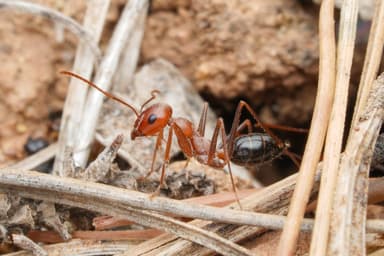
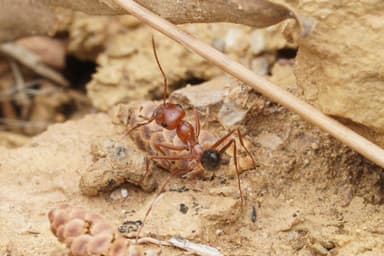
Keeping Cataglyphis cubica, the Saharan silver ant, is an invitation to witness one of nature’s most heat‑adapted marvels. This species, known for its shimmering, metallic‑grey workers that sprint across desert dunes at midday, belongs to a genus famed for extreme thermophily and visual navigation. Workers typically measure between 5 and 8 millimetres, with a monomorphic caste structure, though queens are noticeably larger and more robust. Colonies in the wild are modest, often numbering only a few hundred to a thousand individuals, and are strictly monogynous. What truly sets C. cubica apart is its foraging behaviour: scouts leave the nest when surface temperatures soar well above 45°C, far too hot for most competitors and predators. They rely on a combination of path integration, landmark learning, and possibly polarised light detection to navigate barren landscapes (Wehner et al. 1983). In captivity, this translates into a creature that is endlessly active in the warmest parts of the day, a real spectacle for keepers who can meet its specialised needs.
Care difficulty for this ant sits at moderate to advanced, making it a poor choice for beginners. The primary challenge is replicating the intense heat and aridity of its native Saharan habitat, while simultaneously providing adequate hydration and preventing escapes—Cataglyphis workers are exceptionally fast and alert. Hobbyists who have successfully kept desert‑adapted ants and who enjoy fine‑tuning thermal gradients will find the effort deeply rewarding. Semi‑claustral founding is the rule; a newly mated queen requires a small foraging area from day one, as she must hunt for protein to rear her first brood. This adds a layer of complexity compared to fully claustral species, demanding daily attention until the first workers emerge. For anyone prepared to invest in a dedicated desert setup and commit to regular, careful feeding, C. cubica offers a glimpse into a world of extreme biological specialisation.
Housing must mimic a sun‑drenched sandscape. A glass or plastic terrarium with a tight‑fitting, fine‑mesh lid and a wide PTFE‑based escape barrier is essential. The nest itself can be a plaster, ytong, or sand‑filled chamber with a network of tunnels; a well‑ventilated, horizontally oriented nest works well. Temperature is the most critical parameter: provide a basking spot that reaches 40–45°C at one end of the outworld, with a gradient tapering to around 28–30°C at the nest entrance. Night‑time temperatures can safely drop to 20–25°C. Humidity should be as low as practically possible, ideally 30–40%, though a small water source—a test tube with a cotton plug or a micro‑waterer placed well away from the nest—must always be available; desert ants derive a surprising amount of moisture from their insect prey but still need open drinking water. Substrate should be fine, dry sand at least 5 cm deep, which not only enables natural digging behaviour but also aids in creating thermal microclimates. A heat lamp or ceramic heater on a thermostat is the most reliable way to maintain daytime highs, and a UVB lamp, while not proven essential, may support cuticular sheen and navigation behaviour as it does in some diurnal insects.
Dietarily, C. cubica is an opportunistic scavenger‑hunter. Protein should come chiefly from freshly killed or live small insects: fruit flies, pinhead crickets, mealworms, and chopped roaches all work well. Because workers forage at peak heat, offer protein during the warmest hours, when they are actively scouting. Carbohydrates are equally important; a thin smear of honey or a commercial ant nectar placed on a small pebble or dish will be avidly collected. Be cautious with liquid sugars—provide tiny quantities to prevent drowning. Water, as noted, must be constantly available, but never in a form that raises humidity significantly. A test tube with a cotton wick is ideal. Colony growth is gradual, and overfeeding should be avoided; remove uneaten food after 24 hours to prevent mould.
True hibernation is not required, and forcing a long, cold diapause can be fatal. However, in their native range, C. cubica experiences a brief, mild winter cooling. Many experienced keepers simulate a six‑ to eight‑week rest period by gradually dropping the daytime temperature to 22–25°C and halving the photoperiod, while still offering a small heat spot. This seasonal modulation often stimulates egg‑laying and keeps colony health robust. If you choose not to alter conditions, the colony will remain active year‑round, though the queen may slow egg production during shorter day lengths of winter, even at constant temperature.
The first days after acquiring a queen or small colony are delicate. For a founding queen, house her in a transparent, well‑ventilated tube half‑filled with dry sand, attached to a tiny foraging box containing a small water source and a few grains of honey. Place one freshly killed fruit fly or a piece of mealworm near the entrance; she will explore, feed, and retreat to the nest. Disturb her as little as possible for the first week, only checking to remove mouldy food. If you have a young colony with a handful of workers, introduce them to their permanent desert setup but keep them sealed within the nest area for the first 24 hours, allowing them to acclimate. Offer a tiny drop of honey and a pre‑killed insect on the second day. Watch for frantic, endless pacing or workers refusing to settle—this often signals inadequate heat or an ineffective barrier. An infrared thermometer is invaluable for verifying that the basking zone is truly reaching its target. With patience, you will soon see that magical moment when the first workers emerge at midday, their silvery bodies glinting as they dash effortlessly across the sand, a miniature echo of the Sahara in your own home.