Pogonomyrmex
Pogonomyrmex maricopa
Nuptial Flight Calendar
Care Guide
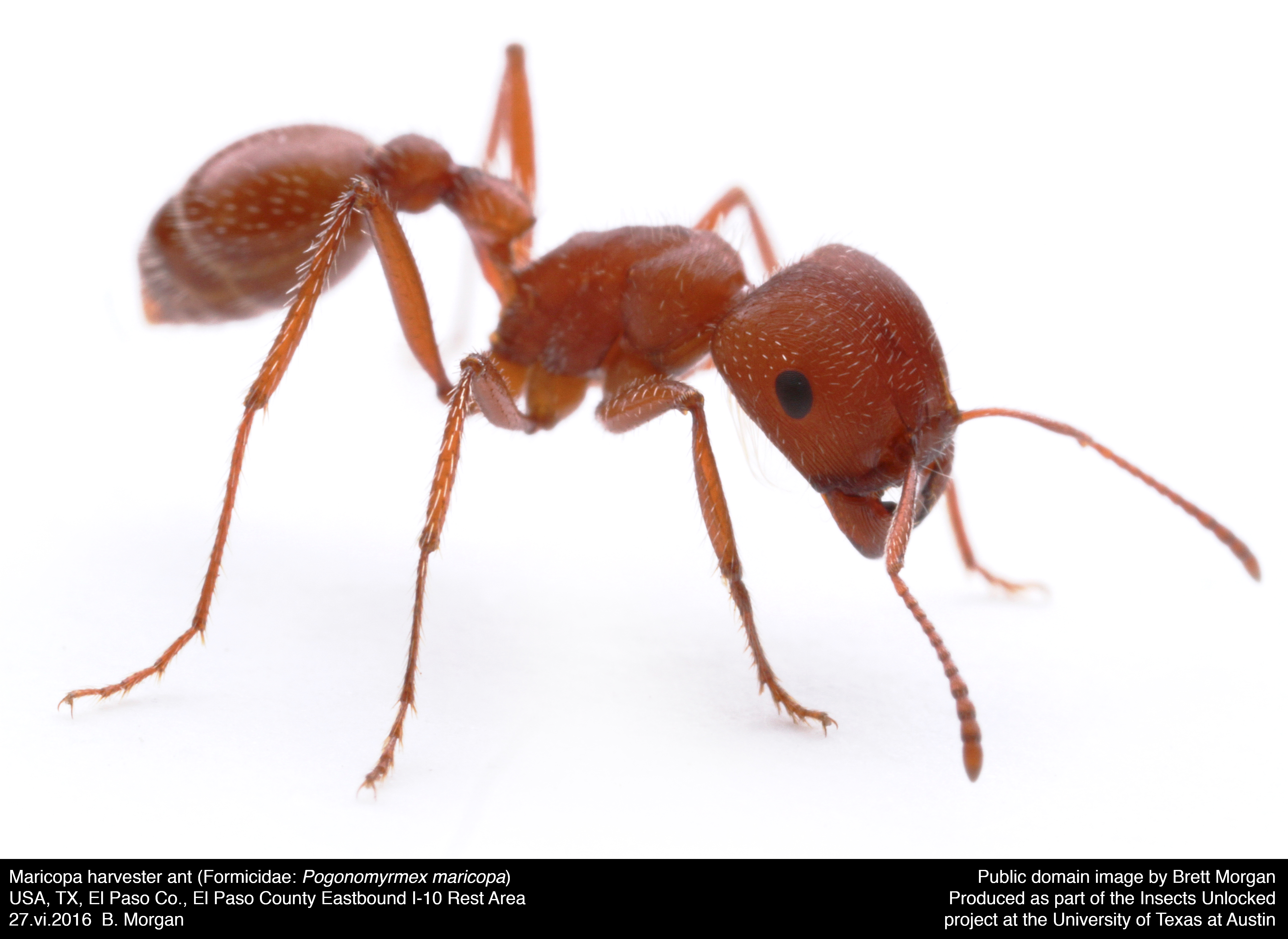
Pogonomyrmex Maricopa — often called the Maricopa harvester ant — is a striking species known for its fiery temperament and potent venom. The queen measures between 10 and 12 mm, while workers range from 6 to 9 mm. These ants do not show the dramatic polymorphism seen in some other seed-eaters; instead, they exhibit a relatively uniform worker size, though minor variations occur. What they lack in physical diversity, they more than make up for in intensity. The Maricopa harvester ant possesses one of the most painful insect stings in North America — a detail any keeper should respect, though it rarely becomes an issue if proper handling precautions are taken.
Their diet is the cornerstone of their biology. Pogonomyrmex maricopa is a dedicated seed harvester, collecting a wide variety of seeds from grasses and forbs. Workers will also gather insects and other protein sources, especially during brood rearing. Unlike some harvester ants that merely store seeds whole, these ants de-hull them and grind them into a nutritious paste that feeds the entire colony. A steady supply of high-quality seeds (such as poppy, millet, or canary seed) combined with occasional protein feedings — like small crickets or mealworms — will keep the colony thriving. They do not require hibernation, making them an excellent choice for keepers who prefer a year-round active colony.
Care difficulty
Keeping Pogonomyrmex maricopa places you firmly at an intermediate level. The founding stage is semi-claustral, meaning the queen must leave the nest to forage for food while raising her first brood. This demands careful feeding and a watchful eye, as the queen is vulnerable during this period. Once the colony grows, care becomes more straightforward, but their sensitivity to disturbances and their powerful sting require a respectful, hands-off approach. This is not a species to poke or prod.
Housing
A well-ventilated formicarium with a dry nesting area is essential. Humidity should be kept low — between 30 and 50 percent — as these ants come from arid habitats. The outworld should offer a deep layer of sand or a suitable substrate for seed storage and waste disposal. Temperature should be warm, between 24 and 32 °C, with a heat mat or cable placed on one side to create a gradient. These ants are highly photosensitive; cover the nest area with red film or a dark cloth to reduce stress. A spacious foraging arena is also important, as they are enthusiastic foragers that will tirelessly collect seeds and explore every inch of their territory.
First days after purchase
Upon arrival, place the queen or small colony into their new formicarium and set it in a dark, quiet corner. Do not disturb them for at least 48 hours. Provide a drop of honey-water or sugar water on a small piece of foil, and a tiny pinch of seeds. Ensure a clean water source is available — a test tube with a cotton plug works well. Observe from a distance; any vibration or bright light will cause unnecessary stress. Over the first week, gradually introduce small protein offerings and monitor acceptance. Patience is key — once the first workers emerge, the colony will gain confidence and you will witness the fascinating spectacle of these desert harvesters at work.