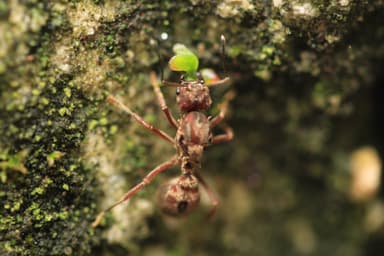
Acromyrmex
Acromyrmex disciger
Care Guide
Acromyrmex disciger is a striking leafcutter ant that showcases the remarkable complexity of fungus-farming societies. These ants display clear polymorphism, with the queen reaching 11–14 mm in length, while workers range from tiny 2 mm minims up to large 10 mm majors. The major workers possess powerful mandibles and a more robust build, specialized for cutting and transporting leaf fragments. This size variation reflects the division of labor within the colony, where each caste performs specific tasks from foraging and leaf processing to caring for the fungus garden.
The most captivating feature of Acromyrmex disciger is their symbiotic relationship with a specific fungus, Leucoagaricus gongylophorus. The ants provide fresh plant material as substrate for the fungus, and in return, the fungus produces nutrient-rich gongylidia — specialized swollen hyphae that serve as the colony’s primary food source. Unlike seed-eating ants, leafcutters cannot digest plant matter directly; they rely entirely on their fungal partner. This means their diet consists almost exclusively of fresh leaves, flowers, and other vegetation, though they may occasionally accept small amounts of protein like insect pieces to supplement the fungus growth. Avoid offering sugary or oily foods, as these can contaminate the garden.
Care difficulty
Keeping Acromyrmex disciger is an advanced undertaking, best suited for experienced keepers who can provide consistent conditions and a steady supply of suitable leaves. The colony’s dependence on a living fungus makes care more demanding than for species with simpler feeding habits. Temperature must be maintained at 24–28°C, and humidity levels between 70–90% are critical — the fungus garden will desiccate quickly if too dry, yet rot if waterlogged. Regular monitoring of ventilation and moisture is essential.
Housing
A well-designed formicarium for Acromyrmex disciger should separate the fungus chamber from foraging and waste areas. The nest requires a substrate that retains moisture without becoming soggy, such as a mix of clay and sand. A dark, vibration-free environment is crucial, especially during colony growth. The foraging arena must be large enough to accommodate leaf fragments and allow the ants to process them. Always provide a constant source of clean leaves — non-toxic, pesticide-free options like bramble, rose, oak, or privet work well. Remove wilted or moldy leaves promptly to prevent contamination.
First days after purchase
Upon receiving your Acromyrmex disciger colony, place the formicarium in a quiet, dimly lit location and allow the ants at least 48 hours to settle. Do not disturb them unnecessarily. Ensure the fungus garden remains intact — if it has been disturbed during transport, the ants will begin rebuilding. Provide a small, fresh supply of leaves immediately, but avoid overfeeding. Observe the colony’s activity: if ants are carrying leaf fragments to the fungus, they are adapting well. Keep the nest area slightly warmer and more humid than the foraging arena. Patience is key — these ants may take several days to resume normal foraging. With careful attention to humidity, temperature, and leaf quality, your colony will soon thrive and reveal the mesmerizing world of fungus agriculture.