Pheidole
Pheidole indica
Nuptial Flight Calendar
Flight months: Apr, May, Jun, Jul, Aug, Sep
Care Guide
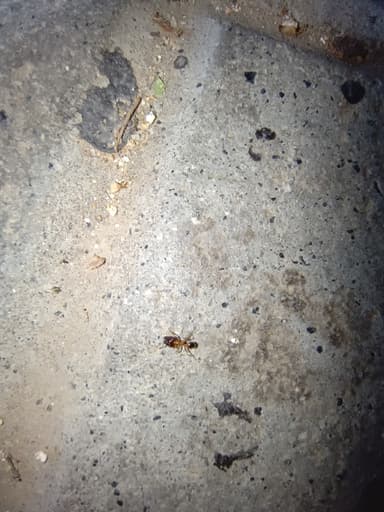
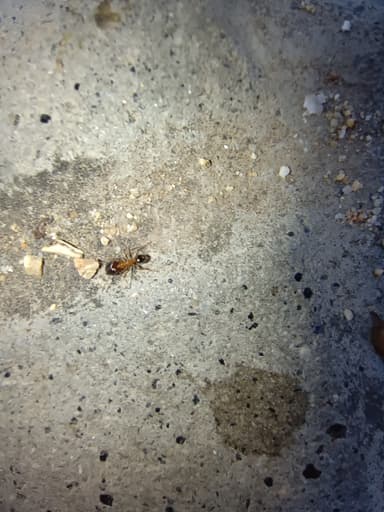
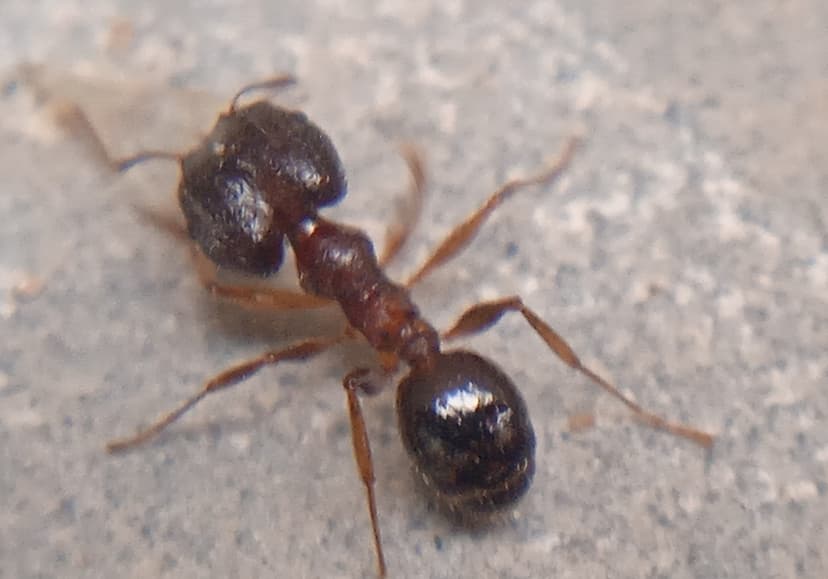
Pheidole indica is a captivating member of one of the world’s most hyperdiverse ant genera, and its combination of rapid growth, pronounced worker polymorphism, and adaptability has made it a rising star in the hobby. Queens measure a robust 5 to 6.5 mm, while the true spectacle lies in the workforce: a striking division between tiny 1.8–3.5 mm minor workers and dramatically larger, big-headed major workers that can exceed 3.5 mm in body length. These majors serve as seed millers, defenders, and food processors, famously blocking nest entrances with their blocky crania. Colonies are founded claustrally by a single queen and, in the wild, often swell to 10,000 individuals within a few seasons. Native to South and Southeast Asia, where it thrives from India to Japan and down through the Indo-Australian archipelago (GBIF occurrence data; Sarnat et al. 2015), P. indica has also established introduced indoor populations in Southern Europe, a testament to its resilience. For keepers, the allure lies in watching a colony explode from a lone queen into a teeming, ever-active society where dimorphic workers coordinate with almost military precision — a living illustration of the social complexity that E. O. Wilson celebrated in his monumental revision of the genus (Wilson, 2003).
From a care perspective, this species is remarkably forgiving and earns a beginner rating. Pheidole indica requires no winter diapause, tolerates a broad range of conditions, and bounces back from minor husbandry mistakes, making it an ideal introduction to polymorphic ants. However, its beginner-friendliness does not imply it is low-maintenance: the colony’s sheer numbers and minute minor workers demand strict escape-proofing. A thin smear of PTFE or a secure lid with fine mesh is mandatory, as these ants are masters at finding the smallest gap. The species suits keepers who delight in fast-paced colony development and the logistical challenge of feeding a growing superorganism. New hobbyists will appreciate the visual drama of major and minor workers interacting, while more experienced enthusiasts can explore the nuances of dietary variation on caste production — though one must be prepared for a colony that never truly “switches off,” as it remains active year-round in the 22–30 °C comfort zone.
Housing Pheidole indica is straightforward if you respect their tropical origins and explosive brood production. In nature, they nest in soil, under stones, and in rotten wood, but in captivity they readily accept plaster, gypsum, or Ytong nests with a network of snug chambers. Provide a temperature range of 22 °C on the cooler side to 30 °C at the warmest spot; a heating mat or cable placed under one-third of the nest allows workers to thermoregulate and speeds brood development. Humidity should remain between 50 and 70 percent, achieved by a water-filled test-tube entrance or a periodic misting of the nest area — be careful not to over-saturate, as the ants need gradient choices. A thin layer of sand-loam mix in the outworld satisfies any digging urge and helps maintain foraging area humidity, but a completely dry, clean setup with a water source works just as well. Crucially, ensure all openings are large enough for majors; a nest entrance that accommodates a minor’s head may frustrate or even trap the big-headed soldiers. As the colony edges toward its 10,000-strong potential, plan on expanding the nest volume incrementally to prevent overcrowding and the accompanying brood cannibalization.
This species is a voracious generalist, and its dietary flexibility simplifies husbandry. Protein is critical for larval growth: offer small, freshly killed insects such as fruit flies, crickets, or mealworm pieces, adjusting prey size to the colony’s strength. Minor workers swarm enthusiastically over food, and the imposing majors will often take over, using their powerful mandibles to dismember prey into manageable fragments. For carbohydrates, provide a constant supply of sugar water, honey diluted with water, or commercial liquid feeders; a test tube plugged with cotton or a small dish filled with sponge prevents drowning. Fresh, clean water must always be available, either via the sugar-water feeder or a separate plain-water source. As the colony grows, you’ll notice an almost alarming appetite — a large colony can consume several fruit flies daily. Dusting prey with a calcium or multivitamin powder once a month can support brood vitality, though it is not strictly necessary if the colony has a varied diet. Avoid leaving large live prey that could injure workers, and remove uneaten food after 24 hours to prevent mold.
In a departure from many temperate ants, Pheidole indica does not hibernate. This tropical ant maintains its metabolic pace throughout the year as long as temperatures stay within the optimal 22–30 °C band. There is no need to chill the colony, nor will you observe a natural slowdown; in fact, in its introduced European range, heated buildings allow nuptial flights and brood production even during winter months (AntWiki: Pheidole indica; GBIF occurrence data). For the keeper, this means a lively colony that rewards constant feeding and observation, but it also demands consistent year-round care planning. You will never face a dormant fridge period, making this species exceptionally well-suited for those who find hibernation logistics daunting or who simply wish to enjoy an active ant display all year.
The first days after purchase set the tone for the colony’s long-term health. When your Pheidole indica queen and her first workers arrive, resist the temptation to immediately connect an outworld or flood them with food. Keep the test tube or small founding nest wrapped in red film or in a dark drawer at a steady 24–26 °C and 60 percent humidity for 24 to 48 hours. After this settling period, offer a minuscule drop of sugar water on a piece of aluminium foil just outside the tube entrance. If the workers take it readily, wait another day before introducing the first protein — a freshly killed, tiny fruit fly or pinhead cricket. Watch closely: the queen should remain calm, her gaster rounded, and the workers should retrieve the food and tend to the brood pile. Signs of excessive stress include continuous tugging at the cotton plug, workers ceaselessly circling, or the queen abandoning her brood. Once you observe steady foraging and a clean nest, you can connect a small outworld with an escape-proof barrier. Within weeks, the colony will begin its remarkable expansion, and you will have a front-row seat to one of nature’s most dynamic micro-societies.