Odontomachus
Odontomachus rixosus
Care Guide
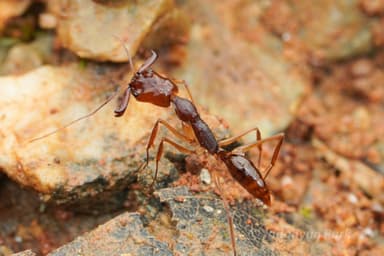
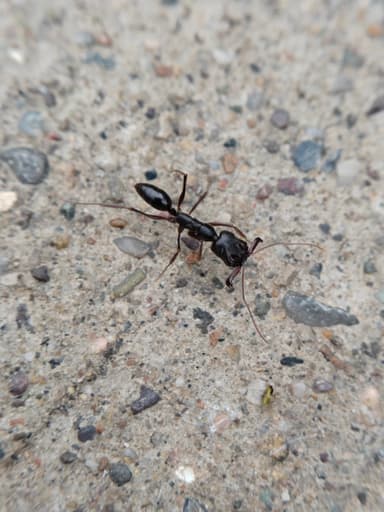
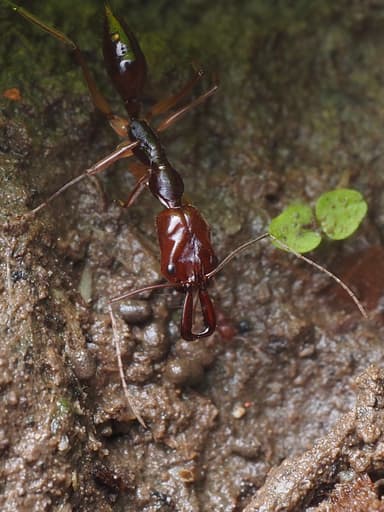
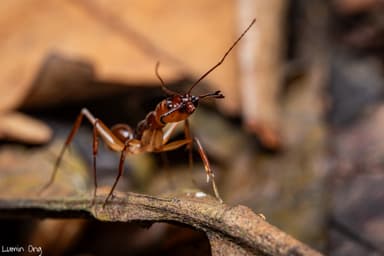
Odontomachus rixosus, commonly known as the trap-jaw ant, is a striking species native to Southeast Asia. Its most remarkable feature is its pair of long, powerful mandibles that snap shut with incredible speed and force — one of the fastest movements in the animal kingdom. These jaws can be used to capture prey, defend the colony, or even launch the ant itself backward to escape threats. The queen measures 10–12 mm, while workers reach 8–10 mm. Colonies are relatively modest in size, typically numbering between 100 and 500 individuals. Workers are agile, with large eyes and a narrow waist, giving them a sleek, predatory appearance. They are also equipped with a painful sting, so care is advised when handling or maintaining their setup.
Odontomachus rixosus is semi-claustral, meaning the founding queen must forage for food to raise her first brood. This adds a layer of responsibility for the keeper, as she requires regular feeding during the early stages. The colony’s diet consists primarily of insects such as crickets, roaches, and mealworms, supplemented with sugar water or honeydew. They are enthusiastic hunters, and watching them ambush prey with their lightning-fast mandibles is one of the great pleasures of keeping this species.
Care difficulty
Keeping Odontomachus rixosus is best suited for intermediate ant keepers who have some experience with semi-claustral species. The queen’s need for regular feeding during founding, combined with the ants’ sensitivity to dry conditions and their defensive nature, means this species requires attentive care. However, for those ready to meet their needs, they are highly rewarding and fascinating to observe.
Housing
Providing the right environment for Odontomachus rixosus is crucial. They require high humidity levels of 70–90% and stable temperatures between 24–28°C. A formicarium with good moisture retention — such as a ytong, plaster, or clay nest — works well. The outworld should be escape-proof, as these ants are skilled climbers and jumpers. A heating cable or mat placed under part of the nest can help maintain the temperature gradient they prefer. Regular misting of the nest and outworld is necessary to keep humidity high, especially in drier climates. They do not require hibernation, so active growth can be maintained year-round with consistent conditions.
First days after purchase
When your Odontomachus rixosus colony arrives, place the container in a quiet, dimly lit area and allow the ants to settle undisturbed for at least 24 hours. Avoid sudden movements or bright lights near the setup. Ensure the nest area is sufficiently moist and that a water source is available in the outworld. Offer small, soft insects like fruit flies or pinhead crickets to the queen or small colony. Observe from a distance — if the ants begin exploring and foraging, they are adjusting well. Patience is key; give them time to acclimate before attempting any maintenance or rearrangements.