Formica
Formica obscuripes
Nuptial Flight Calendar
Care Guide
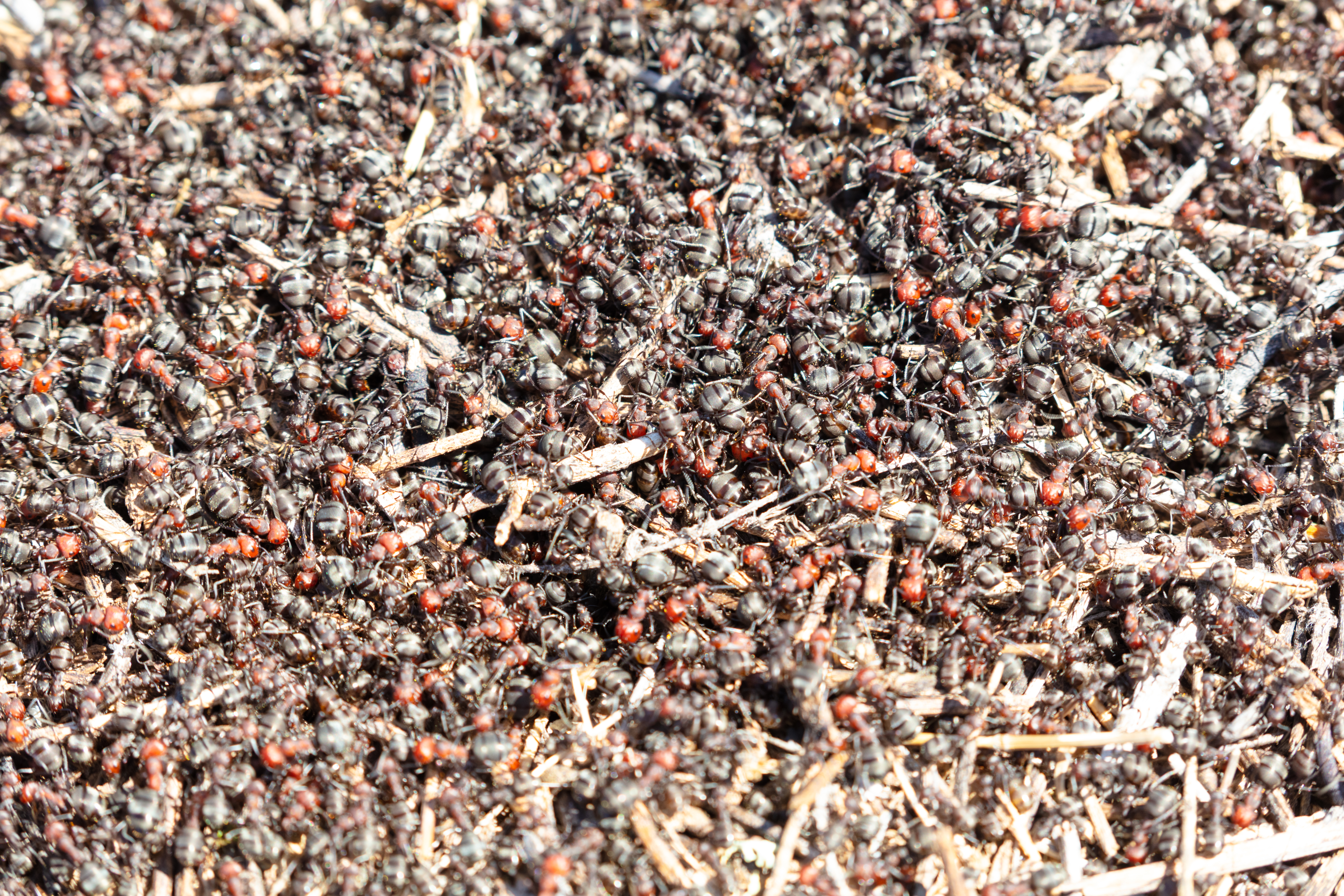
Formica obscuripes, commonly known as the western thatching ant, is a striking species native to North America that builds impressive mound nests out of grass, twigs, and pine needles. The queen measures between 8 and 10 mm, while workers range from 4 to 8 mm, showing a gentle size variation but no dramatic polymorphism. Their coloration is a handsome mix of dark brown to black with reddish legs and a subtle metallic sheen, making them a visually appealing species for the advanced keeper.
What truly sets Formica obscuripes apart is its fascinating reproductive strategy. These ants are temporary social parasites, meaning a newly mated queen cannot start a colony on her own. Instead, she must infiltrate an existing nest of a host species — typically a *Formica fusca* or *Formica lemani* colony — kill or subdue the host queen, and allow the host workers to raise her first brood. Over time, the host workers die off and are replaced by *Formica obscuripes* workers, turning the colony into a pure, thriving nest of this species. This initial parasitic phase is the primary reason this ant is classified as advanced difficulty to keep: successfully introducing a queen to a host colony in captivity requires precise timing, the right host species, and a steady hand.
Care difficulty
Keeping Formica obscuripes is not for beginners. The founding stage is the greatest challenge, as it demands either access to host ant colonies or a well-timed purchase of a colony that has already completed the parasitic takeover. Once established, however, these ants are robust and resilient. They thrive on a mixed diet of insects (crickets, mealworms, roaches), sugar water, and honeydew, and they appreciate a protein-rich menu to support their large colony size, which can eventually reach tens of thousands of workers. Hibernation is essential: they require a cool winter rest at around 6°C for several months to maintain a healthy annual cycle.
Housing
A mature colony of Formica obscuripes needs a spacious formicarium with a large foraging area, as these ants are active and heavy foragers. They prefer a dry nest chamber with moderate humidity in the foraging zone (50–70% overall, but the nest itself should be well-drained). Temperature should be kept between 20 and 26°C during the active season. Given their natural tendency to build thatch mounds, providing a substrate of loose soil or sand mixed with organic material allows them to construct their own nest structures — a behavior that is deeply satisfying to observe. Ensure the setup is escape-proof, as these ants are fast and determined climbers.
First days after purchase
If you receive a young colony — ideally one that has already passed the parasitic stage — place the formicarium in a quiet, dark location and minimize vibrations. Offer a small amount of sugar water and a dead insect, and check that the queen is safely enclosed with her first workers. Do not disturb them for at least a week; let them acclimate and begin nest building. Avoid bright lights and sudden temperature changes. Patience is key with Formica obscuripes — once settled, they reward the diligent keeper with an impressive display of cooperative colony life and mound-building artistry.