Polyrhachis
Polyrhachis ypsilon
Nuptial Flight Calendar
Flight months: May, Jun, Jul, Aug
Care Guide
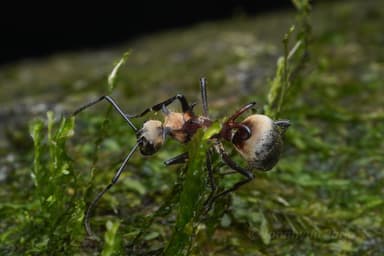
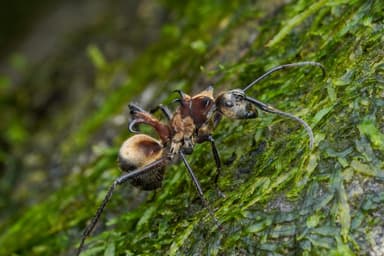
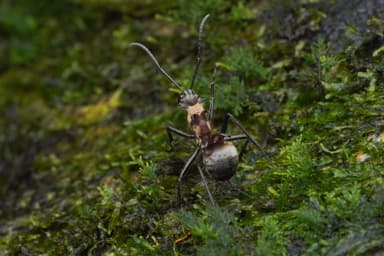
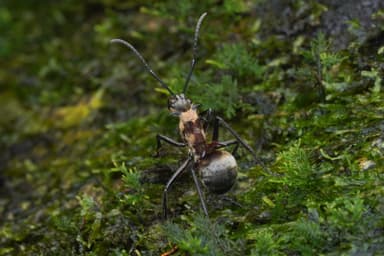
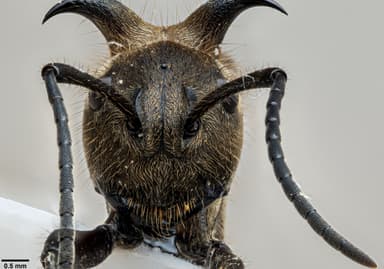
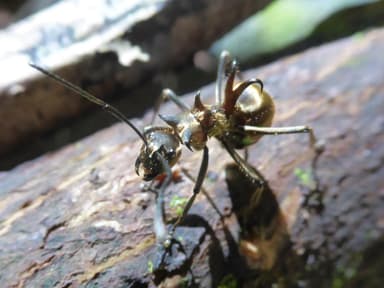
Among the spiny ants of the genus Polyrhachis, few species are as instantly recognizable as Polyrhachis ypsilon, named for the striking Y-shaped pronotal spines that give the queen and workers an almost prehistoric silhouette. This species is native to the warm, humid lowland forests of Southeast Asia, ranging from Myanmar and Thailand down through Malaysia, Sumatra, Java, and Borneo (GBIF occurrence records; Kohout 2013). Queens are a robust 10 to 12 millimeters in length, while the monomorphic workers measure 7 to 9 millimeters, all clothed in a sleek black or dark brown cuticle with a subtle metallic sheen. Colonies are modest by Polyrhachis standards, topping out at around 3,000 individuals, and they are founded claustrally by a single queen. What truly captivates keepers, however, is their remarkable nesting behavior: in the wild, these ants weave elaborate carton or silk nests among low vegetation, using larval silk to stitch living leaves and debris together. Observing a captive colony construct a silken pavilion from provided materials is a highlight of keeping this ant, making it a living sculpture as much as a pet.
With a care difficulty rated as intermediate, Polyrhachis ypsilon is best suited for keepers who have already mastered the fundamentals with hardier species like Lasius or Camponotus and are ready to manage more demanding environmental parameters. The primary challenge lies not in aggression—these ants are relatively shy and more likely to retreat than sting—but in maintaining consistent warmth and humidity without stifling airflow, as stagnant conditions quickly lead to mold and mite outbreaks. This species does not hibernate, so it demands year-round tropical stability. Because the colony grows slowly and peaks at a size that won’t overwhelm a modest display, it appeals to enthusiasts who enjoy detailed, deliberate husbandry and are willing to craft a slice of rainforest in a terrarium. If you are the sort of keeper who relishes tinkering with heating cables and hygrometers and finds joy in watching intricate nest architecture unfold, you will find Polyrhachis ypsilon deeply rewarding.
Housing must mimic the arboreal, humid microclimate of their native habitat. A temperature gradient of 22 to 28 degrees Celsius suits them well, with a basking spot at the higher end encouraging foraging activity; avoid prolonged exposure above 30 degrees, as it can desiccate brood. Humidity should be held between 60 and 80 percent, which can be achieved with a misted substrate and a partially covered ventilation screen to slow evaporation. Many keepers succeed with naturalistic terrariums: a glass enclosure with a deep layer of coconut coir or peat mixed with sand, planted with hardy tropical mosses and a small epiphytic plant like a miniature orchid, all resting on a drainage layer of clay balls. For the nest itself, offer a vertical setup—a cork bark slab, a hollow bamboo tube, or a plaster nest with an embedded moisture reservoir. Crucially, provide abundant silk-weaving materials: short lengths of dried grass, tiny twigs, shredded paper, or kapok fiber. Unlike soil-dwelling ants, P. ypsilon will not excavate; instead, workers will glue these materials together with their larvae’s silk into a secure, chambered retreat. Good cross-ventilation is essential, so a mesh lid or side vents are a must, but misting regularly to maintain humidity while avoiding condensed water in the nest prevents brood fungus.
In the wild, Polyrhachis ypsilon forages for small arthropods and honeydew from sap-sucking insects, and this omnivorous diet translates easily to captivity. Offer protein roughly three times a week in the form of small live or freshly killed insects: flightless fruit flies, pinhead crickets, or chopped mealworm pieces are all accepted eagerly. Remove uneaten prey after 24 hours to keep the nest clean. Carbohydrates should be available constantly via a small feeding station of honey diluted with water, maple syrup, or commercial ant nectar; replace sugary foods every two days to prevent fermentation. An often-overlooked element is water—though they will drink from condensation, always provide a tiny water-filled test tube plugged with cotton or a shallow water dish with a pebble to prevent drowning. A colony in full production benefits from a light dusting of calcium powder on insect prey once a week, mirroring the trace minerals they would obtain from wild prey cuticle. No special supplements are required beyond this well-rounded menu.
As a fully tropical species, Polyrhachis ypsilon experiences no hibernation or diapause. Attempting to cool them down in winter will only stress the colony and may kill the brood. Keep their temperature and humidity constant all year long; they will continue to rear larvae and forage as long as conditions remain favorable. Seasonal light cycles are not critical, but a modest reduction in day length during winter months (from 14 hours of light to 10) can mimic the slight seasonal shift of their native range without compromising their health, and may even trigger a gentle reproductive rhythm. The absence of a break does mean the keeper must be prepared for uninterrupted care, but it also offers the pleasure of watching your colony develop year-round without a dormant period.
When your Polyrhachis ypsilon queen and her first workers arrive, give them time to decompress. Place the test tube or small founding chamber in their permanent setup but keep the enclosure dim and quiet for the first 48 hours. Offer a minuscule drop of sugar water on a slip of wax paper just outside the tube entrance; do not introduce any insects until you see workers actively exploring, which may take three to five days. Once the queen has settled and a few workers are foraging, offer a single small, freshly killed fruit fly. Watch for signs of stress: continuous huddling in a tight cluster without venturing out, or frantic attempts to escape, suggest the humidity is off or they feel exposed. Adjust misting and add more cover material if needed. After a week, if they have accepted food and begun weaving even a few silk strands, you can begin your normal feeding routine. Patience in this initial phase pays dividends—a colony that forms its first silken pavilion in your care is a quiet vote of confidence that you have captured the essence of a Southeast Asian forest floor.