Carebara
Carebara affinis
Nuptial Flight Calendar
Flight months: May, Jun, Jul, Aug
Care Guide
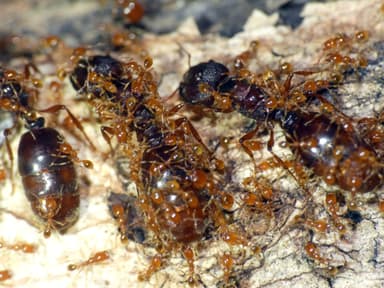
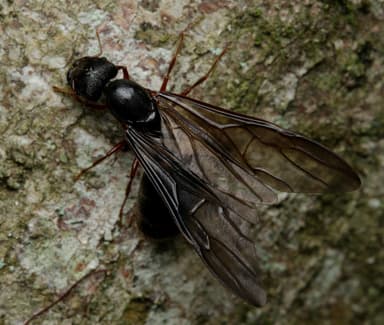
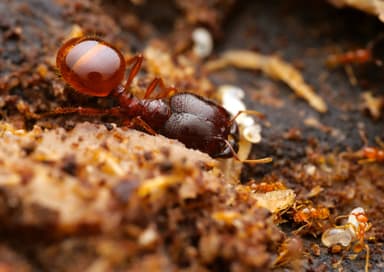
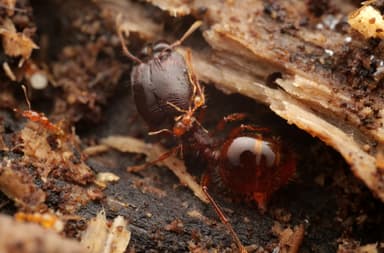
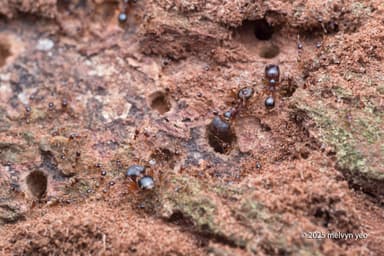
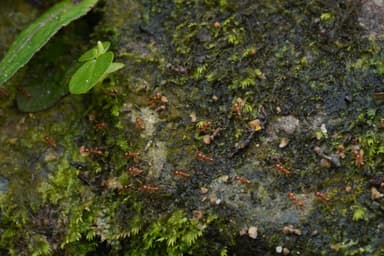
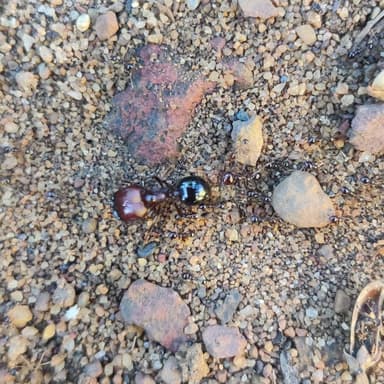
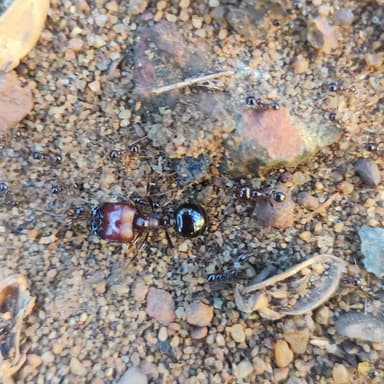
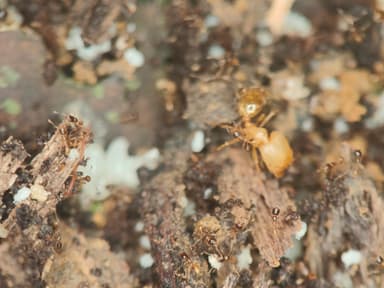
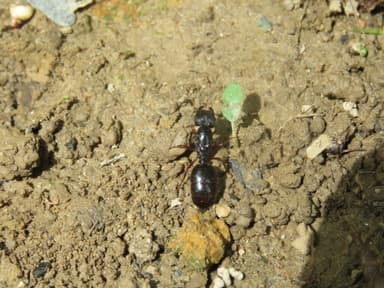
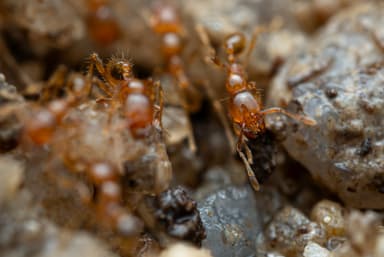
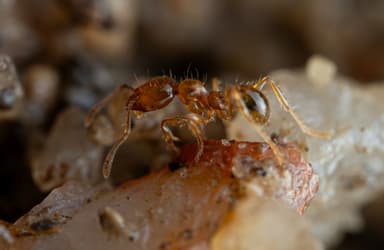
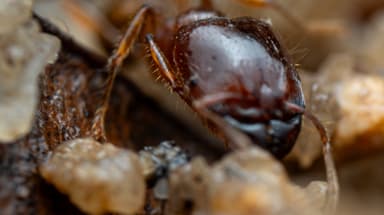
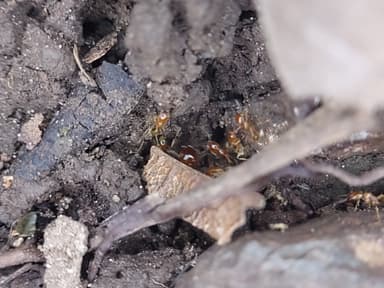
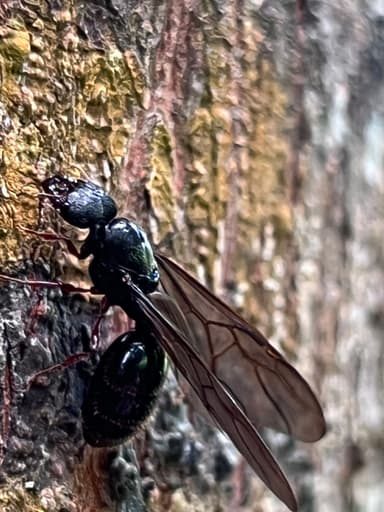
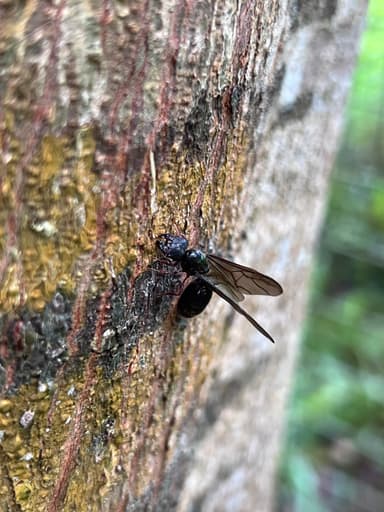
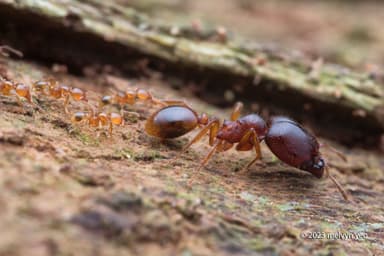
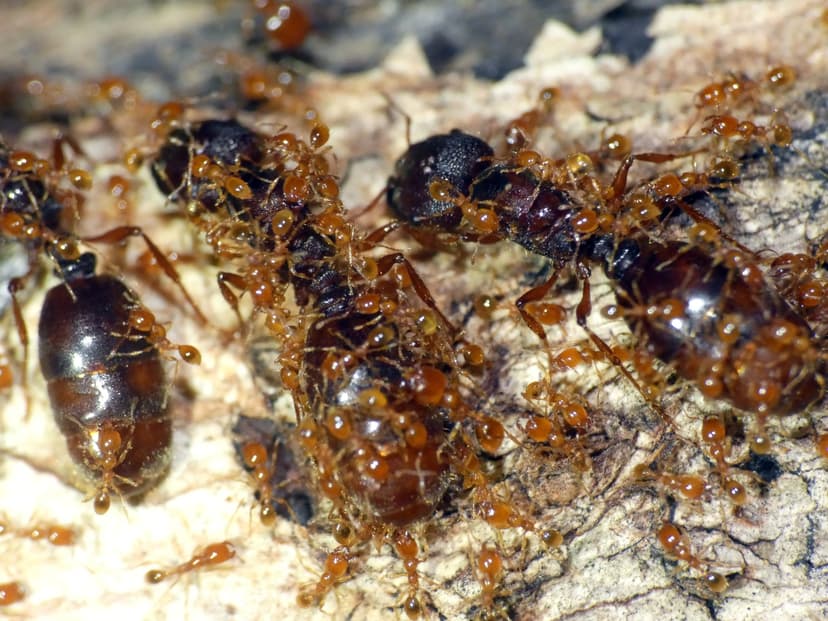
Few sights in the ant-keeping world rival the sheer drama of a Carebara affinis colony. The queen, a formidable 22 to 25 mm giant, towers over her brood as if from another species entirely. Workers, by contrast, span an astonishing size range — from barely 1.5 mm minors that resemble grains of moving dust to 10 mm majors bearing massive, muscular heads. This extreme polymorphism, with three distinct castes (minor, media, and major workers), allows the colony to function like a finely tuned machine, with each size class performing tasks perfectly suited to its proportions. The species ranges across tropical Asia, from India and Sri Lanka eastward to southern China and Indonesia (GBIF occurrence data). Once placed in the genus Pheidologeton, it was transferred to Carebara in a thorough taxonomic revision (Fischer et al. 2014). Nuptial flights remain poorly documented but are thought to occur on warm, humid evenings after monsoon rains between May and August, with a claustral founding stage. A fully mature colony can number up to 30,000 individuals, creating a living tapestry of size and function that is endlessly fascinating to observe.
Carebara affinis is very much an expert-level species and is ill-suited for beginners. The challenges are threefold: humidity control, escape prevention, and the colony’s explosive growth rate. Minor workers are so tiny that they can exploit the smallest gaps in standard formicarium joints or mesh, and they readily climb smooth surfaces, rendering many conventional barrier materials ineffective. Maintaining the required 60–80% relative humidity without causing condensation or mold demands precise ventilation and monitoring. Furthermore, colonies grow rapidly once established, and a large population quickly transforms a manageable setup into a high-maintenance operation. These ants are not particularly aggressive, but major workers can deliver a sharp bite, and the sheer number of inquisitive foragers can overwhelm an unprepared keeper. Only hobbyists with experience managing demanding high-humidity species and spacious escape-proof setups should consider acquiring them.
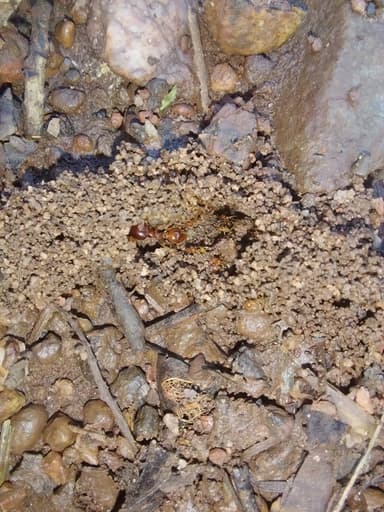
Housing a Carebara affinis colony successfully revolves around creating a stable, humid microclimate while offering ample digging opportunities. A naturalistic approach works beautifully: a deep substrate of a sand-clay-loam mixture, kept moist but not waterlogged, allows the ants to construct their own intricate tunnel networks. Alternatively, a ytong or plaster nest with integrated water reservoirs can provide consistent humidity and is easier to monitor. The temperature should be held between 24°C and 30°C, ideally using a heat mat placed on one side of the nest to create a thermal gradient. An outworld must be entirely escape-proof, with a fine-mesh lid or a tightly fitting enclosure coated with a high-quality fluon or PTFE barrier that is refreshed regularly. Many keepers house them in a modified aquarium or a professional acrylic terrarium with minimal ventilation gaps. A test tube setup with a water reservoir and a small sand plug is sufficient for a founding queen until her first workers arrive; after that, a move to the permanent nest is recommended.
Feeding these ants is straightforward but requires consistency. They are voracious and accept a wide range of live or pre-killed insects — fruit flies, small crickets, chopped mealworms, and roach nymphs — as protein sources. Carbohydrates are equally important and can be supplied as honey water, sugar water, or a commercial ant nectar, offered via a soaked cotton ball or a gravity feeder. Fresh water must be available at all times, either through the nest’s hydration system or a separate water tower. During active periods, a mature colony may consume vast amounts of food daily; uneaten remains should be promptly removed to prevent fungal growth. Crucially, Carebara affinis is a full tropical species and requires no hibernation. The colony remains active year-round, so heating and feeding schedules must be maintained continuously. A slight nocturnal temperature drop to around 22°C is natural and harmless, but there is no need for a seasonal cooling period.
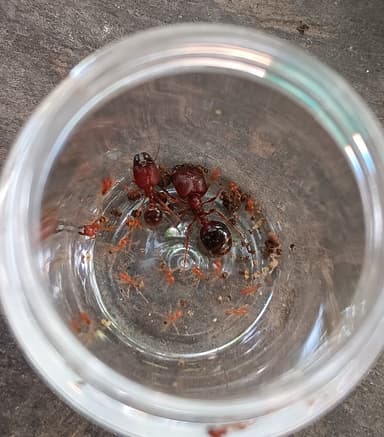
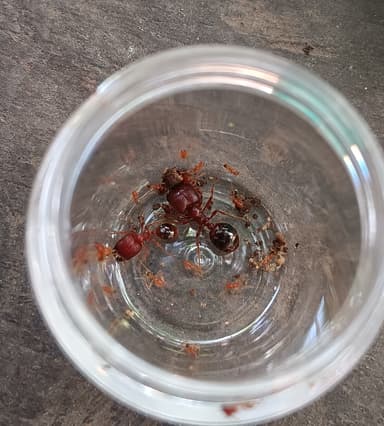
The first days after receiving a new queen or a small starter colony set the stage for long-term success. Unwrap the package carefully and place the test tube or transport container into a dimly lit, vibration-free spot without immediately attaching it to a larger setup. Leave them completely undisturbed for at least 24 hours to recover from shipping stress. After this settling period, very gently open the tube and offer a minuscule droplet of sugar water on a piece of foil or a clean twig; if workers are present, place a small pre-killed fruit fly or a cricket leg near the entrance. Watch for signs of foraging — if no workers appear within a few hours, remove the food to avoid spoiling the humid environment. Resist the urge to check on them constantly; once or twice a day is ample. Ensure the tube’s humidity is adequate by looking for a narrow band of condensation. A healthy queen will eventually settle near the cotton plug and begin laying eggs, and the first miniscule workers should emerge within a few weeks to take over foraging duties, signaling that it is time to attach a secure outworld and start regular feeding.