Aphaenogaster
Aphaenogaster occidentalis
Nuptial Flight Calendar
Flight months: Jun, Jul, Aug, Sep
Care Guide
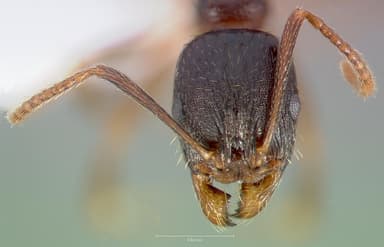
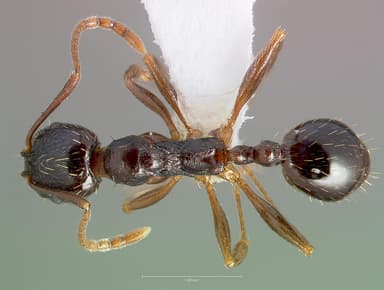
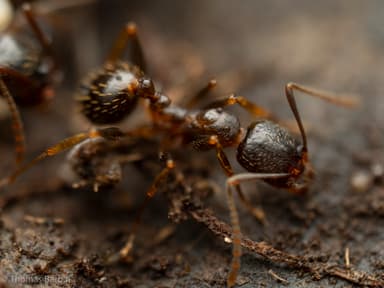
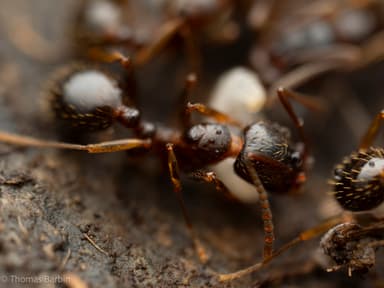
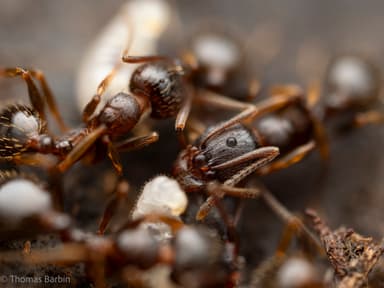
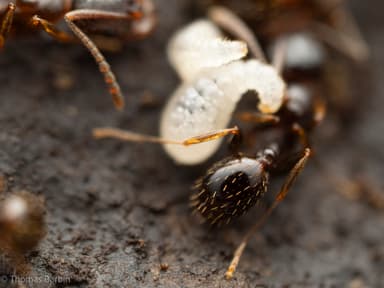
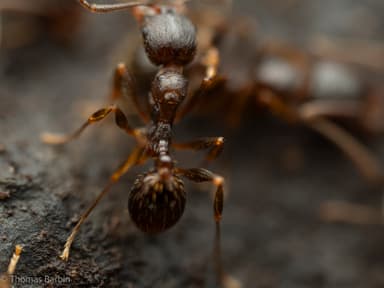
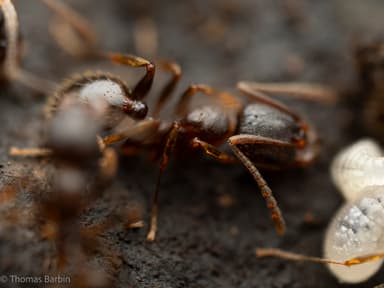
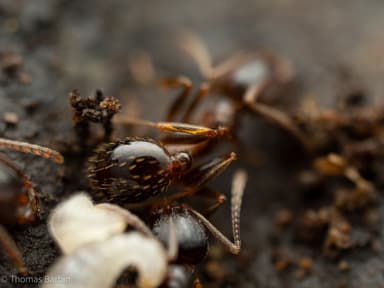
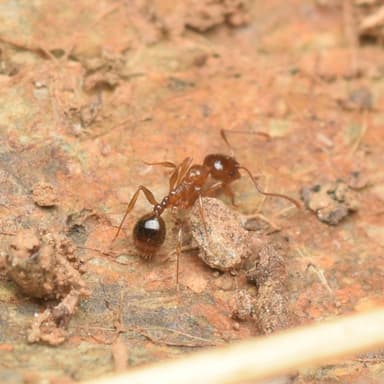
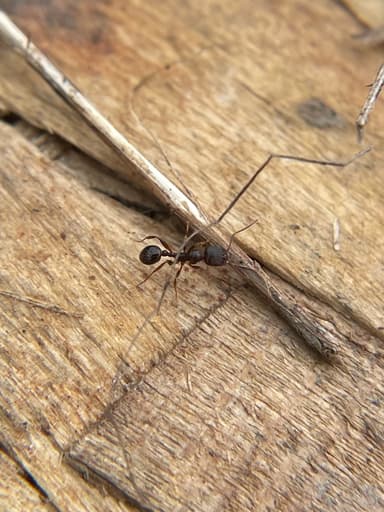
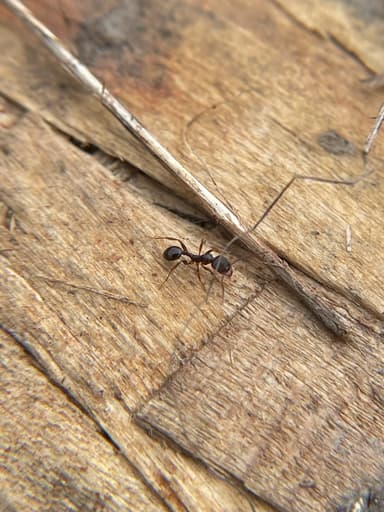
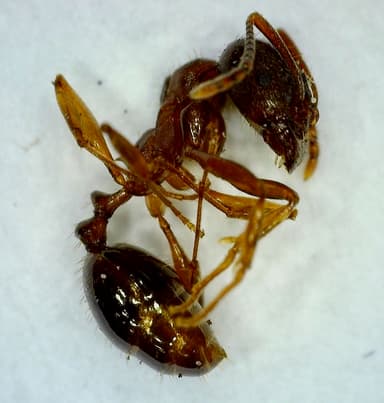
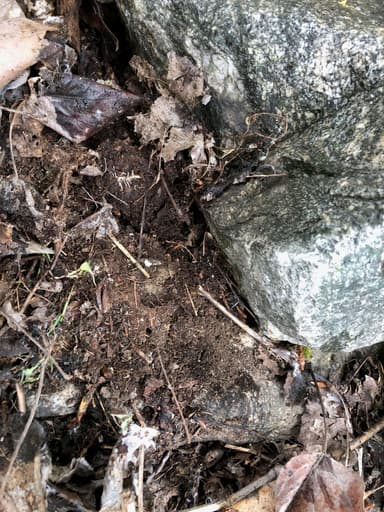
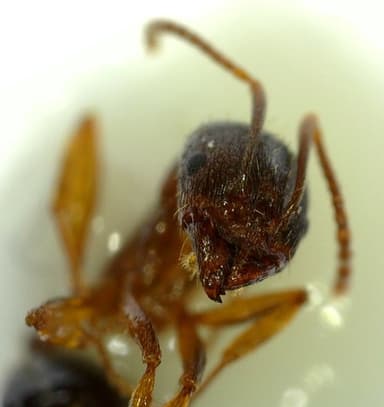
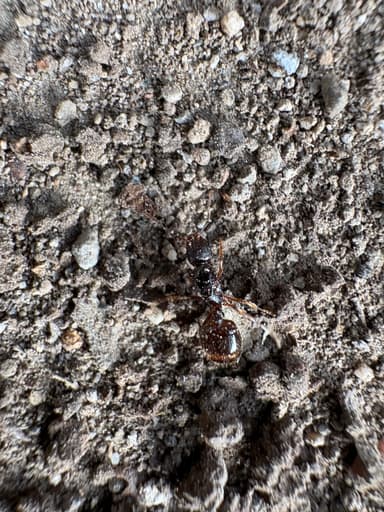
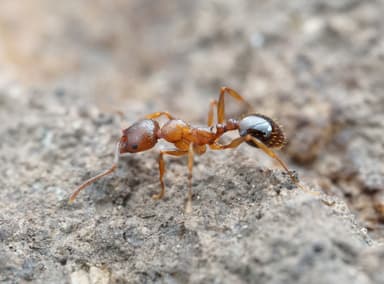
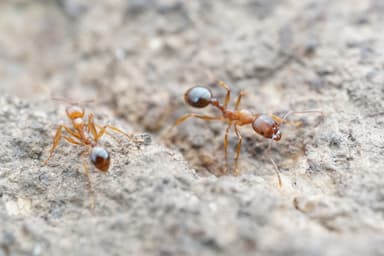
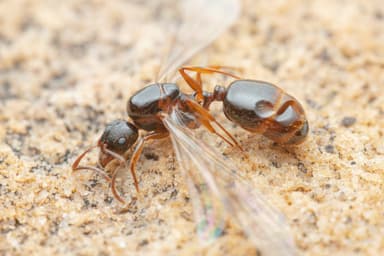
Aphaenogaster occidentalis is a slender, long-legged ant that patrols the sun-dappled floor of western North America’s oak woodlands and mixed conifer forests. Queens measure a stately 8 to 10 millimeters, while the monomorphic workers range from 4.5 to 6.5 millimeters — all sharing a graceful, glossy appearance that makes them a delight to observe under magnification. These ants form modest colonies, peaking at around 3,000 individuals, and are claustral founders, meaning a single newly mated queen can raise her first brood without ever leaving her sealed chamber. What draws many keepers to this species is their lively foraging style: workers move with a quick, deliberate gait, often forming visible trails across the outworld as they scout for prey and sugars. Their distribution hugs the Pacific coast from southern British Columbia down through California, nudging eastward to the Rocky Mountains (GBIF records), with nuptial flights reported in the afternoon warmth of June through September after summer rains (AntWiki; Mackay & Mackay 2002). This seasonality shapes their annual rhythm in captivity, as we shall see.
The care difficulty for Aphaenogaster occidentalis is best described as intermediate. They are not a forgiving beginner species, mainly because they demand a tightly controlled hibernation period and a well-designed humidity gradient to thrive, yet they pose no insurmountable challenges for a keeper who has successfully maintained a few colonies of hardier ants like Lasius or Camponotus. Because workers are all the same size — just one morphological caste — you won’t need to provide graduated seed mixes or manage complex social dynamics tied to polymorphic majors. The colony’s modest ultimate size also means they won’t rapidly outgrow standard formicaria. However, their active metabolism and relatively high preferred temperatures mean you’ll need to stay on top of feeding and hydration, and their slender bodies make them skillful climbers; a secure, escape-proof lid is non-negotiable. If you enjoy watching ants that visibly respond to food placement and patrol their territory with purpose, A. occidentalis will reward you without the logistical intensity of truly large species.
Housing these ants begins with replicating their native microclimate. A temperature range of 20 to 28°C is ideal, with a gentle gradient across the setup — many keepers place a small heat mat under one corner of the foraging arena or nest so the ants can self-regulate. Humidity must be maintained between 50 and 70%, a bracket that prevents delicate brood from desiccating while avoiding mold blooms. A nest built from plaster, gypsum, or aerated concrete works beautifully, especially if it incorporates a hydration reservoir that you can top off periodically. While A. occidentalis will sometimes accept a purely artificial nest, they have a strong instinct to arrange their environment. Providing a sand-loam mixture in part of the foraging arena or in a digbox lets workers move particles, a behavior they frequently use to adjust nest entrance size or to carry fluids — a peculiar trait of many Aphaenogaster species where they soak debris in liquid food and transport it back to the nest (Mackay & Mackay 2002). Ventilation should be ample to prevent stagnant air, but mesh openings fine enough to contain these lithe ants are essential.
In the wild, Aphaenogaster occidentalis are opportunistic omnivores that actively hunt small arthropods and sip at sap flows or honeydew. Their captive diet should mirror this: offer protein in the form of freshly killed fruit flies, pinhead crickets, cut-up mealworms, or pieces of feeder roach, always removing uneaten prey after a day or two to prevent spoilage. For carbohydrates, a small drop of diluted honey, sugar water, or a specialized ant nectar placed on a tiny dish or directly on a pebble works well; you will often see workers eagerly gather around it within minutes. Water must be available at all times, typically through the nest’s hydration system and a separate drinking station in the arena, such as a water-filled test tube plugged with cotton. Aphaenogaster colonies can be surprisingly hungry, especially when brood is present — smaller colonies with fewer than 50 workers should be fed lightly but frequently, two to three times a week, adjusting portions as the population grows. Larger colonies of several hundred will appreciate a constant protein source and a carbohydrate station refreshed every couple of days.
A strict hibernation is absolutely required for the long-term health of this species. Without a cold winter rest, queens will eventually cease egg-laying, and the colony’s biological clock will derail. As autumn approaches, and you notice the workers becoming less active and brood production slowing, begin gradually lowering the nest temperature over two to three weeks until they settle at around 10°C. They should remain at this temperature for three to four months, typically from November to February. During diapause, activity will nearly cease, and they will cluster together in the moistest part of the nest. It is vital to ensure the nest does not dry out — check hydration ports monthly — but do not offer food, as they will not forage and it would only mold. When winter wanes, reverse the process, warming them up to the normal range over a week or two. A timely, uninterrupted diapause of this kind mirrors the seasonal chill of their native coast range and is the single most important key to seeing your A. occidentalis colony produce a robust first cohort of workers in spring.
For those first critical days after your queen or small colony arrives, patience is paramount. A newly mated queen will have been started in a test tube setup with a water reservoir and a cotton plug; simply place this tube in a quiet, dark drawer or cupboard at room temperature and resist the urge to check on her more than once a week. If you have purchased a young colony with a handful of workers, connect their test tube to a small outworld containing a dry foraging area. Do not introduce food for the first 48 hours — the journey is stressful, and the ants first need to settle and re-establish their scent trails. When you do offer the first meal, place a tiny dab of honey on a piece of wax paper and a single pre-killed fruit fly near the tube entrance, then step back. Watch for workers exploring and feeding; this indicates they are acclimating. In the early weeks, focus on maintaining stable humidity in the tube and avoiding sudden temperature swings. Signs that all is well include the queen laying eggs and workers actively tending the small brood pile. With steady, informed care, your Aphaenogaster occidentalis colony will soon grow into a captivating microcosm of the Pacific woodland floor.