Stigmatomma
Stigmatomma pallipes
Nuptial Flight Calendar
Flight months: Aug, Sep
Care Guide
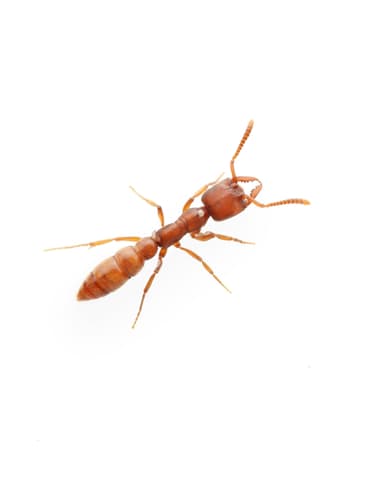
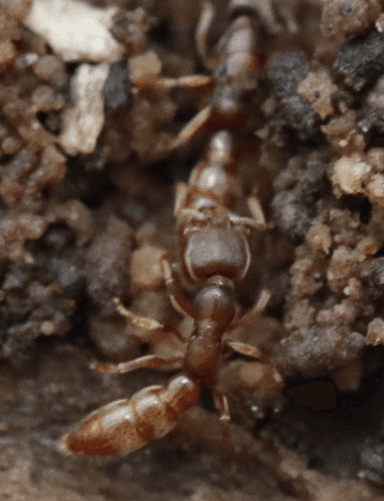
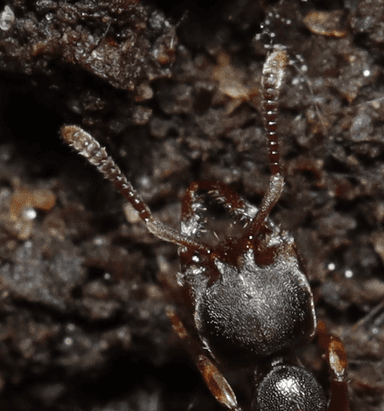
Stigmatomma pallipes, a member of the ancient amblyoponine subfamily, is a master of the subterranean world. Often called a Dracula ant for its habit of non-destructively drinking the hemolymph of its own larvae, this species captivates with its cryptic lifestyle and primitive social behaviors. Queens measure a modest 5.5 to 7 mm, while workers range from 4 to 5.5 mm, all exhibiting a uniform pale amber to yellowish-brown hue with slender, elongated bodies and long, needle-like mandibles. Colonies are small, rarely exceeding 100 individuals, and maintain a simple structure with a single queen and a monomorphic worker caste. The ant’s true allure lies in its specialized predatory adaptations and its position as a living window into early ant evolution, having been studied in detail by early myrmecologists like Wheeler (1900) and later by Brown (1960), who helped clarify its taxonomic placement. Observing a Stigmatomma colony means witnessing a slow, deliberate existence centered almost entirely below the soil surface.
Given its demanding requirements, Stigmatomma pallipes is unequivocally a species for the expert keeper. Its sensitivity to environmental fluctuations, highly specialized diet, and slow colony growth make it a poor choice for beginners or those seeking a dynamic, rapidly expanding display. This ant rewards patience and meticulous attention to microclimate; keepers who thrive with fragile, moisture-dependent species and who enjoy the quiet observation of cryptic behaviors will find it an endlessly fascinating challenge. You must be comfortable providing live prey of specific types and maintaining stable, high-humidity conditions for years on end. In return, you gain a rare glimpse into a lineage that has changed little since the age of dinosaurs.
Housing must replicate the cool, perpetually damp subterranean galleries these ants inhabit across the eastern United States, from the Great Plains to the Atlantic coast. A formicarium designed for high humidity is non-negotiable; a plaster or grout nest with a deep, loamy substrate layer works well, but many successful keepers prefer a soil-based setup where the ants can dig their own chambers. Temperature should be kept within a moderate range of 18 to 26°C, avoiding rapid fluctuations. Humidity is the critical parameter — a constant 70 to 90% relative humidity is essential, as lower levels will quickly desiccate the brood and stress the adults. The substrate itself should hold moisture without becoming waterlogged; a mix of fine sand, chemical-free topsoil, and a touch of clay, kept consistently damp, mimics their natural habitat. Ventilation must be carefully balanced to prevent mold while not drying the nest, and the formicarium should be kept in a darkened, vibration-free area, as these ants are highly photophobic and sensitive to disturbance.
The diet of Stigmatomma pallipes is one of the most specialized among ants available to hobbyists. These are obligate predators of soft-bodied soil invertebrates, with a particular fondness for geophilomorph centipedes in the wild (Wheeler, 1900). In captivity, they can be sustained on a diet of live springtails, small earthworms, freshly molted mealworms, and termites. The queen, being semi-claustral, must forage during the foundation stage and will require tiny, live prey items delivered directly to her. Colonies also exhibit the famous Dracula behavior: workers pierce the integument of their own larvae and imbibe hemolymph, a practice that supplements but does not replace their need for insect prey. Carbohydrate sources like sugar water or honey are generally ignored; these ants derive all necessary energy from their protein-rich meals. A fresh water source is still required, best provided through the humid substrate and a small, well-maintained water feeder placed away from the nest entrance.
A true winter diapause is mandatory for the long-term health of Stigmatomma pallipes, mirroring the seasonal cooling of their temperate range. Colonies must experience a hibernation period of three to four months at a steady temperature around 8°C. As autumn approaches, reduce feeding and allow the nest to slowly cool over several weeks until it reaches the target temperature. During diapause, the ants will become largely inactive, often clustering deep in the substrate; the substrate must remain just barely moist to prevent desiccation without encouraging mold. Once spring arrives, gradually warm the colony back to active temperatures, and resume offering tiny live prey as the queen and workers reanimate. Skipping this chill period invariably leads to colony decline, as the ants’ biological clock depends on this reset.
When your Stigmatomma pallipes queen first arrives, introduce her to her new nest with minimal disturbance. If she is in a founding tube, attach it to the prepared humid formicarium and allow her to move in on her own over a day or two; do not rush the process. Since she is semi-claustral, she will need to forage immediately, so offer a few micro-prey such as springtails or pinhead crickets directly into a small foraging area on the evening of her arrival. Observe from a distance: a settled queen will begin to clean her antennae and explore the substrate deliberately, while a stressed one will pace frantically. Keep the nest dark and avoid any vibrations for the first week. First feeding success is a strong indicator of acceptance; if she ignores prey for more than 48 hours, check that temperature and substrate humidity are within the precise ranges specified. With the right quiet care, she will soon lay her first eggs, and the slow, rewarding journey of colony growth will begin.