Pheidole
Pheidole gilvescens
Nuptial Flight Calendar
Flight months: Jul, Aug, Sep
Care Guide
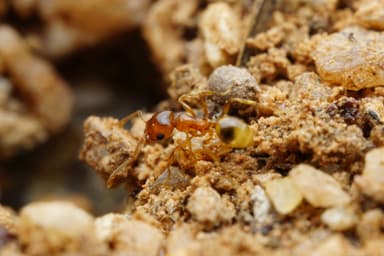
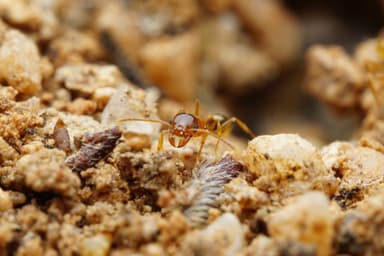
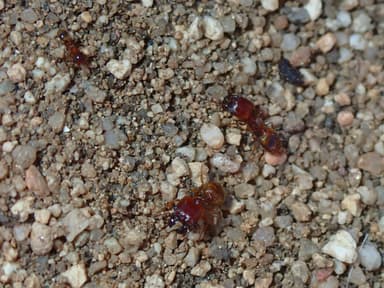
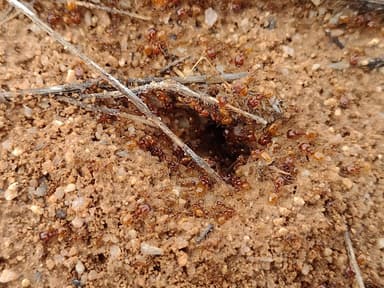
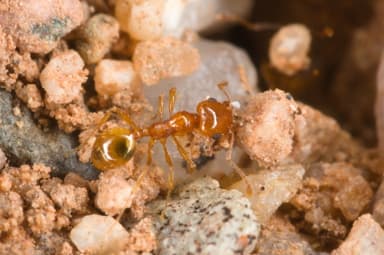
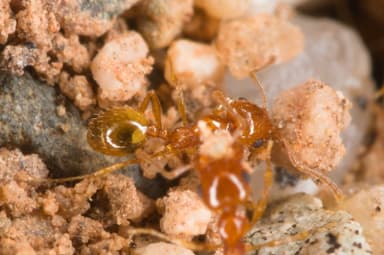
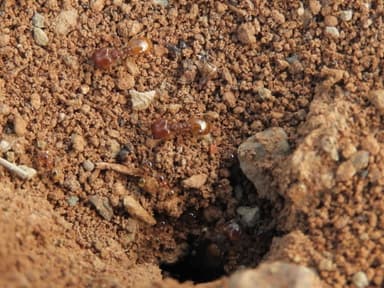
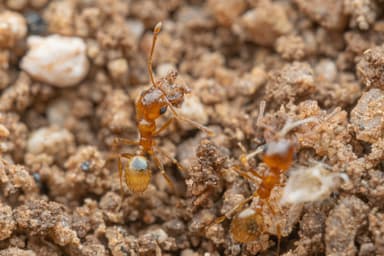
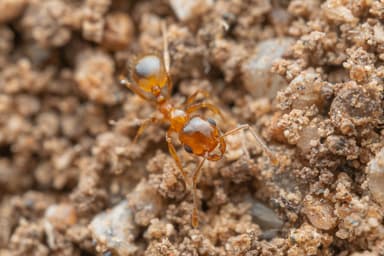
Pheidole gilvescens is a captivating ant of the arid Southwestern United States and northern Mexico, flourishing in a broad arc bounded by latitudes 25°N to 35°N and longitudes 115°W to 100°W. Queens are a stately 6–7.5 mm, while the tiny minor workers measure just 2–3.5 mm, creating a striking size contrast that makes this species so beloved by hobbyists. The colony, which can swell to an impressive 10,000 individuals, exhibits true worker polymorphism with two distinct castes: minor workers and the iconic, large-headed major workers. These majors, armed with powerful mandibular muscles, specialize in seed cracking and colony defense, while the nimble minors carry out brood care and foraging. As a claustral founder, the queen seals herself away after her nuptial flight—which in this region occurs on warm, humid evenings after summer monsoon rains between July and September—and raises her first workers on internal fat reserves, a quietly resilient start to a dynamic empire. The species belongs to the hyperdiverse New World radiation documented by Wilson (2003), showcasing the genus’s hallmark trait of dramatic caste differentiation.
With an intermediate care difficulty, Pheidole gilvescens is best suited to keepers who have successfully maintained a beginner species and are ready for a faster-paced, more demanding colony. Their minuscule size and lightning speed make them notorious escape artists, so a meticulous approach to barrier security and nest sealing is non-negotiable. The large maximum population size and abundant brood production demand consistent feeding and observation, yet the colony’s robustness—tolerating temperatures from 22–30°C and a modest humidity range—offers some forgiveness for minor husbandry lapses. This ant is ideal for enthusiasts drawn to the logistical ballet of a bustling society and the visual spectacle of a caste system in action, as majors emerge to complement the delicate minors.
Housing Pheidole gilvescens is an exercise in precision containment. Workers can slither through minute gaps and will probe silicone seams, so a well-built formicarium is essential. Ytong (aerated concrete), plaster, or high-grade acrylic with tight-fitting lids and fresh fluon barriers all perform well. Nest chambers should be shallow and textured to provide grip, and an outworld with a secure lid is mandatory. Maintain a temperature gradient between 22°C and 30°C, with a warmer basking spot at the upper end to speed brood development, though the colony does not require extreme heat. Relative humidity should hover between 40% and 60%; a test tube water source or gentle periodic moistening of one chamber suffices, as consistently wet conditions invite mold and mites. A substrate of sand and clay in the outworld encourages natural digging and seed storage, but a bare, easy-to-clean base is equally viable. Always use fine-mesh ventilation—even major workers can squeeze through gaps larger than 0.8 mm, and minors are half that size.
Diet reflects the species’ granivorous leanings and generalist scavenging. In line with the habits of many Pheidole species (Wilson 2003), P. gilvescens thrives on a mix of protein and carbohydrates. Offer pre-killed insects such as fruit flies, pinhead crickets, or mealworm pieces several times a week, and provide a steady supply of sugar water or diluted honey. Small oil-rich seeds like chia, flax, or grass seed are eagerly accepted; majors will crack them open inside the nest, a fascinating behavior to observe. Always keep a clean water source, either via the test tube setup or a dedicated water feeder, and remove uneaten food within 48 hours to prevent spoilage. With a rapidly expanding brood pile, feeding small amounts daily or every other day yields the most active foraging and healthy growth.
Hibernation is a required seasonal rest for Pheidole gilvescens, mirroring the cool winter period of its native range. Gradually reduce the temperature over two to three weeks until the colony is held steadily at around 15°C, where it should remain for two to three months. During this diapause, activity slows to a near halt: the queen ceases egg-laying, and workers huddle together in a dormant cluster. Offer only a tiny drop of sugar water and a reliable water source, as feeding demand is minimal. A temperature-controlled refrigerator, a wine cooler, or an unheated space that reliably stays near 15°C works well. After the rest period, warm the colony slowly back to its active range; within a few weeks, the queen’s ovaries will reactivate and the first new eggs will appear, often signaling a burst of spring growth. Skipping this cooling period can lead to colony exhaustion and a truncated lifespan.
The first days after acquiring your Pheidole gilvescens queen and her first workers demand gentle patience. Place the test tube or small founding chamber in a dim, quiet spot at a stable 24–26°C and resist the urge to check them for at least 24 hours. After this settling period, lay a minuscule droplet of sugar water on a small square of foil just outside the tube entrance. If a worker collects it eagerly, you can introduce a pre-killed fruit fly the following day. Do not attempt to move a young colony into a larger nest until the worker count reaches about 20–30, which for this fast-growing species arrives swiftly. Watch for the queen’s attentive grooming and steady egg-laying as signs of acceptance. Once the tube becomes crowded, attach it to a small outworld and let the ants move at their own pace—they will usually relocate without coercion. Within a month, you are likely to spot the first large, distinctively shaped major pupae, a clear signal that your colony has settled into its new home and is thriving under your care.