Nylanderia
Nylanderia flavipes
Nuptial Flight Calendar
Flight months: May, Jul, Aug, Sep
Care Guide
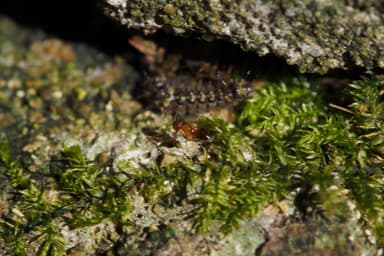
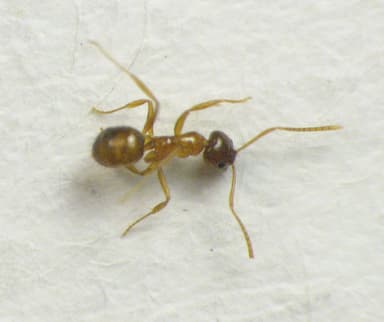
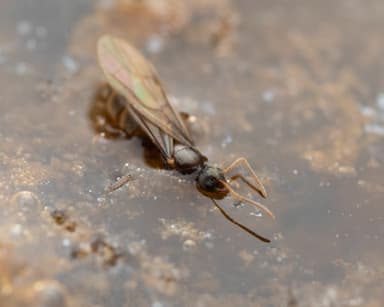
Nylanderia flavipes is a diminutive yet delightfully resilient formicine ant that has quietly spread from its native East Asian range to establish thriving introduced populations across the eastern United States, particularly in forested patches from Georgia to Ohio and as far north as New York. Known to seasoned keepers as the yellow-footed ant, though that common name is often shared with its close relatives, this species is immediately recognizable by its bicolored body: a dark brown to blackish head and gaster contrasting with amber or yellowish legs and mesosoma. Queens measure a modest 4.5 to 5.5 millimeters, while the monomorphic workers range from just 2 to 2.8 millimeters, making them one of the smaller species regularly cultured in captivity. A mature colony, which can swell to around 3,000 individuals over a few years, consists of a single queen and her numerous tiny, quick-footed foragers. What makes Nylanderia flavipes especially fascinating for the hobbyist is not just its ease of care but its reproductive strategy: the alates perform true nuptial flights rather than in‑nest mating, taking to the air on warm, humid afternoons in July through September—often after summer rains—a spectacle that can be observed both in its ancestral home of Japan and in its adoptive North American haunts (Ivanov, 2016; Kjar & Park, 2010). The queens are fully claustral, meaning a freshly mated gyne requires no food while she rears her first tiny nanitics using only her wing‑muscle reserves, a forgiving trait for novices learning the rhythms of colony foundation.
This species is firmly cemented as a beginner‑level ant, and it suits anyone from a first‑time keeper looking for a forgiving introduction to the hobby to a seasoned myrmecologist craving a low‑maintenance display colony that still exhibits full behavioural repertoires. Their small size demands a formicarium with very snug escape‑proofing—think narrow‑bore vinyl tubing and fine‑mesh stainless steel screening—but beyond that precaution, Nylanderia flavipes asks very little. They adapt quickly to artificial nests and are not prone to the sudden, stress‑induced die‑offs that plague more delicate taxa. Their workers are curious and relatively bold for their size, readily accepting food and exploring their foraging arena with an industriousness that becomes addictive to watch. Because they reach a moderate colony size without creating enormous biomass, they remain a manageable project even in a small apartment, never requiring the cavernous setups that a Camponotus or Messor colony eventually demands.
Housing for Nylanderia flavipes should replicate the warm, humid microclimate of the leaf litter and soil layers they inhabit in the wild. Temperatures should be kept between 20 and 28°C, with a consistent gradient being ideal so that brood can be moved to the warmest patches for accelerated development. Humidity inside the nest ought to stay in the 50 to 70% range, a level easily achieved with a plaster, ytong, or grout‑based nest that can be periodically wetted. A substrate‑filled outworld is not essential, but a thin layer of coconut coir or sand mixed with clay gives the ants a more natural footing and helps retain ambient humidity. Many keepers successfully house them in simple tube nests or small vertical formicariums with a single hydration chamber, as the ants are not messy and will diligently gather any debris into a midden corner. Because workers are monomorphic and lack a soldier caste, the nest does not need to accommodate size variations; narrow chambers of just a few millimeters width will make them feel secure. Good ventilation is still crucial, however, to prevent stagnant air and mould, so always allow a dry area where the ants can ventilate themselves and store seeds or dry food if offered.
Feeding Nylanderia flavipes is a straightforward affair. As with most ants, a balanced diet of carbohydrates and protein will keep the colony growing steadily. They readily lap up sugar‑water, honey diluted with water, or commercial ant nectar products, and they will eagerly feed on cut‑up pieces of feeder insects such as crickets, mealworms, and fruit flies. Given their tiny workers, it is wise to offer insect parts that are appropriately small or to crush soft‑bodied prey to allow easier access; a whole dead cricket will soon be dismantled by a mob of workers, but a pre‑torn segment accelerates the process. An ample source of fresh water must always be available, typically provided via the nest hydration system or a water‑filled test tube plugged with cotton. Colonies appreciate a varied menu, and rotating between proteins like pinhead crickets, goose liver pâté (in moderation), and occasional hard‑boiled egg yolk will guard against nutritional deficiencies. Remove uneaten insect remains after a day to prevent mold. They are not seed‑harvesters, so grains and nuts should be avoided.
A distinct seasonal rhythm is non‑negotiable for this species: Nylanderia flavipes requires a true hibernation period. In their native and introduced ranges, colonies endure cool winters, and captive colonies must be cycled down to around 8°C for roughly three to four months, from late November through February or early March depending on your local seasonal cues. During this diapause, the ants cluster together, movement slows drastically, and the queen ceases egg‑laying entirely. Keepers can achieve this by placing the formicarium in a wine cooler, a dedicated refrigerator with a temperature controller, or an unheated but frost‑free garage or basement that reliably stays within the single‑digit Celsius range. Ensure the nest does not dry out during this period—a lightly moistened plaster or ytong substrate will sustain them—and offer a small water source. When spring arrives, gradually warm the colony over a week to avoid shock, and they will resume foraging and brood production with renewed vigor. Skipping hibernation leads to a steady decline in queen fecundity and worker longevity, effectively shortening the colony’s lifespan.
When your Nylanderia flavipes colony arrives in the post, give them the gentlest possible welcome. Unpack the shipping tube or container with slow, deliberate movements, and immediately offer a tiny drop of sugar water on a piece of wax paper or a small feeder placed directly into their temporary holding container. Avoid jostling them into their permanent nest right away; instead, connect the transport vial or tube to the formicarium with a short length of tubing and allow the ants to discover the new living quarters at their own pace over the next day or two. Initially they will be stressed, clinging together tightly around the queen, and a dark, warm period will help them settle. After 24 hours, offer a small fragment of pre‑killed fruit fly or a crushed termite; if they ignore it, remove it the next day and try again in a couple of days. Watch for signs of normal activity: a few foragers tentatively exploring, the queen moving slowly and grooming, and possibly a patch of eggs or small larvae if she had resumed laying during transit. Resist the temptation to open the nest repeatedly; a red filter over the formicarium allows you to observe without disturbing them. Soon, the tiny yellow‑footed foragers will be busily navigating their new world, and you will have the privilege of witnessing a true pioneer of forest edge ecosystems thrive under your care.