Monomorium
Monomorium pharaonis
Nuptial Flight Calendar
Flight months: Jan, Feb, Mar, Apr, May, Jun, Jul, Aug, Sep, Oct, Nov, Dec
Care Guide
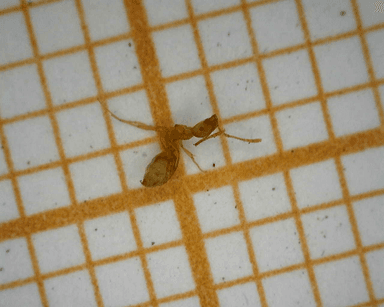
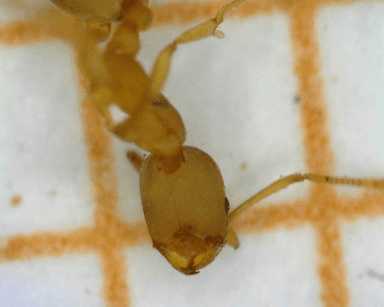
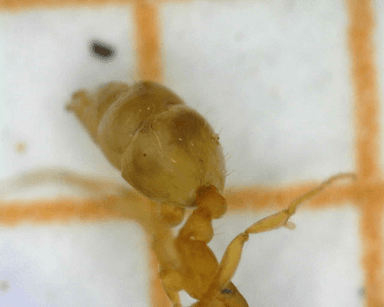
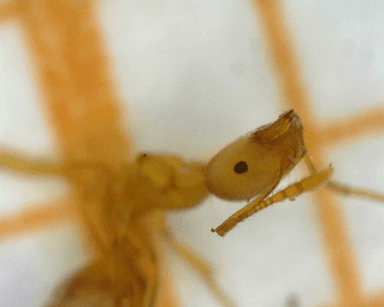
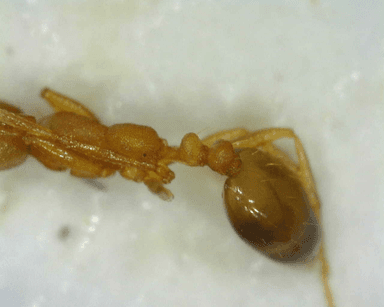
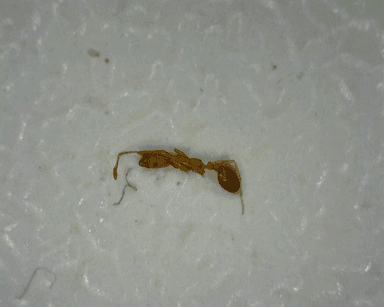
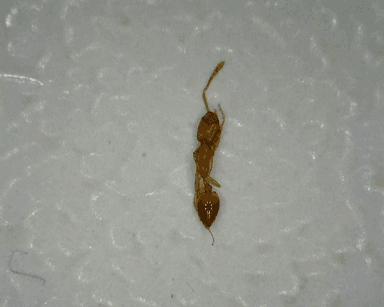
Monomorium pharaonis, the pharaoh ant, is a diminutive but captivating species whose global success story has made it one of the most widespread ants on the planet (Wetterer 2010). These tiny myrmicines are immediately recognisable by their pale yellow to light reddish-brown colouration and their almost translucent integument. The monomorphic workers, the only sterile caste present, measure a mere 1.5 to 2.5 millimetres, while the fertile queens range from 3.5 to 5 millimetres and tend to be slightly darker. Though small, their colonies are anything but modest—mature nests can swell to an astonishing 300,000 individuals and are highly polygynous, often harbouring hundreds of queens. What truly sets pharaoh ants apart is their mode of reproduction: mating occurs entirely within the nest, with no need for a nuptial flight, and propagation happens exclusively through budding, where a cohort of workers and a few queens simply break away to establish a new nest a short distance away. This strategy, combined with their tropical origins, allows them to breed continuously throughout the year in the warmth of human dwellings, a trait that makes them both a notorious household pest and, for the responsible hobbyist, a remarkable study in social resilience.
With a care difficulty rated as intermediate, Monomorium pharaonis is not a species for the complete beginner. Their legendary escape artistry is the primary challenge—workers can slip through gaps as narrow as 0.5 millimetres, and a single escaped queen can, through budding, rapidly give rise to an unplanned satellite colony in your home. This ant suits the keeper who already has experience maintaining escape barriers and who understands the discipline of vigilance: every lid, seam, and ventilation hole must be scrutinised. The reward is an endlessly active, fast-growing colony that exhibits intricate foraging trails and offers a front-row seat to the phenomenon of budding, all while remaining small enough to observe under a modest microscope. Patience and precision will be your daily companions.
Housing pharaoh ants demands an uncompromising attitude to containment. The nest itself can be a plaster, ytong, or grout formicarium with a glass cover, as long as all joints are sealed with non-toxic silicone and every opening is protected by a high-quality barrier. A PTFE (polytetrafluoroethylene) coating applied in a continuous band around the upper edges of the foraging arena, or a carefully maintained mineral-oil moat, are effective methods, though you should test them regularly as workers can learnedly bridge tiny gaps with debris or even their own bodies. Temperature should be held steadily between 26 and 30 degrees Celsius, and humidity maintained at 50 to 80 percent. A simple way to achieve this is to use a heated cable or mat under one corner of the nest, creating a gentle thermal gradient, and to supply a water tower or a regularly misted plaster insert in a humidity chamber. While a substrate is not strictly necessary in the nest itself—these ants happily occupy bare, humid cavities—a thin layer of sand or a small outworld dish of coconut fibre can help regulate moisture and provide a more naturalistic aesthetic. Given the explosive growth potential, design your formicarium with modular expansion in mind; a series of connected satellite nests will mirror their natural budding behaviour and simplify eventual colony management.
The dietary habits of Monomorium pharaonis are as generalist as they come, a reflection of their success as urban scavengers. Offer a balanced rotation of protein and carbohydrates. For protein, small feeder insects such as freshly killed fruit flies, pinhead crickets, or chopped mealworms are ideal; they will also readily accept tiny morsels of cooked chicken, hard-boiled egg yolk, or high-quality dry cat food softened with water. Carbohydrates should be provided in the form of diluted honey, sugar water, or artificial ant nectar, always presented on a small piece of foil or in a liquid feeder to prevent drowning. Protein is especially crucial during the rapid brood-rearing phases, while the worker force will consistently demand sugars to fuel their ceaseless foraging. Freshen both food and water every one to two days to prevent spoilage and mould, and always keep a clean water source available, as this species dehydrates quickly in overly dry conditions. Do not underestimate their collective appetite: a large colony can consume surprising volumes relative to its size, so adjust portions as the population expands.
One aspect of pharaoh ant care that greatly simplifies husbandry is the complete absence of any hibernation requirement. As a tropical species with a natural range now encompassing nearly every heated building between latitudes 70° north and 50° south, these ants have lost the physiological need for a winter diapause. Maintain their warm environment year-round and they will continue to breed and forage without interruption. Any attempt to chill them, even moderately, will result in stress, reduced brood production, and potential colony collapse—so never subject them to seasonal temperature drops. Their constant activity does mean that keeper engagement remains high throughout the year, a prospect that many find deeply satisfying.
When your pharaoh ant colony first arrives, usually as a small founding unit of a few dozen workers and one or more queens inside a test tube or starter container, the priority is a gentle transition. Connect their travel tube to a prepared small formicarium or simply place it inside a sealed outworld, ensuring humidity and temperature are already at target levels. Cover the setup with a dark cloth for the first 24 hours to let them calm from transit vibrations. After that period, introduce a minuscule droplet of sugar water on a feeding tray and wait. If the workers find it quickly, you can offer a tiny fragment of protein the following day; if they seem hesitant, wait another day before trying again. Watch closely for the first few days: consistent foraging, queens moving calmly, and the absence of excessive huddling in corners are good signs. Any sign of workers persistently testing the barrier or attempting to dig through sealant must be addressed immediately with a fresh PTFE application or by reinforcing the enclosure. In these early hours, resist the urge to overfeed—too much food left uneaten in a humid environment invites mites and mould, two threats that can swiftly overwhelm a small colony. With meticulous attention, your pharaoh ant colony will soon settle in and begin to reveal the extraordinary, self-replicating society that has fascinated myrmecologists from Edwards (1986) to the present day.