Camponotus
Camponotus fellah
Nuptial Flight Calendar
Flight months: Mar, Apr, May
Care Guide
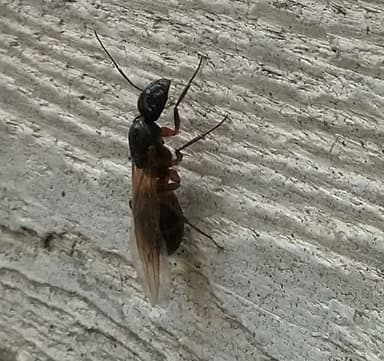
Camponotus fellah is a robust and highly engaging carpenter ant native to the warm coastal regions of North Africa and the Middle East (AntWeb 2023). The species displays an impressive degree of worker polymorphism, with two distinct castes: gracile, fast-moving minor workers measuring 6–9 mm, and a formidable major caste bearing enlarged, muscular heads that can reach 12 mm. Queens are notably large at 13–16 mm, and mature colonies can swell to 10,000 individuals, creating a bustling, visually striking display. Their dark, often deep reddish-brown to black cuticles catch the light beautifully as they forage, and the dramatic division of labor between castes makes colony observation endlessly fascinating. Scientifically, C. fellah has gained attention for its sophisticated social networks; Stroeymeyt et al. (2018) demonstrated that the colony’s interaction structure adapts plastically to the demography of its inhabitants, a testament to their behavioral complexity. For the hobbyist, this translates into a constantly active and responsive colony that quickly learns the rhythms of feeding and nest maintenance.
This species is unequivocally a beginner-friendly ant, ideal for newcomers who want to experience the full arc of a large, polymorphic colony without the steep demands of tropical exotics. Because C. fellah does not require a hibernation period, keepers are spared the need to manage a winter cooling phase, a common hurdle for temperate ants. The forgiving temperature and humidity windows also mean that minor fluctuations in the care setup will not immediately endanger the colony. That said, the ant still benefits from a conscientious approach: stable conditions produce faster brood development and more predictable foraging. It is particularly well-suited to keepers living in warmer climates, or to those willing to provide a consistent heat source like a heating cable or mat, as the ants thrive when maintained between 25°C and 28°C. The presence of majors, which appear even in relatively young colonies, offers a satisfying visual reward for good care without excessive waiting.
Housing Camponotus fellah requires a nest that retains moisture well while accommodating the species' penchant for enlarging their living space—behaviors reminiscent of their wood-nesting habits in the wild. Nests made of ytong (aerated concrete), cork, or plaster are excellent choices, as they can be kept reliably humid without saturating the substrate. A humidity range of 50–70% should be maintained, with slightly higher humidity in the brood chambers and a drier foraging area; a gentle moisture gradient within the nest will allow workers to position eggs and larvae in their preferred microclimate. Temperature should be provided as a gradient from a basking spot of around 30°C near one end of the nest to a cooler 22–24°C at the other, allowing the ants to thermoregulate. A glass or acrylic terrarium for an outworld should be layered with a sand-clay mixture to help stabilize humidity and give the ants a naturalistic surface for foraging and waste disposal. Adequate ventilation is critical to prevent mold, especially as colonies grow large and produce abundant waste; a mesh lid on the outworld and a breathable nest design will keep the air fresh.
Diet for C. fellah is straightforward but should be varied to support brood production and the queen’s longevity. Their primary protein comes from insects—crickets, dubia roaches, mealworms, and fruit flies are all readily accepted. Offer insect prey two to three times per week, scalding or freezing beforehand to eliminate pests, and remove uneaten portions after a day to prevent spoilage. Carbohydrates are equally important and eagerly consumed; a small feeding dish of sugar water, honey diluted with water, or slices of ripe fruit (apple, banana) should be available almost constantly, especially when larvae are present. Water is best supplied via a test tube setup or a small plaster-filled water feeder inside the outworld, as the ants will drown in open water sources. Interestingly, queen–worker interactions over food distribution have been studied in this species, with Boulay et al. (2007) noting that the queen’s presence can modulate worker foraging behavior, so do not be alarmed if foragers temporarily reduce their activity when she is moved to a new nest—this is normal social adjustment.
Many keepers are drawn to Camponotus fellah precisely because it forgoes hibernation entirely. In its native range, winters are mild, and the ants continue to forage and raise brood year-round as long as temperatures remain sufficient. In captivity, simply keep the nest heated and the feeding schedule consistent through the winter months. A slight natural slowdown may occur if ambient room temperatures drop at night, but this will not harm the colony; if anything, a subtle rhythm can mimic natural diurnal cycles. Do not attempt to force a cold hibernation, as the ants lack the physiological preparedness for prolonged chill and may perish. The absence of a diapause requirement simplifies long-term care, making this an excellent year-round display species.
When your Camponotus fellah colony first arrives, patience is the most important tool. Place the test tube or small nest in a dark, quiet location and allow them to settle for at least 24 hours without disturbance. If you have a founding queen with her first workers (a small colony), resist the urge to connect them immediately to a large outworld; instead, offer a tiny drop of sugar water on a piece of foil placed directly into the tube or via a short vinyl tube extension. Wait another day before introducing a small pre-killed insect fragment. Watch for signs of stress: workers dragging brood out of the nest, the queen ceasing to lay, or frantic pacing. These often indicate excessive vibration, light, or incorrect humidity. After the colony has reached a comfortable 15–20 workers, gradually attach them to a modest outworld. For the first few weeks, feed minimally to keep waste low, and check only every two to three days. With stable warmth, a steady diet, and a calm environment, your C. fellah colony will soon reveal the industrious architecture of their network and the quiet strength of their major caste, offering years of captivating observation.