Polyrhachis
Polyrhachis rastellata
Nuptial Flight Calendar
Care Guide
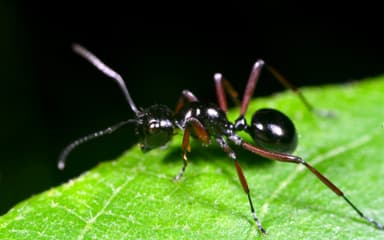
Polyrhachis rastellata is a fascinating and visually striking ant species native to parts of Southeast Asia, where they build their nests in dead wood, hollow branches, or sometimes among leaves. Workers measure between 5 and 7 mm, while the queen reaches a slightly larger 8–10 mm. Their most noticeable feature is the pair of sharp, backward-curving spines on the thorax and additional spines on the petiole, giving them a prehistoric, armored appearance. Despite this formidable look, these ants are not aggressive toward keepers, though they are fast and energetic. Colonies are modest in size, typically ranging from 500 to 2,000 workers, which makes them manageable for intermediate hobbyists.
Care difficulty
Polyrhachis rastellata is best suited for keepers who have some experience with ant keeping, as their environmental requirements are a bit more specific than those of beginner species. The colony is claustral at founding, meaning the queen seals herself into a small chamber and raises her first workers without outside food. This initial stage is relatively straightforward, but once the colony grows, maintaining stable humidity and temperature becomes essential. The ants are sensitive to dryness and sudden temperature swings, so a consistent approach to care is needed.
Housing
A formicarium for Polyrhachis rastellata should be designed with their climbing nature in mind. These ants are excellent climbers and appreciate vertical surfaces, so a setup with textured walls, branches, or cork bark is ideal. The nest itself can be a ytong or acrylic formicarium with a connected outworld, but the nesting chamber must retain high humidity—between 70 and 80 percent—while the outworld can be drier. Temperature should be kept in the range of 24 to 28°C, ideally with a gentle gradient so the ants can choose their preferred spot. No hibernation is required, so they can be kept active year-round. The diet is a mix of insect protein (crickets, roaches, or mealworms) and carbohydrates from sugar water or honeydew. A small water supply in the outworld is also appreciated, though they will obtain most of their moisture from the humid nest.
First days after purchase
After receiving your Polyrhachis rastellata colony, place the formicarium in a quiet, low-light location and allow the ants to settle for at least 24 hours. During this time, avoid opening the nest or disturbing the outworld. Check that the nest substrate is sufficiently moist and that the temperature is within the target range. Offer a drop of sugar water and a small piece of insect on the first day, then observe whether the ants begin foraging calmly. Over the next few days, gradually increase light exposure to a normal day-night cycle. With patience and consistent conditions, your Polyrhachis rastellata colony will quickly become an active, captivating addition to your formicarium.