Cataglyphis
Cataglyphis viatica
Nuptial Flight Calendar
Flight months: May, Jun, Jul
Care Guide
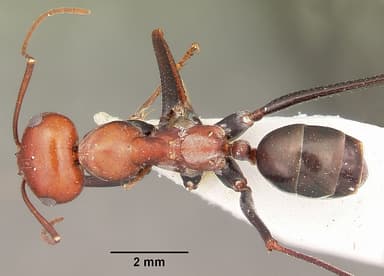
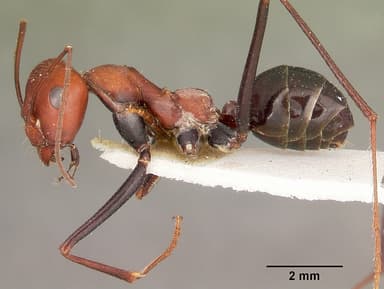
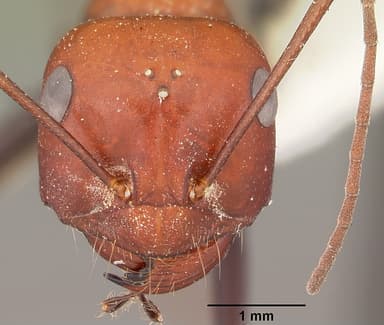
Cataglyphis viatica is a striking desert ant whose native range stretches across the arid lowlands of North Africa and the western Mediterranean, including the Iberian Peninsula, where it thrives in some of the hottest, driest habitats on Earth. Queens measure a robust 12–15 mm, while the polymorphic worker caste spans 5–12 mm, with distinct minor and major workers that handle different tasks within colonies that can grow to around 10,000 individuals. New colonies are founded claustrally, the queen sealing herself away to raise her first tiny workers on body reserves. What truly captivates researchers and hobbyists alike is this ant’s legendary thermophily: they forage at surface temperatures that exceed 50°C, a time when virtually all other desert ants have retreated underground. This behaviour, meticulously studied by Wehner (1983) and colleagues, relies on exceptional heat-shock protein expression, rapid locomotion, and a celestial compass that uses polarized skylight patterns to navigate back to the nest in seconds — an ability that makes them one of the most visually sophisticated ant genera known. For the keeper, witnessing this high-speed, heat-fuelled foraging is a remarkable spectacle.
Due to its specific thermal and humidity requirements, Cataglyphis viatica is best suited to keepers with some prior ant-keeping experience. The species is rated intermediate in difficulty, not because it is aggressive or prone to disease, but because it demands precise environmental control that can easily go wrong for a novice. The colony requires a formicarium that offers a steep temperature gradient: a dedicated basking spot of 35–40°C is essential, while the rest of the nest should be kept at 24–28°C, allowing workers to thermoregulate. Relative humidity must stay extremely low, between 20% and 50%, which means typical plaster or ytong nests used for high-humidity species are unsuitable unless they are allowed to dry out completely and are paired with a well-ventilated lid. Instead, many successful keepers house them in a sand-clay mix substrate that mimics the mineral soil of their natural habitat, giving the ants the opportunity to excavate shallow chambers. A thin layer of dry sand in the foraging arena, some stones and twigs, and a heat lamp positioned over one corner create an ideal setup. Escape-proofing is non-negotiable: these ants run at astonishing speeds and can climb smooth surfaces with ease, as noted by Agosti (1990) in his review of Arabian congeners.
Feeding these desert specialists requires a focus on protein, as Cataglyphis viatica are primarily scavengers. In the wild, they search for heat-stressed or dead arthropods; in captivity, they readily accept small pieces of pre-killed crickets, mealworms, or fruit flies offered two to three times per week. Carbohydrates are far less important than for many common ant species, and some colonies will ignore sugar water or honey entirely. If you do provide sweets, use a tiny droplet of diluted honey on a small piece of foil and remove it after a few hours to prevent fermentation. Water is, however, critical — even desert ants need hydration. A drinking tube with a cotton stopper placed in the foraging area gives them constant access, while the small amount of evaporation helps to prevent the nest air from becoming completely bone-dry, which can desiccate brood. Never mist the nest directly, and ensure that any water source does not raise the overall humidity, as this quickly leads to fungal problems and a stressed colony.
A proper hibernation period is mandatory for the long-term health of Cataglyphis viatica. In their native range, winter temperatures drop to around 15°C, even if the days remain bright. You should replicate this by gradually cooling the colony over several weeks in late autumn, then maintaining a stable 15°C for two to three months, typically from December through February. During this diapause the ants cluster lethargically, the queen ceases egg-laying, and feeding should be suspended — though a small, clean water source must always remain available. In early spring, warm the nest slowly back to the summer gradient. Skipping this cold rest almost invariably leads to a colony that fails to thrive, producing weak broods and often resulting in the queen’s premature death.
When your Cataglyphis viatica colony first arrives, patience is your greatest ally. Keep the transport container or test tube in a dark, quiet place at the cooler end of their range — roughly 24°C — for at least 24 hours without any disturbance. After this settling period, place a minuscule offering of sugar water and a freshly killed fruit fly near the entrance, then retreat. Watch for signs that the queen is active and accompanied by a small pile of eggs or larvae; a healthy queen will soon begin tending her brood. Over the following week, gradually increase the temperature to the full basking level, and you will start to see the workers’ characteristic rapid, restless foraging. Be especially vigilant for any hint of mould in the nest or an exodus of workers trying to escape: these are signs of excessive humidity or a temperature that is too high too soon. With careful, stepwise acclimatisation and a strictly low-moisture husbandry, this legendary desert navigator will reward you with a captivating display of speed, endurance, and the intricate social life of the Sahara’s midday ant.