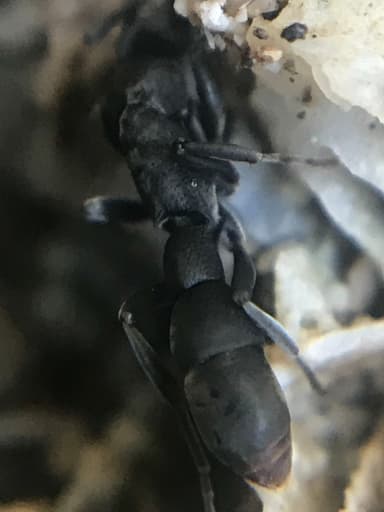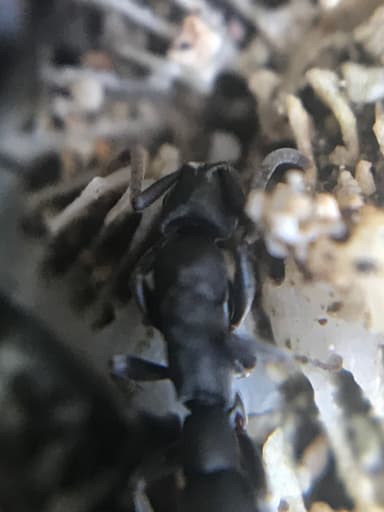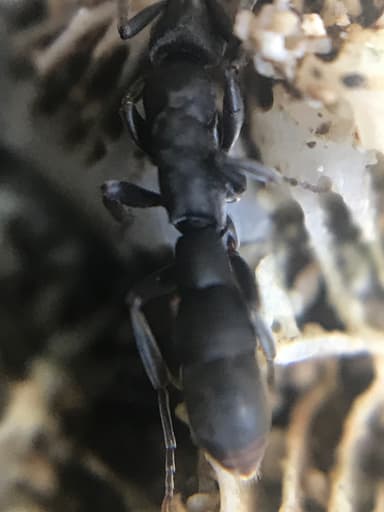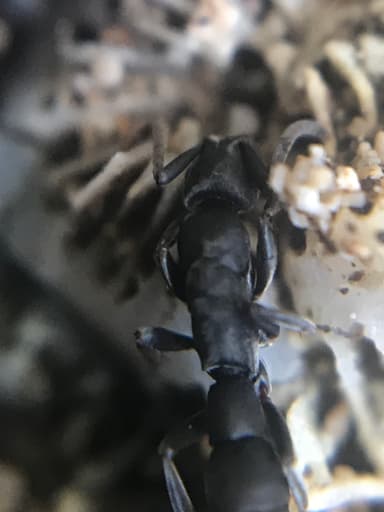
Platythyrea
Platythyrea punctata
Care Guide
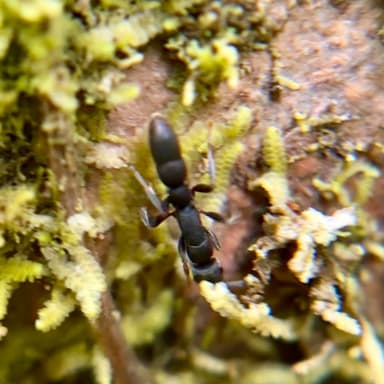
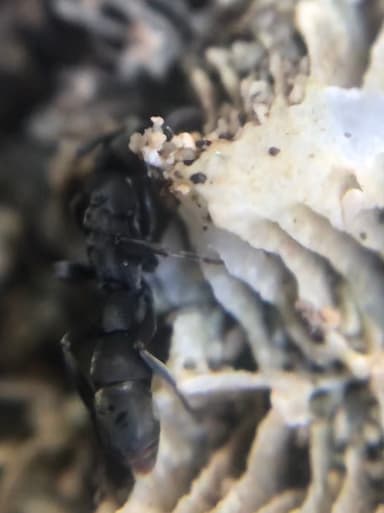
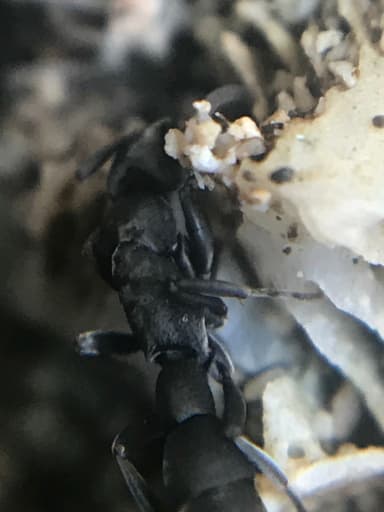
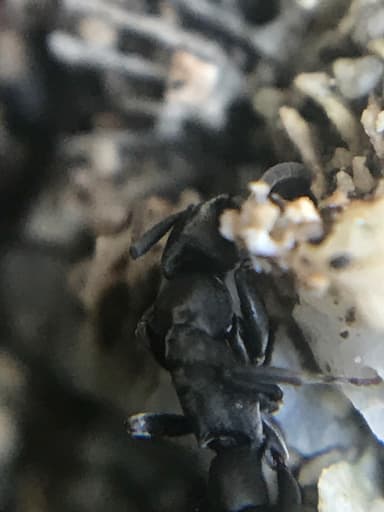
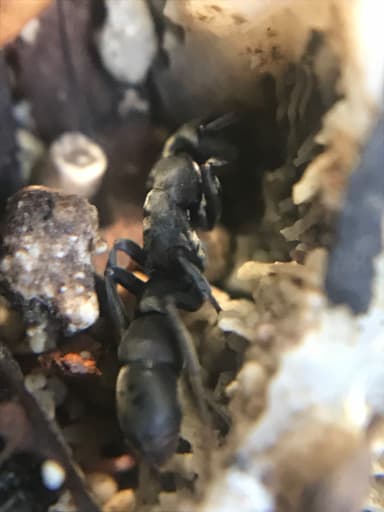
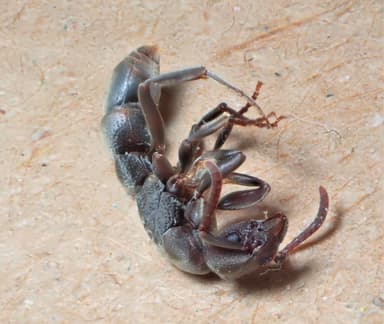
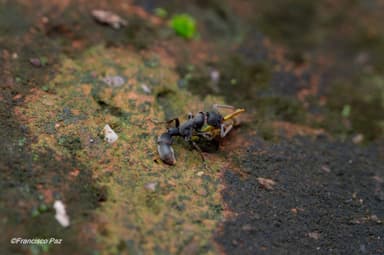
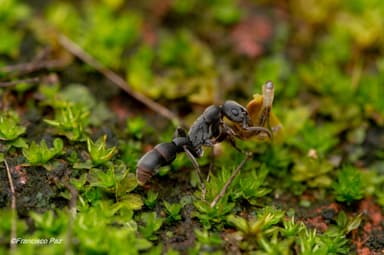
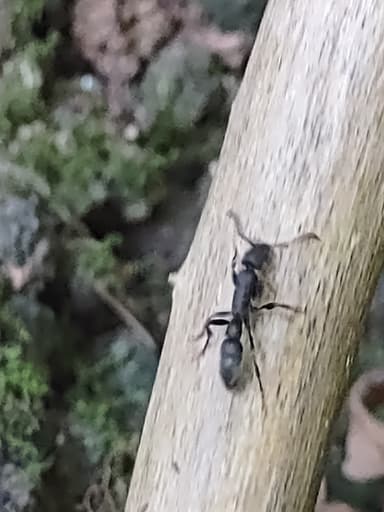
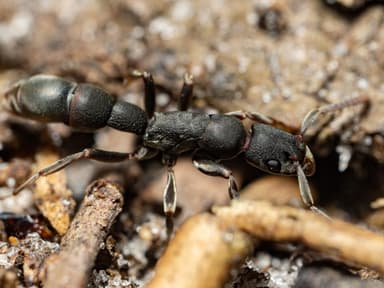
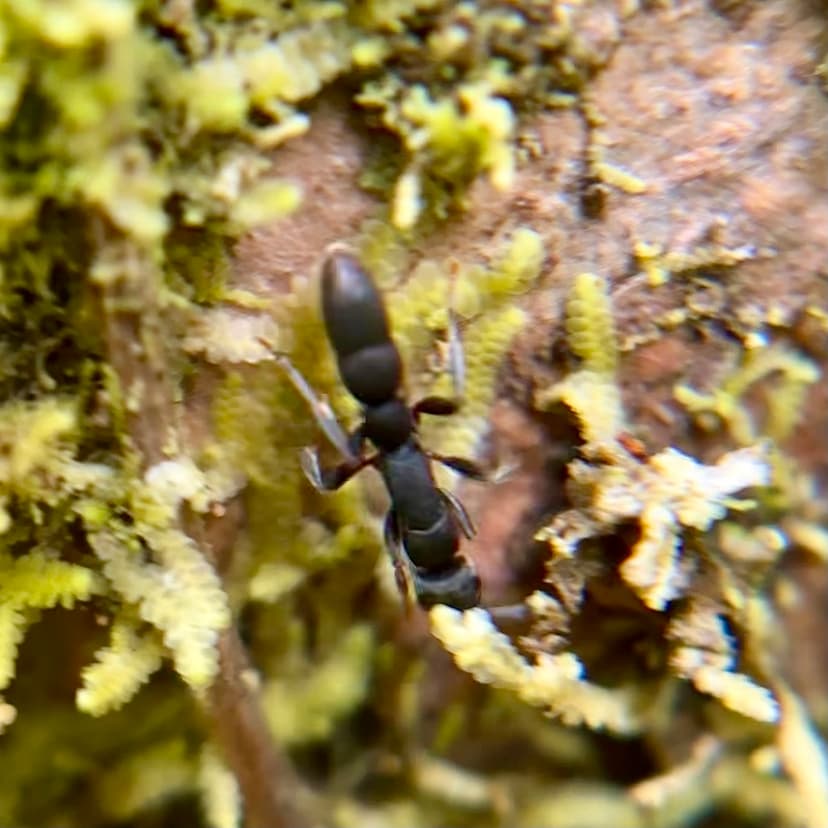
Few ants challenge our assumptions about colony life as profoundly as Platythyrea punctata, a sleek, medium-sized ponerine spanning the Neotropics from the southern United States through the Caribbean and deep into South America. Workers measure 6 to 8 millimetres, with a slender black or dark brown body, long legs, and swift, jerky movements that give them an almost spider-like gait. This is a species that has largely dispensed with queens. Reproduction is overwhelmingly by thelytokous parthenogenesis, meaning unmated workers lay diploid eggs that develop into females (Heinze & Hölldobler 1995). In the rare instances where winged females appear, they are often inseminated by workers or simply fail to establish; instead, colonies grow by budding, with groups of workers and brood splitting off to form new nests. A mature colony typically contains up to 400 individuals, all physically similar, without soldier or distinct queen castes. What truly fascinates researchers and hobbyists alike is the intricate social hierarchy that emerges among these gamergate workers, where dominance interactions determine reproductive output (Schilder et al. 1999). For the observant keeper, a P. punctata colony is a window into a matriarchal society of equals, all the while being a manageable size for the home terrarium.
This ant is firmly an intermediate-level species, best suited to keepers who have successfully maintained a couple of tropical colonies and are ready for a more sensitive, escape-prone ponerine. While their parthenogenesis means a queenless colony containing just a few workers can rebound and grow, they are acutely sensitive to desiccation and stagnation. A slight failure in humidity will rapidly lead to brood loss and worker die-off. Moreover, Platythyrea punctata workers possess a functional sting, which, though not medically significant, makes handling without a secure outworld a memorably unpleasant experience. They are agile and determined climbers, so a tight-fitting lid with a fine mesh or a liquid PTFE barrier is non-negotiable. The reward for meeting their needs is a colony that actively hunts prey, displays complex social interactions, and steadily builds its population without ever requiring mating or a nuptial flight. If you appreciate the subtlety of dominance hierarchies and the elegance of a queenless society, this species will captivate you for years.
Housing must revolve around the narrow climatic needs of this tropical ant. Daytime temperatures should sit between 22°C and 28°C, with a slight nighttime drop being acceptable but not required. Far more critical is humidity, which must remain consistently between 70% and 90%. This demands a passive-humidity nest setup: a gypsum or ytong block with a built-in water reservoir, or a classic plaster nest that can be wetted regularly. The foraging arena should offer a gradient, with a dry side for feeding and a moist side, often created by a layer of damp coco fibre or a sand-clay mixture over a drainage layer. P. punctata workers will not thrive in a dry test tube for long; upon founding by budding, they require a small, humid chamber immediately. Provide a loose, organic substrate in the outworld to facilitate their natural behaviour of carrying debris for nest maintenance, though the brood chamber itself should be kept relatively clean. Because there is no hibernation requirement, you must maintain these tropical conditions year-round. A simple thermostat and hygrometer are not luxury items but essential tools to avoid the common pitfall of a slowly drying nest that kills the colony over a few weeks.
Feeding Platythyrea punctata reveals their active predatory nature. They require a steady supply of insect protein, with small crickets, fruit flies, and chopped mealworms being excellent staples. Workers will cooperatively subdue prey, often dragging it back to the nest entrance. In addition, these ants eagerly accept carbohydrates in the form of honey water or a commercial nectar substitute, which should be offered in a small, shallow dish to prevent drowning. I have found that a protein feeding every other day for a growing colony of 30–50 workers, with a constant but small nectar source swapped twice a week, keeps them healthy and encourages egg-laying. Always provide a clean water source in a cotton-plugged tube or a water tower in the outworld; ambient humidity alone is not enough for drinking. As with all ponerines, remove uneaten prey after 24 hours to prevent mould and mite infestations, which spread rapidly in the warmth and moisture this species demands.
This ant does not hibernate. There is no natural chill period in its native range, and any attempt to cool it down below its active threshold will result in high mortality. Keep their environment stable, without seasonal manipulation, and they will continue to forage, nurse brood, and interact throughout the year. The only concession to seasons is a potential slight slowing of brood production if room temperatures dip slightly in winter, but aim to avoid this altogether with a heating cable or mat connected to a thermostat.
The first days after acquiring your Platythyrea punctata colony are a delicate period. The group will likely arrive as a small cluster of workers with brood, possibly housed in a temporary transport container. Introduce them to their permanent, pre-humidified nest as gently as possible; a common method is to place the open transport tube in the foraging arena and cover it to mimic a dark crevice. Do not force them out. They will explore on their own, and a first feeding of a pre-killed fruit fly and a drop of honey water on a leaf can be placed near the nest entrance after 12 hours. Watch for a telltale sign of stress: workers frantically running the perimeter of the arena or carrying brood back and forth. This often indicates that humidity is off. If so, re-wet the nest and cover the arena partially to raise local humidity. Once they settle, you will witness the subtle drama of the dominance hierarchy—workers engaging in brief antennal boxing and body-posturing, which is not aggression but reproductive negotiation (Kellner & Heinze 2011). Within two to three weeks, you should begin to see the first new eggs appearing as tiny, glistening pearls, a sign that your colony has truly accepted its new home.