Messor
Messor angularis
Care Guide
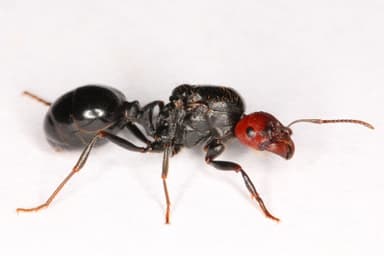
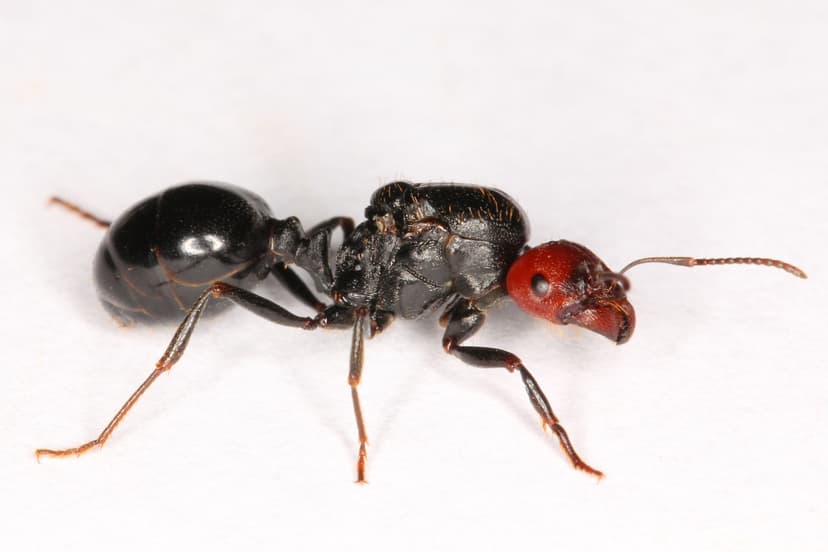
Messor angularis is a strikingly polymorphic harvester ant, displaying a clear size variation within a single colony that reflects the division of labor. The queen, the colony’s largest individual, measures 10–12 mm, while workers range from nimble minors of about 3 mm up to robust majors reaching 12 mm. These larger majors possess disproportionately massive heads, equipped with powerful mandibles used for cracking and milling tough seeds—a specialization that makes them the colony’s living nutcrackers.
The dietary habits of Messor angularis are the cornerstone of their care. As true seed specialists, they gather, store, and process seeds into a nutrient-rich paste often called “ant bread.” This made them remarkably easy to feed: a supply of mixed birdseed, millet, or poppy seeds will keep them thriving. Occasional small insects, such as fruit flies or mealworm pieces, provide supplementary protein and stimulate brood production. Unlike species that require constant live prey, the seed-based diet simplifies maintenance for the keeper.
Care difficulty
Messor angularis is an ideal choice for beginner ant keepers. Their robust nature, forgiving environmental tolerances, and simple feeding requirements make colony management straightforward. They are claustral founders, meaning the queen can raise her first generation of workers without needing food during the founding stage, reducing stress for new keepers. Once the colony establishes, it will grow steadily to a moderate size of several thousand workers—exciting but not overwhelming.
Housing
A formicarium for Messor angularis should provide ample dry space for seed storage, as these ants create dedicated granaries. The nest area must remain at low humidity (30–50%), but a moistened area in the outworld is necessary to maintain the local humidity gradient they prefer. Temperature should be kept between 20–28°C; a heat mat on one side allows the colony to thermoregulate. Importantly, these ants are sensitive to vibrations and bright light, especially in their early stages. Place the setup in a quiet, dim location and avoid frequent opening of the nest. During winter, a hibernation period at around 8°C for a few months is recommended to align with their natural cycles and promote long-term health and fertility.
First days after purchase
Upon receiving your Messor angularis colony, transfer them into their prepared formicarium and set it in a calm, dark spot. Resist the urge to observe constantly—give them at least 48 hours to acclimatize. During this time, ensure a constant supply of fresh water in the outworld (via a test tube or water dispenser) and scatter a small pinch of seeds nearby. Minimal disturbance will help the queen feel secure and resume brood care. After a few days, you can begin gentle observation; you may already see workers tidying the nest or storing seeds. With patience and quiet, your new colony will quickly settle in and reveal the fascinating world of harvester ant society.