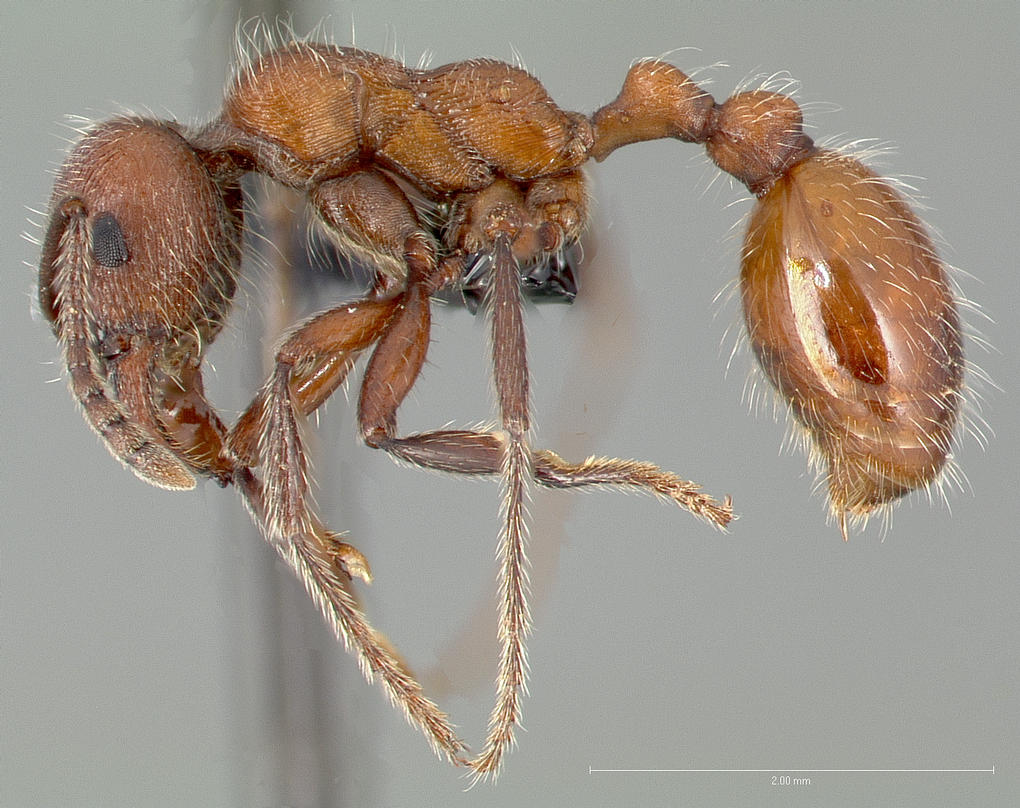
Manica
Manica invidia
Nuptial Flight Calendar
Care Guide
Manica invidia is a strikingly beautiful ant species that combines a vivid red coloration with a robust, active temperament. The genus *Manica* is closely related to *Myrmica*, but these ants are generally larger and more aggressive – a trait reflected in their Latin name, which means “envy” or “grudge.” The queen measures between 8 and 10 mm, while workers range from 5 to 7 mm. Colonies can grow to a modest size of 300 to 2,000 workers, making them a manageable yet rewarding species for hobbyists with a bit of experience.
Care difficulty
Keeping Manica invidia is rated as intermediate, primarily due to their semi-claustral founding method. Unlike fully claustral species, the queen must leave the nest regularly to forage for food until the first workers arrive. This means she needs a steady supply of insects and sugar water during the founding stage, and the keeper must provide a small feeding area accessible from the test tube. Once the colony is established, maintenance becomes easier, but their sensitivity to disturbance and their need for a proper hibernation period keep them from being a beginner species. They are not aggressive toward the keeper, but they will defend their nest vigorously if provoked, so calm handling is essential.
Housing
Manica invidia thrives in a formicarium that maintains a temperature between 18 and 24°C and a humidity level of 50 to 70%. The nest area should be kept slightly more humid than the foraging area, with regular moisture checks in the substrate. These ants are moderately sensitive to vibration and light, so placing the setup in a quiet, low-traffic room is beneficial. As the colony grows, provide a spacious foraging arena where they can hunt live prey and collect sugar water. Hibernation is mandatory for healthy brood development and longevity; from late autumn to early spring, the colony should be gradually cooled to a stable 5°C for several months. A refrigerator or cool cellar works well, but ensure the nest does not dry out during this period.
First days after purchase
Upon receiving your Manica invidia colony, transfer the queen and any brood into a clean test tube setup with a water reservoir and a small entrance that allows her to exit for food. Place the setup in a dark, quiet place at room temperature. For the first few days, minimize disturbances and observe from a distance. Offer small pieces of insect (e.g., fruit fly or small cricket) and a drop of sugar water near the entrance every two to three days. The queen will forage cautiously – do not be alarmed if she seems hesitant; she needs time to adapt. Once the first nanitics appear, you can slowly introduce a small arena connected to the test tube. Avoid sudden changes in temperature or light, and always keep the water supply topped up. With patience and a calm approach, Manica invidia will reward you with a lively, colorful colony that showcases the fascinating behavior of a semi-claustral, temperate-adapted ant.