Camponotus
Camponotus gigas
Nuptial Flight Calendar
Flight months: Jan, Feb, Mar, Apr, May, Jun, Jul, Aug, Sep, Oct, Nov, Dec
Care Guide
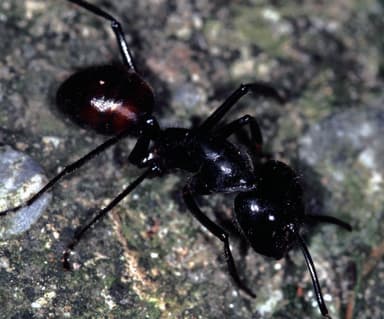
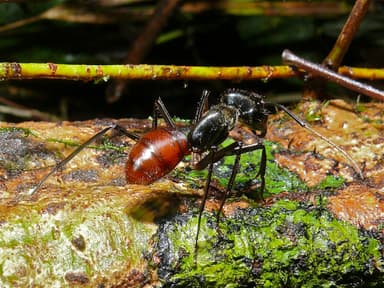
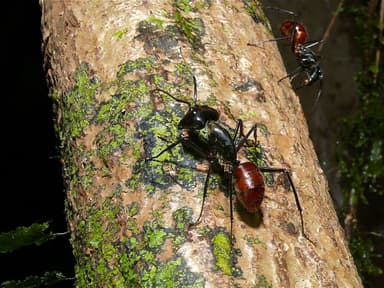
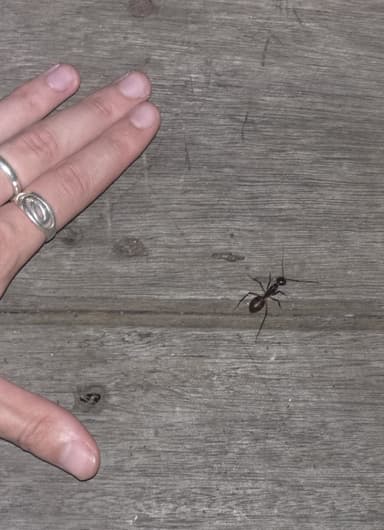
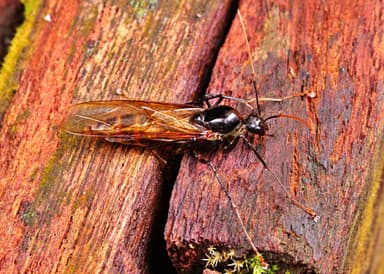
Camponotus gigas, the Malaysian giant ant, is one of the most breathtaking ants to ever grace a formicarium. Queens measure an astonishing 25 to 31 mm, while the polymorphic workers range from relatively modest 12 mm minors up to massive 28 mm majors, making this the largest living Camponotus species (AntWiki). Their sleek, black bodies and robust limbs give them a commanding presence, and their colony structure can swell to around 10,000 individuals in well‑established nests. What truly sets C. gigas apart, however, is its sophisticated foraging behaviour: field studies by Pfeiffer & Linsenmair (1998, 2000) in the tropical lowland rainforests of Borneo revealed a complex system of permanent trunk trails, temporary food‑source paths, and even a distinct “garbage disposal” network. Workers are strictly nocturnal, carrying loads many times their own body weight down these highways. Their polydomous nests—spread across multiple satellite locations—and the sight of a major worker lumbering along a branch are unforgettable, making this species a jewel for the dedicated myrmecologist.
As the care difficulty rating of “expert” suggests, Camponotus gigas is not a beginner’s ant. Their sheer size demands specialised housing and stringent environmental control that can easily overwhelm casual keepers. They are suitable only for those with experience maintaining highly tropical species, the space to accommodate a large, expanding colony, and a thorough understanding of escape prevention—a 31 mm queen or a major worker can effortlessly scale or chew through flimsy barriers. Additionally, their nocturnal activity pattern means you will need to observe them under dim red light if you wish to witness their natural behaviour. Anyone contemplating this species should be prepared for a long‑term commitment to a fast‑growing colony that lives large and requires constant attention to moisture and temperature levels.
Recreating a slice of Southeast Asian lowland rainforest is key to their well‑being. The occurrence data shows C. gigas ranging from Borneo to the Malay Peninsula in consistently warm, humid lowlands. Stable temperatures between 24°C and 28°C are essential, and fluctuations beyond this range can quickly stress the ants. Humidity must be kept high—between 70% and 85%—to prevent desiccation, especially for brood and newly eclosed callows. A deep, moisture‑retentive substrate such as a mix of coconut fibre, topsoil, and clay can help buffer humidity while offering a naturalistic digging medium, though these ants are not dedicated soil nesters; in the wild they nest in decaying logs and hollow tree bases. A large, well‑ventilated terrarium or custom acrylic setup with abundant vertical climbing surfaces and a nest area composed of cork, ytong, or wooden blocks that can be kept moist works best. Providing a thermal gradient with a gentle heat source on one side allows the colony to regulate itself, but never allow stagnant air—gentle, indirect ventilation is crucial to prevent mould in such humid conditions.
Diet for C. gigas must reflect their dual nature as hunters and nectar‑feeders. In the wild, they are formidable predators, taking down large arthropods and even small vertebrates, but they also rely heavily on carbohydrate‑rich honeydew from sap‑feeding insects. In captivity, offer a steady supply of protein in the form of freshly killed or frozen‑thawed insects—crickets, roaches, mealworms, and occasionally small pieces of lean meat. Cutting prey into manageable pieces helps smaller workers participate. Carbohydrates should be provided daily via high‑quality liquid feeders filled with a honey‑water mix or an artificial nectar solution; ripe fruit slices like mango or melon are also accepted. Clean, fresh water must be available at all times, either through a water tube or a moistened sponge in a separate drinking station, as the high ambient temperature can quickly dehydrate the colony. Be meticulous about removing uneaten food after 24 hours to prevent bacterial blooms.
This purely tropical species does not hibernate and has no requirement for a cooling period. Attempts to overwinter them will prove fatal. Maintain their warm, humid parameters year‑round, only allowing a slight natural dip at night by turning off heat sources—but keep the enclosure above 24°C. There is no evidence of a true diapause phase in this equatorial ant.
Upon arrival, your C. gigas queen and her first workers will be disoriented and stressed. Immediately transfer them into their prepared setup with minimal disturbance, placing the open test tube or transport container inside the outworld so they can move out on their own. Keep the enclosure in near‑darkness for the first 48–72 hours, and resist any urge to check on them constantly—red light inspection only if necessary. Offer a tiny drop of honey on a piece of foil near the nest entrance after the second day, but do not introduce live prey until the colony is settled and foraging actively. Watch for signs of drowning in open water sources; use only a cotton‑plugged water tube or a very shallow, escape‑proof drinking pool. The queen may initially appear lethargic or hide for extended periods, but as long as the brood pile remains warm and moist, recovery is typical. Early failures most often stem from premature disturbance or a humidity crash, so let the colony find its rhythm under stable, quiet conditions.