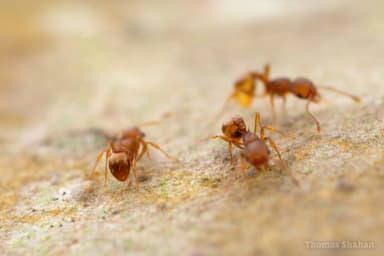
Wasmannia
Wasmannia auropunctata
Care Guide
Wasmannia auropunctata
, commonly known as the little fire ant, is a species that demands respect and careful attention from any keeper. Despite their minuscule size — queens measure just 1.5 to 2 mm, while workers range from 1 to 1.5 mm — these ants are formidable. Their sting produces a sharp, burning sensation that gives them their common name, and in the wild they are notorious invasive pests. In captivity, however, they offer a fascinating glimpse into a highly adaptable, polygynous species capable of forming supercolonies. Colony size can climb from a few hundred workers to tens of thousands, making them a rewarding challenge for experienced hobbyists.
Founding is claustral, meaning the queen seals herself in a chamber and raises her first brood without foraging. The colony grows slowly at first, but once established, worker numbers can explode. These ants are highly active and will quickly fill any available space, so escape-proofing is absolutely essential — even the smallest gap will be exploited.
Care difficulty
Keeping Wasmannia auropunctata is considered advanced. Their sensitivity to fluctuations in humidity and temperature, combined with their notorious escape artistry, makes them unsuitable for beginners. A consistent environment with temperatures between 24 and 30°C and relative humidity of 70 to 90% is critical. Too dry, and the colony will struggle; too cold, and development stalls. Additionally, their aggressive nature means any disturbance can cause stress, leading to colony retreat or even queen death. Only keepers with experience managing tiny, fast-moving, and stinging ants should attempt this species.
Housing
A formicarium with excellent ventilation and moisture control is a must. Use a substrate that retains humidity well, such as clay or plaster, and provide a large outworld for foraging. Because these ants are so small, they can easily drown in open water sources — use cotton-plugged test tubes or water feeders with narrow openings. The nest area should be kept dark and stable. Escape prevention is paramount: fluon or PTFE barriers on the outworld walls, and tight-fitting lids. Wasmannia auropunctata will also climb glass and plastic, so all surfaces must be treated.
Diet
Their diet is varied. They thrive on a mix of protein and sugar. Offer small insects (fruit flies, pinhead crickets) along with sugar water, honey, and fresh fruit. They are also fond of honeydew, so you can occasionally provide a honeydew substitute. Protein is especially important during brood rearing. Ensure food is accessible to their tiny mandibles — chop or mash larger items.
First days after purchase
Upon receiving your colony, place the setup in a quiet, dim area and allow the ants to acclimate for at least 24 hours without disturbance. Check that the nest has adequate humidity and that the queen is calm. Do not feed immediately; let them settle. Over the first week, observe their activity level and ensure they are drinking from the water source. If the colony seems stressed, reduce light exposure and vibrations. Patience is key — once they feel secure, their fascinating behaviors will unfold.