Gigantiops
Gigantiops destructor
Care Guide
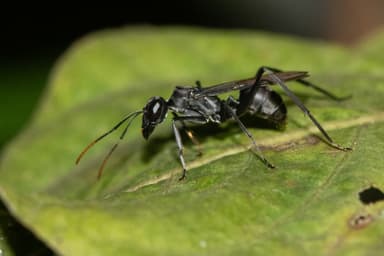
Gigantiops destructor is one of the most remarkable and visually striking ant species in the hobby, known for its enormous compound eyes that cover much of the head, giving it exceptional vision. These ants are powerful jumpers, capable of leaping several centimeters to escape threats or ambush prey. The queen, measuring 11–12 mm, is only slightly larger than the workers, which range from 10–13 mm. Despite this modest size difference, the colony dynamic is dominated by a single queen and a relatively small but highly active workforce of 100–500 individuals. Gigantiops destructor is a semi-claustral founder, meaning the queen must forage for food during the initial stages of colony founding, making the early phase more demanding than fully claustral species.
What sets these ants apart is their diurnal, visually guided hunting behavior. Unlike many ants that rely on pheromone trails, Gigantiops uses its keen eyesight to actively stalk and capture live insects, often springing into the air to catch flying prey. Their diet consists primarily of protein-rich insects, supplemented with sugar water and honeydew. They do not store seeds or engage in fungus farming; instead, they require a steady supply of live or freshly killed feeder insects such as fruit flies, crickets, or roaches. Without adequate protein, the colony will fail to grow.
Care difficulty
Keeping Gigantiops destructor is considered advanced, mainly due to their semi-claustral founding and specific environmental requirements. The queen must be fed regularly during colony establishment, and the ants are sensitive to desiccation and sudden changes in humidity. Their need for live prey and a warm, humid setup means this species is best suited for experienced keepers who can provide consistent care and observation.
Housing
A formicarium for Gigantiops destructor should maintain temperatures between 24–28°C and humidity levels of 60–80%. The nest area must retain moisture, but with good ventilation to prevent mold. These ants are active and appreciate a spacious foraging area with natural décor like twigs and leaves, which they use for cover while hunting. They do not require hibernation, making year-round maintenance simpler. However, they are extremely light-sensitive and easily stressed by vibrations, so place the setup in a quiet, dim location. A test tube setup for the founding stage works well, but as the colony grows, consider a plaster or soil-based nest with a separate outworld.
First days after purchase
Upon receiving your Gigantiops destructor colony, transfer them gently into a prepared formicarium with a pre‑moistened nest chamber. Place the setup in a calm, low‑light area and avoid disturbing them for at least 48 hours. Provide a small drop of sugar water and a few tiny insects (e.g., pinhead crickets or fruit flies) near the entrance. Monitor humidity closely, as the colony will quickly dehydrate if conditions are too dry. With patience and careful observation, you will be rewarded with one of the most intelligent and visually engaging ant species in captivity.