Iridomyrmex
Iridomyrmex chasei
Nuptial Flight Calendar
Flight months: Jan, Feb, Aug, Sep, Oct, Nov, Dec
Care Guide
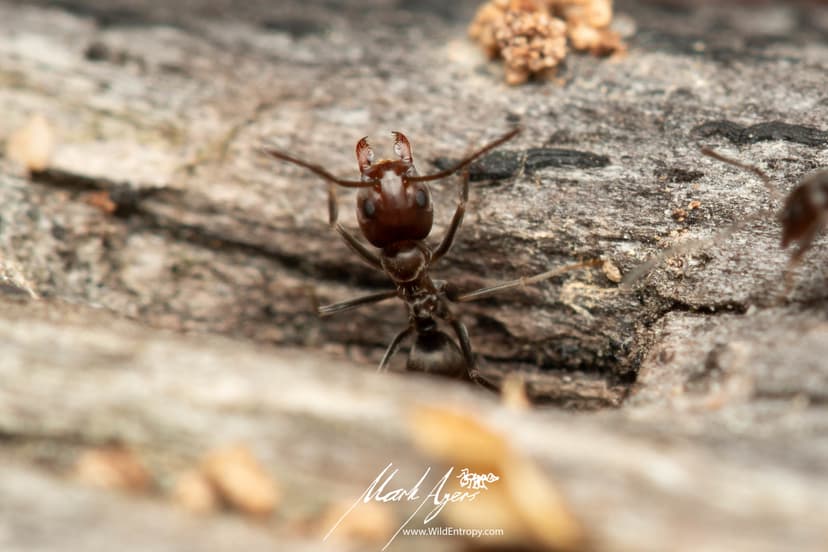
Iridomyrmex chasei is a dynamic, ground-foraging dolichoderine ant native to a sweeping arc of southern Australia, from the western coast of Western Australia across to the eastern seaboard, roughly between latitudes 10°S and 38°S (Heterick & Shattuck 2011). In the hobby it is prized for its restless, high-speed activity and bold scavenging behaviour—traits that reflect its close relationship to the famous “meat ants” of the Iridomyrmex purpureus group. Workers measure a petite 3 to 5 millimetres but more than compensate with sheer numbers: mature colonies can swell to 10,000 individuals, all of a single worker caste (monomorphic), with queens a noticeably larger 7 to 9 millimetres. The exoskeleton is typically a deep brown to black, often with a faint metallic blue or bronze sheen that catches the light as they pour out of their nest. Founding is claustral, meaning a newly mated queen seals herself away and raises her first workers entirely on her own fat reserves, a straightforward process that endears the species to keepers. Nuptial flights in the native range are reported during the warmer months of October through February, taking place on humid afternoons following rain, though the timing is marked as low-confidence in current databases and may vary across the broad distribution. These ants lack a functional sting and instead deploy pungent chemical secretions—characteristic of the subfamily—making them safe to observe but a potent reminder of their ecological success as dominant scavengers and predators in the Australian landscape (Shattuck 1992).
With a difficulty rating of “beginner”, Iridomyrmex chasei is an excellent choice for those new to ant keeping, as well as for seasoned hobbyists who want a fast-growing, visually engaging colony. The claustral founding mode removes the need for feeding during the fragile queen-only phase, and the colony’s hardiness allows it to forgive minor husbandry lapses. That said, the very speed and vigour that make them entertaining also demand a secure setup: workers are agile escape artists, and a tight-fitting lid with a reliable barrier—such as fluon or olive oil—is essential on the outworld. Their large colony size means they will eventually need a spacious nest, so the keeper must be ready to expand the living quarters as the population explodes. Because they are fully diurnal and constantly on the move, they provide the spectacle of a busy ant metropolis without the complications of polymorphic castes or specialised environmental triggers. For anyone captivated by the relentless energy of Australian meat ants but looking for a more compact species to start with, I. chasei fits the role beautifully.
Housing should replicate the semi-arid to warm temperate conditions of their vast Australian range. A well-ventilated formicarium with a moisture gradient is ideal: one end kept slightly damp while the rest remains dry gives the ants the choice they are adapted to. Target ambient temperatures between 20 and 30 degrees Celsius, and maintain humidity in the nest broadly within 40 to 60 percent. Many keepers find that Ytong or acrylic nests with a sponge or water tower on one side work well; the ants will move their brood to the zone that matches their needs. Substrate within the outworld can be a simple layer of dry sand or a sand–loam mix, which not only mimics their native soil but also encourages natural behaviours such as minor excavation and refuse management. Provide plenty of climbing structure—small twigs, stones, or cork bark—as these ants use elevated points as sentry posts and foraging highways. Because they are such active runners, the outworld should be generous relative to the nest size; a cramped arena will lead to constant attempts at escape. No specialised lighting is required, but a natural photoperiod helps regulate diurnal activity cycles.
Feeding Iridomyrmex chasei is straightforward and rewarding. As opportunistic scavengers and predators, they thrive on a varied protein supply: fruit flies, small crickets, mealworm chunks, and other commercially available insects are taken eagerly. Workers will mob prey items and dismember them quickly, so offering pre-killed or stunned insects reduces the chance of a struggling feeder insect harming young ants. The protein drive is especially high during brood-rearing, and daily offerings are appropriate for a rapidly growing colony. Carbohydrates should be provided in the form of sugar water, honey water, or a small dab of pure honey on a clean surface—take care to dilute honey sufficiently to prevent workers from becoming stuck. Ripe fruit pieces (such as apple or melon) are also accepted, but these must be removed before they ferment or grow mould. A constant supply of fresh water is essential, best delivered via a test tube setup in the outworld or a dedicated water feeder; the ants themselves will adjust their intake as needed. Given the colony’s size, multiple feeding stations can prevent congestion and ensure all individuals have access.
Hibernation is not a requirement for this species. While the southernmost populations experience cooler winters, Iridomyrmex chasei does not undergo a true diapause and can be kept at stable room temperatures year-round without ill effect. If temperatures in the ant room drop slightly during winter, the colony will simply slow down, brood production may pause, and the queen may rest, but no deliberate chilling period is needed. This makes them an exceptionally convenient species for indoor keeping, as the keeper does not need to provide a separate cool dormancy tank or manage a seasonal temperature drop. They will resume rapid growth as soon as warmth returns.
When your I. chasei queen and her first few workers arrive, patience during the settling-in period pays huge dividends. Remove the parcel from its packaging gently and place the test tube or founding chamber in a quiet, darkened space at around 25 degrees Celsius. It is best to leave them completely undisturbed for at least three to five days; any immediate feeding or inspection can cause stress that leads to the queen consuming her eggs. As she is claustral, she needs no food until the first workers eclose. Once you observe foragers emerging and exploring the tube, offer a tiny droplet of sugar water on a piece of tinfoil and, a day later, a very small pre-killed fruit fly or half a mealworm. Avoid the temptation to overfeed: a single protein item every two days is ample for a founding colony. Watch for signs of distress such as continuous running against the tube wall, excessive grooming, or egg cannibalism—these usually indicate disturbance or incorrect humidity. Keep the humidity in the tube at around 50 percent, and only move the colony to a larger nest when the test tube becomes crowded with thirty or more workers. Moving too early can result in a stressed queen and slow growth. With a steady hand and minimal interference, you will soon witness the colony’s explosive expansion, a spectacle that makes Iridomyrmex chasei one of the most rewarding beginner ants available today.

