Aphaenogaster
Aphaenogaster subterranea
Nuptial Flight Calendar
Flight months: Jul, Aug, Sep
Care Guide
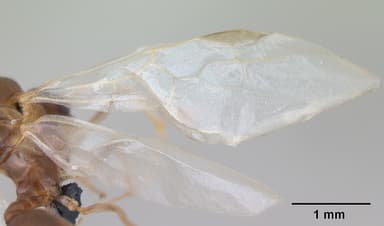
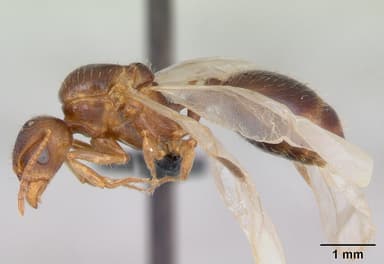
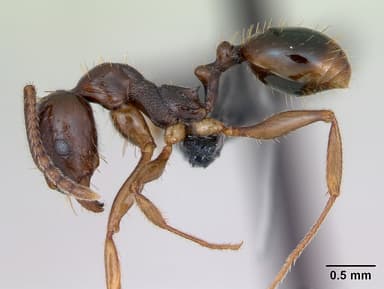
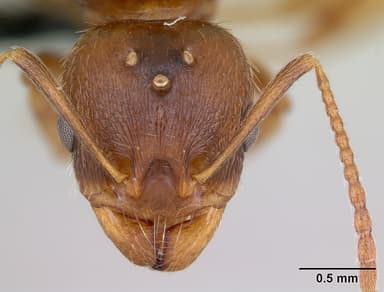
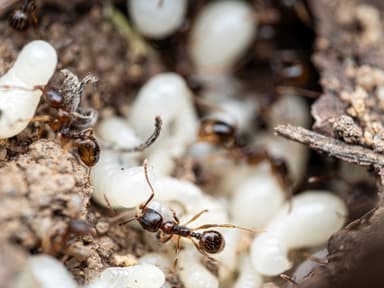
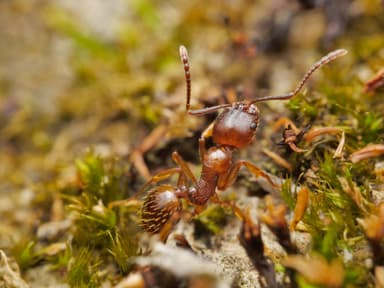
Aphaenogaster subterranea is a delicately built ant from the shady woodlands of Central and Southern Europe, a species that rewards patient observation with glimpses of its carefully choreographed foraging and subterranean industry. Queens measure a modest 7 to 9 mm, while the monomorphic workers range from 3.5 to 5 mm (Seifert 2018). Their slender, elongated bodies are clothed in a fine pubescence that varies from yellowish‑brown to dark brown, and the head is notably long and narrow, sporting distinctive curved mandibles. In the wild, these ants nest deep in the soil, under stones, or in decayed wood, yet they readily emerge to scavenge across the leaf litter. Colonies are founded claustrally, with a single queen eventually building a mature society of up to roughly 3,000 workers. Nuptial flights occur during the warm, humid afternoons of August and September, often following rainfall, when winged reproductives take to the air in a quiet but purposeful dispersal (Czechowski et al. 2012). What makes A. subterranea so engaging for the hobbyist is its combination of cryptic habits and gentle, almost hesitant movement; watching a worker stop to antenna‑check every pebble before proceeding is a reminder of the intricate sensory world these ants inhabit.
This species is rated as a beginner‑friendly ant, and it is precisely the kind of introduction that opens the door to more advanced husbandry practices. Aphaenogaster subterranea is notably robust, tolerating the occasional oversight in temperature or humidity that might devastate more delicate taxa. Its modest maximum colony size means it never outgrows a manageable enclosure, and its calm, non‑aggressive demeanor makes routine maintenance a low‑stress affair. Because it requires a true hibernation period, the keeper must learn about seasonal cycling early on, which is arguably one of the most valuable skills in ant keeping. Newcomers will appreciate the steady, unpressured pace of growth; there are no sudden population surges, and the ants will not attempt to escape at every opportunity. For anyone who wishes to keep a European native that is both beautiful and undemanding, A. subterranea is an ideal choice.
Housing should replicate the cool, humid microclimate of a forest floor. A soil‑based or ytong nest with a moisture gradient is ideal, as the ants will move their brood and themselves to the optimal humidity zone. I setup a layered substrate of sand, clay, and decaying wood particles allows the colony to excavate and arrange its chambers naturally, though a plaster nest with a dark cover also works well. The foraging arena should include a thin layer of coconut fibre or leaf litter to give the ants a sense of security while they explore. Maintain the nest temperature between 20 and 26 °C, with a daytime gradient that allows the ants to self‑regulate. Relative humidity should stay in the 50–70% range, accomplished by regular misting of one part of the nest and by keeping a water reservoir or test tube with a cotton plug constantly available. Remember that A. subterranea is a naturally timid ant; the nest should be kept in dim light or entirely dark, and observation should be gentle to avoid sending the colony into prolonged retreat.
In the kitchen, Aphaenogaster subterranea is an omnivorous generalist with a particular fondness for sweet liquids. For protein, offer small, appropriately sized insects — flightless fruit flies, freshly killed pinhead crickets, or soft‑bodied mealworm segments — always pre‑killed to prevent injury to the ants. Feed protein two to three times a week, removing any uneaten remains after 24 hours to stop mould. Carbohydrates can be supplied as a thin honey‑water mixture, a commercial ant nectar, or simply a drop of sugar water on a slip of baking paper in the outworld; the workers will gather around it eagerly. Fresh, clean water must be available at all times, either in a test tube with a cotton wick or in a small water tower. Avoid overfeeding, especially with sugary solutions, as surplus can ferment and attract pests. A balanced, regular diet will keep the workers vigorous and the queen laying steadily.
A dependable, prolonged hibernation is not optional for A. subterranea; it is a physiological necessity that ensures the queen’s long‑term fertility and the colony’s overall health. In the wild, the ants retreat deep into the soil profile as temperatures drop, spending roughly October to March at an average temperature of 8 °C (Czechowski et al. 2012). In captivity, after the last feeding in late autumn, gradually lower the temperature over a week’s time until the nest reaches a steady 5–10 °C, with the sweet spot around 8 °C. A wine cooler, an unheated basement, or a dedicated insect fridge all work well, provided the ants still have access to moisture and are not subjected to freezing. The colony will cluster tightly together and activity will all but cease; this torpid period should last a minimum of three months. At the end of winter, slowly warm the nest back to room temperature over several days before offering a small droplet of honey water as a welcome‑back feast.
When your Aphaenogaster subterranea arrives, typically as a test‑tube colony with a queen and a handful of workers, resist the urge to immediately connect them to a large formicarium. Place the tube in a quiet, dark place at a steady 20–22 °C and leave it undisturbed for 24 hours. After this settling‑in period, you may offer a minuscule dab of sugar water on a square of foil and a pre‑killed fruit fly near the tube’s entrance. Observe from a distance; the workers will tentatively explore, feed, and then retreat to the safety of the cotton‑plugged end. In these early weeks, the colony’s top priority is brood rearing, and stress must be avoided. Wait until the workforce has grown to at least 20 to 30 strong before attaching a small outworld or nest expansion. Should you notice signs of excessive skittishness, such as the queen ceasing to lay or workers huddling in permanent hiding, reduce light and vibration immediately. With patience, the colony will soon settle into a rhythm of quiet, industrious growth that is a true delight to witness.